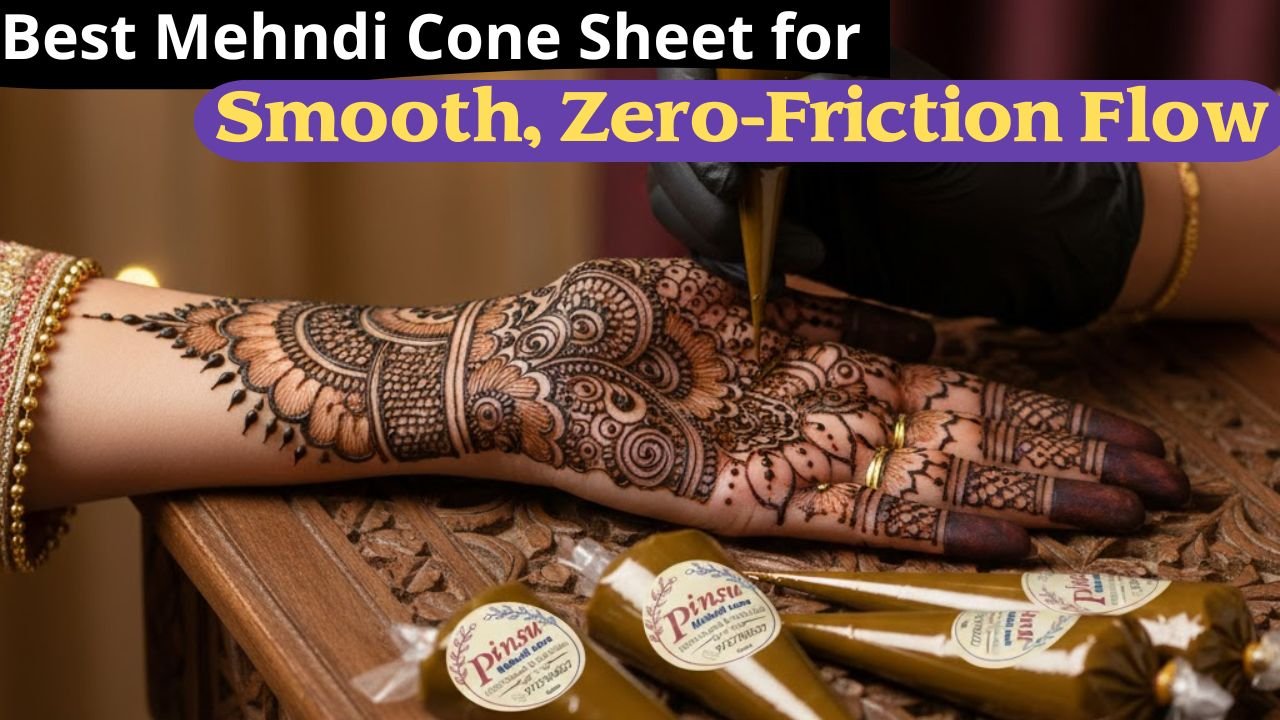
Nothing breaks a Jaali or intricate bridal design faster than a skipping cone. Even expert hands struggle when paste drags, skips, or the cone collapses mid-pattern. For professional mehndi artists in India, the secret isn’t just skill—it’s your cone sheet.
After working with countless bridal setups, the consensus is clear: high-gloss PVC or Mylar sheets in the 35μ to 40μ range deliver Smooth Flow and consistent line control. Their non-porous surface reduces friction, while thickness ensures Tip Stability, preventing wobbles during long sessions.
Master this with Professional Cones
The same products used in this guide are available in our shop.
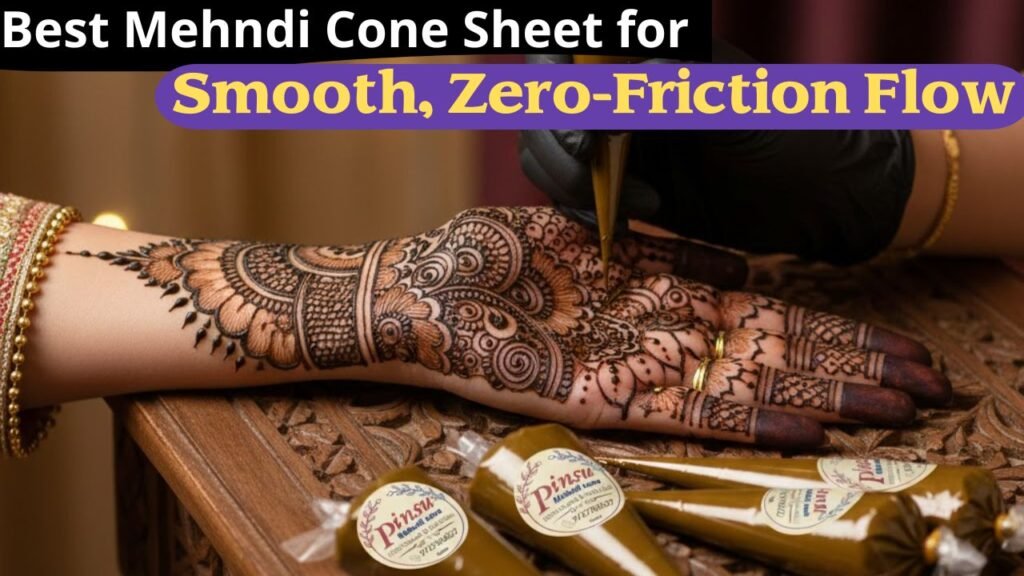
🏆 The Professional’s Choice: The Final Verdict
For flawless, uninterrupted mehndi flow, experts overwhelmingly prefer High-Gloss PVC or Mylar sheets with 35μ–40μ thickness. This combination:
- Guarantees consistent Tip Stability
- Supports even pressure for perfect lines
- Minimizes hand fatigue during long bridal sessions
- Works reliably in humid or dry Indian climates
This is the standard for professional Bridal Henna and detailed Jaali Work.
Inside this Guide:
The Mechanics of Flow: Two Critical Factors
Surface Friction (Inner Cone)
The inner surface of your cone must be smooth and non-porous. Rough surfaces slow paste or cause it to skip, breaking continuity in tight designs.
PVC and Mylar sheets excel here. Paste glides effortlessly, converting hand pressure into precise flow without drag. Even subtle imperfections in Cellophane can lead to uneven lines or skipped strokes.
Buy Mehndi Cones Pack of 12 – Natural, Organic & Dark Stain
Tip Stability (Outer Cone)
Cone thickness directly affects stability. A thin or flimsy sheet collapses under pressure, stopping flow mid-design.
35μ+ sheets maintain a firm inner diameter, letting paste move steadily. The cone snaps back slightly when you release pressure, maintaining consistent line width for the finest Jaali or Mandala work.
Material Breakdown: PVC/Mylar vs. Cellophane
PVC/Mylar: The Flow Master (Recommended Choice)
- High-gloss surface ensures zero friction
- Non-porous inner walls for consistent paste glide
- Maintains Tip Stability throughout long designs
- Easy to fold tightly for smooth double rolls
- Resistant to humidity and paste drag
Cellophane: Popular but Risky
- Thin sheets (often 25μ) absorb moisture, increasing internal friction
- Low Tip Stability can lead to wobbling cones
- Requires constant hand adjustments, increasing Hand Fatigue
- Works for practice or short sessions but risky for bridal mehndi
The Micron-Flow Sweet Spot
35μ–40μ Rule for Smooth Flow
- Provides slight rebound to prevent collapse
- Keeps inner diameter consistent for uniform lines
- Supports fine-tip and dense designs without drag
Thick Paste Exception
For stiff paste, professionals may use 50μ+ cones. High-viscosity paste stabilizes itself, but sheets must remain smooth to prevent internal drag.
Rolling for Ultimate Smoothness
- Tight Double Roll: Minimizes air gaps and ensures all pressure is directed to the tip
- Paste Consistency: Even the best sheet can’t fix lumpy paste or poor Rheology
- Balance: Sheet minimizes external friction; paste controls internal flow resistance
Quick Comparative Table
| Material | Smoothness | Tip Stability | Cost/Availability | Ideal Micron | Professional Use |
| PVC/Mylar | Excellent | High | Moderate | 35–40μ | Fine lines, Bridal Mehndi, Jaali work |
| Cellophane | Moderate | Low | Low | 25μ | Practice, small designs, budget setups |
Featured Snippet-Optimized Questions
Which Cone Sheet Material is Best for Smooth Flow?
High-gloss PVC or Mylar, 35μ–40μ, for zero internal friction and stable tips.
Why Does My Mehndi Cone Paste Skip or Drag?
Usually due to friction from porous sheets or thin cones that wobble.
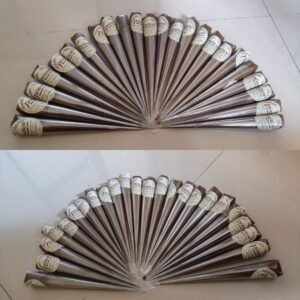
Buy Mehndi Cones Pack of 24 – Natural, Organic & Dark Stain
Can Cellophane Work for Professional Mehndi?
It’s cheap and available, but thin Cellophane increases drag and hand fatigue during long bridal sessions.
What Micron Size Ensures Perfect Flow?
35μ–40μ balances flexibility and support for continuous, smooth paste movement.
Conclusion
The best cone sheet for smooth flow is high-gloss PVC or Mylar in the 35μ–40μ range. This ensures: Smooth Flow for zero-skipping paste, consistent Tip Stability, and flawless line control for long bridal henna sessions.
More Design Inspiration