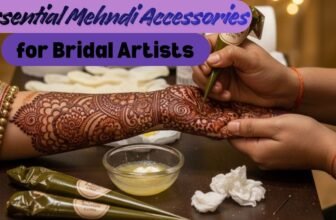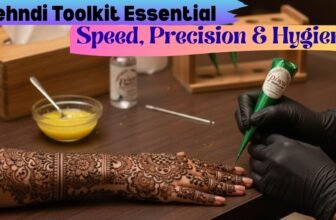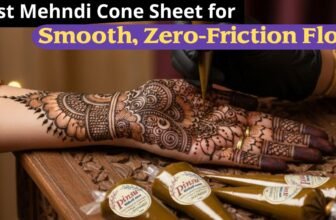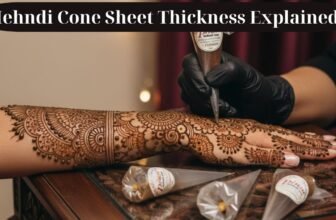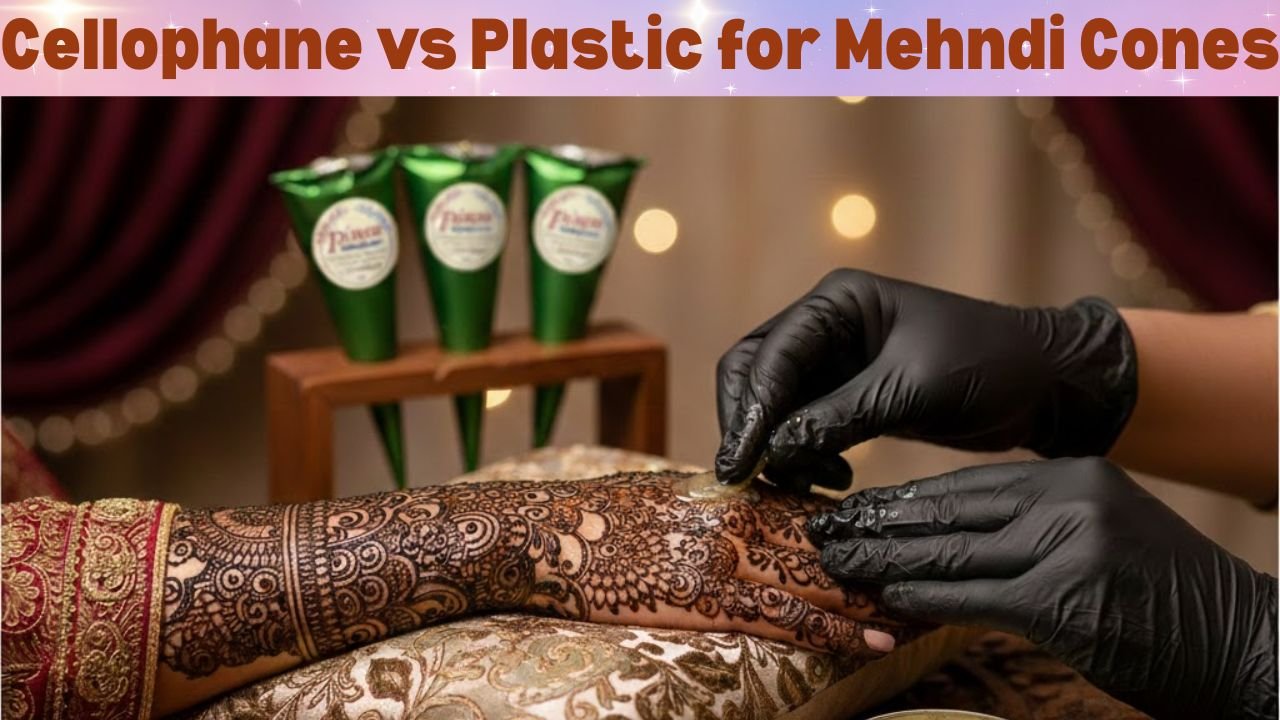
The moment henna touches the skin during a bridal booking, everything hinges on a tool we often overlook: the mehndi cone. Like a surgeon’s scalpel or a chef’s knife, this humble cone dictates precision, control, and ultimately, the beauty of our work. Yet, how often do we stop to consider what it’s made of? In the rush to prep for long Bridal Mehndi sessions, many artists grab whatever plastic or cellophane rolls are handy—sometimes to disastrous effect.
In this post, we dive deep into the silent but critical factor behind flawless henna lines: cone material. By the end, you’ll understand why seasoned artists swear by BOPP cellophane, how thickness matters, and why your choice directly affects line precision, paste flow, and even stain quality.
The Silent Saboteur: Why Your Cone Material Shapes Every Design
Think about the last time a fine jaali pattern collapsed mid-design. The paste leaked, lines wobbled, and suddenly, the pattern looked amateurish. Beyond aesthetics, these failures cost us precious time and even client trust.
Plastic cones, especially thin polybags measuring 10–15 microns, tend to collapse under hand heat. Even a slight slip causes uneven paste thickness, resulting in a patchy stain once the henna dries. On the other hand, professional BOPP cellophane sheets, typically 25–30 microns, maintain stiffness and clarity throughout long sessions, ensuring smooth, consistent flow. The difference is not subtle; it’s the difference between a rushed, uneven bridal design and a flawless Dulhan Mehndi that wows every guest.
Understanding Cellophane (BOPP) and Why Experts Prefer It
When we say “cellophane,” we’re often referring to BOPP film (Biaxially Oriented Polypropylene). Many beginners confuse this with cellulose-based cellophane, which degrades with moisture—but in professional use, BOPP is the standard, offering durability, transparency, and a firm grip.
The advantages are clear. First, rigidity: a well-rolled cellophane cone holds its shape, allowing you to cut a consistent tip and create ultra-fine lines without collapse. Transparency lets you monitor paste levels and spot trapped air bubbles instantly, avoiding interruptions mid-pattern. The smooth surface also offers just the right friction for long Bridal Mehndi sessions, reducing hand fatigue and increasing precision.
The Crucial Role of Microns
Thickness is more than a number—it dictates performance. BOPP sheets at 25–30 microns resist heat and maintain tensile strength under constant hand pressure. The paste flows predictably, even during multi-hour bridal sessions. Thin plastic sheets at 10–15 microns, in contrast, stretch easily and collapse, making precise application a constant battle. When every line matters, that extra rigidity of cellophane becomes a lifeline.
Tip-Cutting Consistency
The stiffness of cellophane also allows for cleaner tip cuts. Scissors glide through without stretching the opening, producing sharp, uniform nozzles. Plastic, by contrast, stretches unpredictably, creating jagged openings that ruin line uniformity. For fine jaali or intricate Dulhan Mehndi patterns, this difference can make or break the design.
Plastic Sheets: Cheap But Risky
Plastic cones seem convenient: inexpensive, flexible, and widely available. But beneath this surface lies a minefield for professionals. Their soft walls collapse under pressure, air pockets distort flow, and worst of all—blowouts happen.
Imagine mid-session during a bridal booking: a thin plastic cone bursts at the seam, sending ₹50–₹100 worth of premium henna paste spilling across your design. Panic sets in, lines smudge, and the client notices immediately. For a one-time saving of ₹1–₹2 per sheet, the risk of wasted paste, lost time, and damaged trust far outweighs the upfront cost.
Opacity adds another subtle challenge: hazy plastic hides trapped air, causing paste jams and inconsistent lines. Even if the cone survives physically, precision disappears. For serious artists, this is unacceptable.
Cellophane vs Plastic Sheets: Head-to-Head Comparison
The key differences between Cellophane and Plastic sheets for Mehndi cones are summarized below, highlighting precision, durability, and professional reliability.
| Feature | Cellophane (BOPP) | Plastic Sheets |
| Tip Precision | Very stable; maintains shape | Collapses easily; uneven output |
| Leakage Risk | Minimal | High blowout risk |
| Flow Control | Smooth, consistent | Uneven; prone to pauses |
| Grip Comfort | Smooth, controlled | Slippery, awkward |
| Hygiene | Food-grade, non-toxic | Quality varies |
| Cost | Slightly higher (₹1–₹2 per sheet) | Cheaper, but higher risk of paste loss |
Professional Takeaway: Choosing cellophane is not an expense; it is a professional insurance policy against lost time, wasted materials, and compromised client trust. For bridal bookings, it ensures every line is intentional and every design meets your reputation.
Rolling Techniques: Mastering the Cone
Even the best material fails without proper rolling technique. Cellophane requires a sharp, precise rolling angle, applying firm and even pressure. Beginners should ensure the sheet is perfectly flat before securing; even a tiny crease becomes a weak channel that funnels paste inconsistently.
3-Step Guide to Rolling a Professional Cellophane Cone:
- Place paste slightly away from the sheet’s edge.
- Roll tightly into a narrow, stable nozzle.
- Seal immediately with high-quality clear packing tape.
For plastic sheets, extra reinforcement at the tip and back seam becomes mandatory, yet precision still suffers. Advanced artists sometimes experiment with Mylar, which offers near-zero stretch for ultimate line stability—but its rigidity demands careful handling to avoid tearing.
Where to Buy: Sourcing Quality Cellophane in India
High-quality BOPP is widely available under different labels: “transparent packaging film,” “food-grade cello sheets,” or “cello sheets for crafts.” You can source them through packaging distributors, large craft stores, and stationery suppliers, not just in metro markets. Online marketplaces also offer verified BOPP rolls with guaranteed thickness, making it easier to maintain professional standards across locations.
Final Verdict: Invest in Reliability, Not Just Savings
For serious Mehndi artists, particularly those handling Bridal Mehndi or Dulhan bookings, cellophane remains the undisputed choice. Plastic may save a rupee or two, but one blowout can cost far more in paste, time, and reputation. The 25–30 micron food-grade BOPP sheet is a small investment that ensures consistent precision, smooth paste flow, and confident application.
Think of it as protecting your craft: the right tools are not optional—they are what transform good artists into respected professionals. Source from trusted suppliers in Sadar Bazaar (Delhi), Crawford Market (Mumbai), or verified online stores, and watch your designs elevate effortlessly.
When every paisley, flower, and jaali counts, choosing the right cone material is not just a preference—it’s your signature of professionalism.