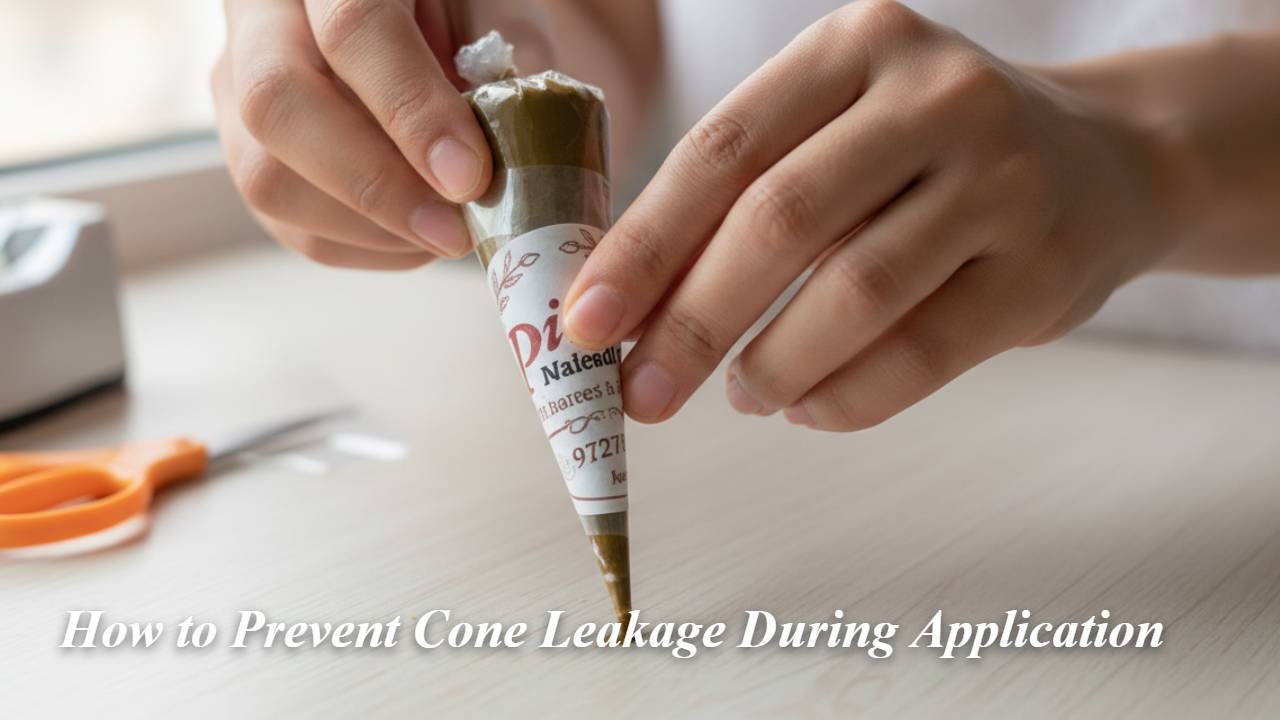
How to Prevent Cone Leakage During Application is one of the most critical technical skills every serious mehndi artist must master. Cone leakage can ruin intricate bridal detailing, distort Arabic floral flow, stain unintended areas, and damage client trust within seconds.
Leakage often occurs mid-session, when pressure builds unevenly inside the cone. Even perfectly mixed henna paste cannot compensate for poor sealing, weak sheet structure, or improper rolling tension.
Master this with Professional Cones
The same products used in this guide are available in our shop.
This comprehensive guide explains the real causes of cone leakage, practical prevention techniques, structural corrections, and professional workflow strategies to ensure flawless execution during every mehndi session.
Why Cone Leakage Happens in the First Place
Understanding how to prevent cone leakage during application begins with identifying root causes.
Inside this Guide:
Cone leakage typically occurs due to:
- Weak seam alignment
- Poor sealing technique
- Overfilled cone chambers
- Thin or low-quality sheets
- Air pockets inside the cone
- Excessive squeezing pressure
- Tape failure in humid conditions
Each factor disrupts internal pressure balance.

Buy Mehndi Cones Pack of 12 – Natural, Organic & Dark Stain
Professional prevention requires systematic preparation.
Types of Cone Leakage
Different types of leakage indicate different structural problems.
| Leakage Type | Likely Cause | Impact on Design |
|---|---|---|
| Back leakage | Weak sealing | Paste on fingers |
| Side seam leakage | Poor alignment | Interrupted strokes |
| Tip side burst | Uneven cut | Thick lines |
| Sudden paste burst | Air pocket | Ruined symmetry |
Accurate diagnosis improves correction.
How to Prevent Cone Leakage During Application – Sheet Selection
Material quality plays a foundational role.
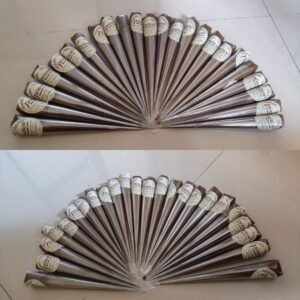
Buy Mehndi Cones Pack of 24 – Natural, Organic & Dark Stain
Choose:
- 30–35 micron thickness
- High-clarity cellophane
- Tear-resistant material
- Smooth surface texture
Thin sheets may tear under pressure.
Thick sheets may resist tight folding.
Balanced thickness supports stable seam integrity.
Proper Sheet Cutting for Leak Prevention
Uneven sheet geometry causes weak structural points.
Best practices:
- Use sharp scissors
- Cut precise diagonals
- Maintain uniform sheet size
- Avoid jagged edges
Clean cuts ensure tight rolling.
Tight rolling reduces leakage risk.
How to Prevent Cone Leakage During Application – Rolling Technique
Rolling tension directly affects internal pressure.
Follow this method:
- Start from sharp corner
- Maintain steady tension
- Avoid overlapping wrinkles
- Keep tip channel narrow
- Align edges evenly
Loose rolling creates hollow spaces.
Hollow spaces trap air.
Air leads to burst flow.
Air Removal Before Sealing
Air pockets cause sudden paste bursts.
Before sealing:
- Hold cone upright
- Tap gently downward
- Push paste toward tip
- Remove visible air gaps
Skipping this step increases leakage probability.
Stable internal pressure ensures smooth flow.
Sealing Techniques That Prevent Leakage
Sealing is often the weakest link.
Recommended Sealing Methods
- Double fold compression
- Reinforced tape sealing
- Rubber band lock method
- Tight fold with no gaps
Do not overfill cones.
Leave at least one inch space before folding.
Secure sealing maintains pressure balance.
How to Prevent Cone Leakage During Application in Bridal Mehndi
Bridal mehndi sessions last several hours.
Dense jaali meshwork and mandala grids demand steady pressure.
For bridal work:
- Use medium thickness sheets
- Apply double compression seal
- Test cone before touching skin
- Prepare backup cones
Leakage during bridal detailing compromises intricate portrait work.
Precision requires structural reliability.
Pressure Control During Application
Excessive squeezing causes seam stress.
Maintain:
- Gentle consistent pressure
- Balanced finger grip
- Avoid sudden force bursts
- Relaxed wrist posture
Pressure discipline prevents structural breakdown.
Henna application techniques must align with mechanical stability.
Comparison: Properly Prepared Cone vs Poorly Prepared Cone
| Factor | Proper Cone | Poor Cone |
|---|---|---|
| Seam Strength | Tight | Loose |
| Air Presence | Minimal | Trapped |
| Tip Alignment | Centered | Off-axis |
| Pressure Response | Smooth | Sudden bursts |
| Leakage Risk | Low | High |
Preparation defines performance.
How to Prevent Cone Leakage During Application – Climate Considerations
Humidity weakens tape adhesion.
Heat softens plastic.
Cold thickens paste.
Adjust accordingly:
- Use stronger adhesive in humid conditions
- Store cones upright
- Avoid heat exposure
- Test paste consistency before use
Environmental awareness reduces risk.
Testing Protocol Before Application
Never skip testing.
Before starting:
- Draw straight lines
- Create small circles
- Check seam integrity
- Apply moderate squeeze
If paste leaks from back or side, replace cone immediately.
Testing saves client trust.
Storage and Transportation
Improper storage increases leakage risk.
Store cones:
- Upright
- In airtight containers
- Away from direct sunlight
- Without stacking weight
During travel:
- Use flat rigid boxes
- Avoid hot car trunks
- Keep away from sharp objects
Protecting cones preserves structural integrity.
Common Professional Mistakes
Even experienced artists make errors.
Frequent mistakes include:
- Using old tape
- Ignoring seam inspection
- Overloading paste
- Reusing damaged cones
- Delaying cone replacement
Prevention requires discipline.
Cultural Importance of Flawless Application
Mehndi represents celebration, prosperity, and sacred symbolism.
Bridal mehndi includes:
- Dulha-dulhan portraits
- Mandala storytelling
- Regional motifs
Leakage disrupts sacred symmetry.
Respect for craft includes mechanical precision.
Professional preparation honors tradition.
Long-Term Benefits of Mastering Leak Prevention
Artists who understand how to prevent cone leakage during application gain:
- Higher client satisfaction
- Reduced stress
- Faster execution
- Cleaner portfolio results
- Stronger professional reputation
Mechanical reliability supports artistic confidence.
Troubleshooting Guide
| Problem | Cause | Solution |
|---|---|---|
| Paste leaking from back | Weak fold | Double compression seal |
| Seam splitting | Low-quality sheet | Upgrade material |
| Sudden burst at tip | Air pocket | Remove air before sealing |
| Tape loosening | Humidity | Use stronger adhesive |
Quick correction improves consistency.
Frequently Asked Questions
1. Why does my cone leak from the back?
Weak sealing or overfilling often causes back leakage.
2. Can poor sheet quality cause leakage?
Yes. Thin or weak sheets tear under pressure.
3. Should I seal cones immediately after filling?
Remove air first, then seal tightly to prevent internal pressure imbalance.
4. How can I test for leaks before applying?
Draw practice lines on tissue to inspect seam and pressure response.
5. Does paste consistency affect leakage?
Extremely thin paste increases burst risk, while overly thick paste increases seam pressure.
Final Thoughts
How to Prevent Cone Leakage During Application defines the difference between amateur frustration and professional mastery. Structural precision, proper sealing, balanced pressure, and environmental awareness work together to eliminate leaks and ensure smooth henna flow.
Bridal mehndi, Arabic patterns, and intricate cultural designs demand mechanical reliability. Refine your preparation system, test consistently, and elevate your artistry with cones that perform flawlessly from the first stroke to the final detail.
More Design Inspiration