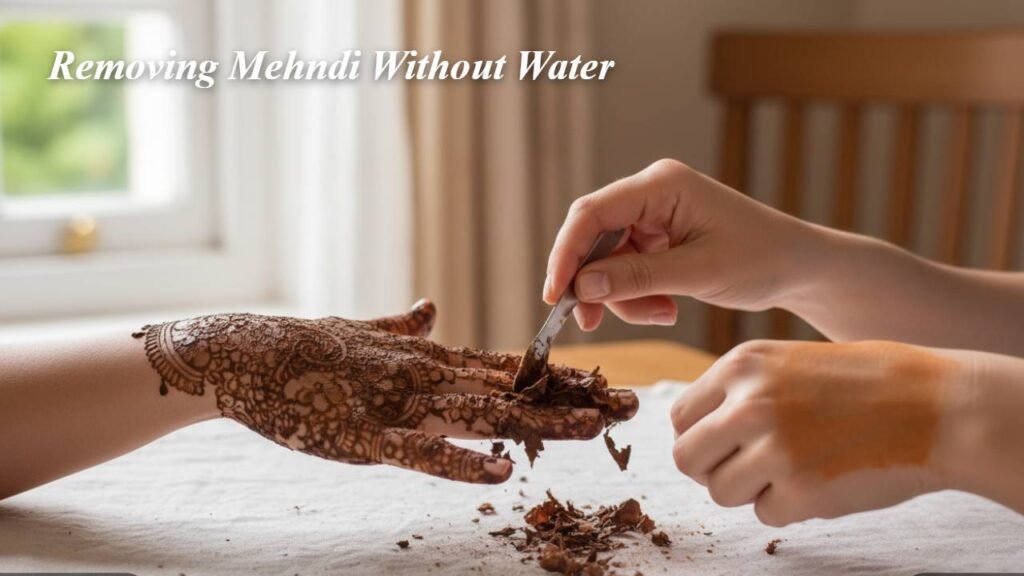
Removing Mehndi Without Water is one of the most important yet overlooked steps in achieving a deep, long-lasting stain. Many people focus on henna paste quality, intricate bridal mehndi patterns, or Arabic design precision. Few realize that improper removal can instantly weaken color development.
Water exposure immediately after paste removal interferes with oxidation. That single mistake often causes light orange stains instead of rich brown tones.
Master this with Professional Cones
The same products used in this guide are available in our shop.
Understanding the correct removal technique protects dye bonding, improves stain longevity, and ensures professional-level results.
Why Water Ruins Fresh Mehndi Stain
Henna stains develop in two stages:
Inside this Guide:
- Dye absorption while paste remains on skin
- Oxidation after paste removal
When you wash hands immediately:
- Oxidation slows down
- Surface dye gets disturbed
- Final color appears lighter
The first 24 hours after paste removal are critical. Removing mehndi without water allows lawsone molecules to fully bind to keratin before moisture disrupts the process.

Buy Mehndi Cones Pack of 12 – Natural, Organic & Dark Stain
The Science Behind Removing Mehndi Without Water
Henna paste contains lawsone dye molecules. These molecules migrate into the upper skin layer during application. Once paste dries and stays on skin for 6–10 hours, most dye has penetrated.
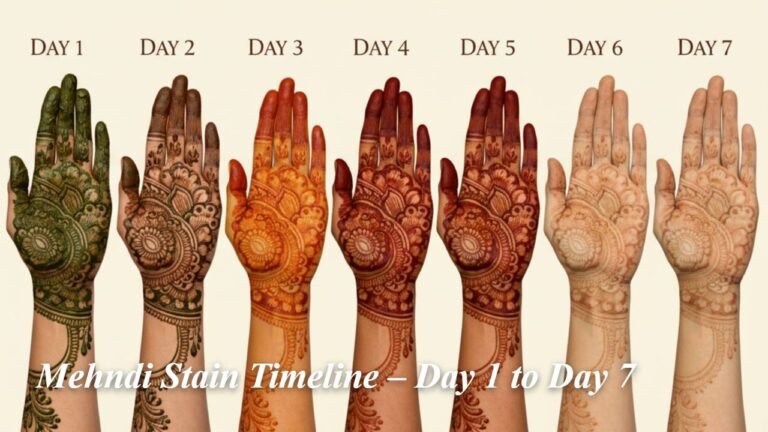
However, the stain still appears bright orange. Oxygen exposure darkens it into brown or maroon tones over 24–48 hours.
Water during this oxidation window:
- Rehydrates skin surface
- Weakens dye binding
- Reduces depth of stain
Dry removal protects oxidation and strengthens final color.
Buy Mehndi Cones Pack of 24 – Natural, Organic & Dark Stain
Removing Mehndi Without Water: Step-by-Step Professional Technique
Follow these structured steps to ensure optimal results.
Step 1: Allow Proper Drying Time
Before removing paste:
- Keep mehndi on skin for 6–12 hours.
- Bridal mehndi benefits from overnight retention.
- Ensure paste feels fully dry and slightly cracked.
Premature removal reduces dye absorption.
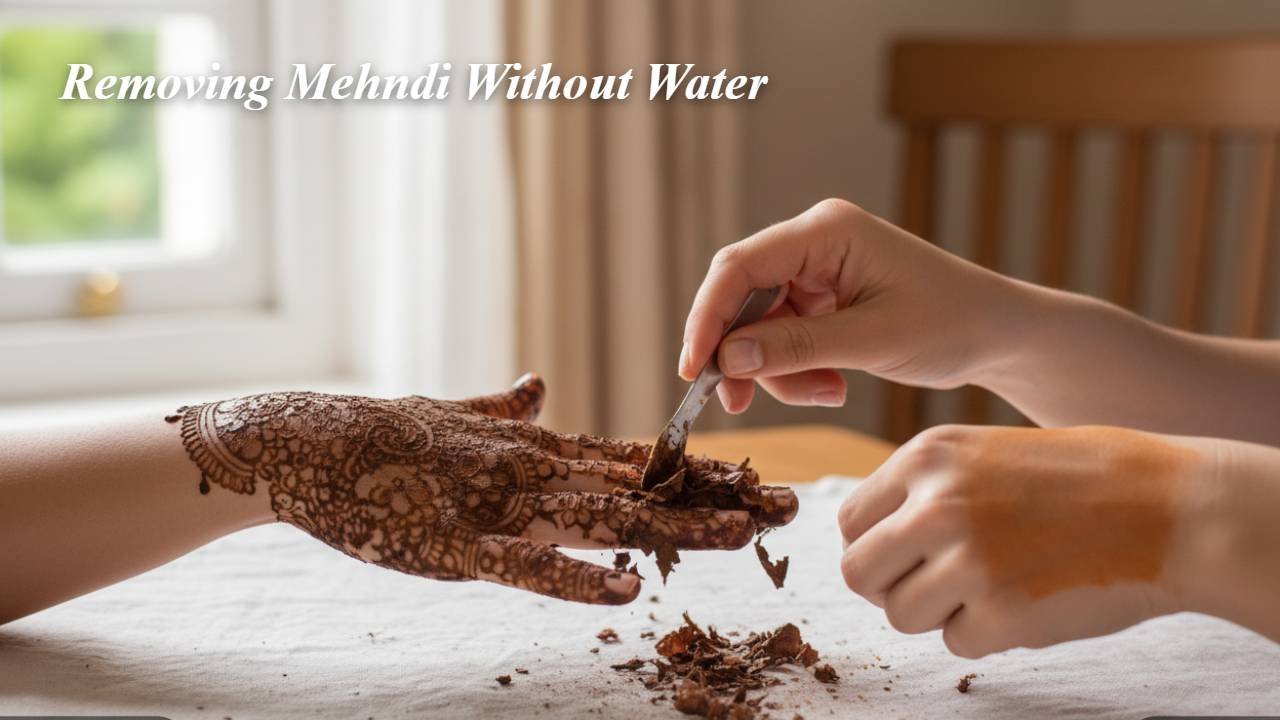
Step 2: Gently Scrape, Do Not Wash
Use a blunt object such as:
- Butter knife
- Spoon edge
- Fingernails
Carefully scrape dried paste off skin.
Avoid aggressive rubbing.
Scraping maintains surface dye while preventing moisture interference.
Step 3: Use Natural Oil Barrier
After scraping:
- Apply mustard oil, coconut oil, or clove-infused oil.
- Massage gently to remove residue.
Oil acts as a protective barrier. It prevents accidental water exposure and supports oxidation.
Step 4: Avoid Water for 24 Hours
This is the most critical rule.
Avoid:
- Hand washing
- Dishwashing
- Bathing without protection
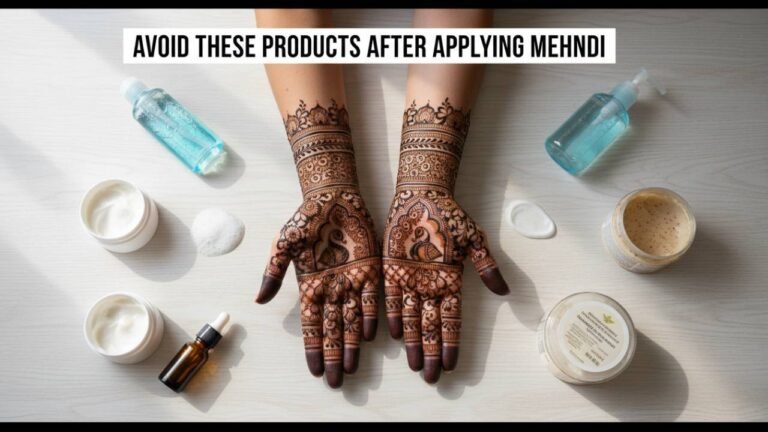
- Sanitizer use
The longer you delay water contact, the darker the stain becomes.
Removing Mehndi Without Water for Bridal Mehndi
Bridal mehndi features dense coverage and intricate detailing. It often includes:
- Mandala centers
- Groom name initials
- Cultural motifs
- Fine line fillers
These elements require maximum stain depth for visual impact.
Brides should:
- Schedule application 24–36 hours before ceremony
- Remove paste late at night
- Avoid water until next evening
Deep maroon bridal stains depend heavily on correct removal technique.
Comparison: Water Removal vs Dry Removal
| Removal Method | Oxidation Support | Stain Depth | Longevity |
|---|---|---|---|
| Washing with water | Weak | Light orange-brown | Short |
| Dry scraping only | Strong | Deep brown | Long |
| Scraping + oil | Very strong | Rich maroon | Extended |
Removing mehndi without water consistently produces stronger results.
Removing Mehndi Without Water in Different Design Styles
Indian Bridal Style
Dense paste retains moisture longer. Dry removal preserves maximum dye concentration.
Arabic Mehndi Patterns
Bold strokes benefit from controlled removal. Washing too early softens edges.
Minimal Modern Designs
Fine lines fade quickly if exposed to water. Dry technique protects clarity.
Each style demands careful handling during removal.
Cultural History of Dry Mehndi Removal
Traditional mehndi ceremonies rarely involved washing immediately after paste removal. Women often:
- Scraped paste late at night
- Applied oil
- Avoided morning washing
Cultural symbolism emphasized patience and protection. Modern convenience habits changed this practice.
Returning to traditional dry removal improves modern stain outcomes.
Removing Mehndi Without Water in Different Climates
Climate influences drying time and oxidation.
Dry Winter Climate
- Paste dries faster
- Dry removal works easily
- Oil barrier becomes essential
Humid Monsoon Climate
- Paste stays moist longer
- Wait extra time before scraping
- Avoid additional moisture exposure
Adjust technique based on environment.
Common Mistakes While Removing Mehndi Without Water
Avoid these frequent errors:
- Scraping too early
- Peeling paste forcefully
- Washing small residue spots
- Using wet cloth to clean surface
Even minor water contact reduces stain potential.
Removing Mehndi Without Water vs Steam Exposure
Some people take clove steam before removal. Steam adds warmth but also moisture.
Steam should only be used during semi-dry stage. Once paste fully dries, focus on dry scraping.
Steam after removal does not help oxidation.
Dry technique remains safer and more predictable.
Skin Type and Removal Impact
Skin composition affects stain performance.
| Skin Type | Reaction to Dry Removal | Oxidation Response |
|---|---|---|
| Dry Skin | Excellent dye retention | Strong darkening |
| Normal Skin | Stable | Consistent |
| Oily Skin | Slightly weaker binding | Needs strict water avoidance |
| Sweaty Skin | Higher smudge risk | Requires careful timing |
Understanding skin type improves aftercare recommendations.
Removing Mehndi Without Water for Professional Artists
Professional mehndi artists must educate clients clearly.
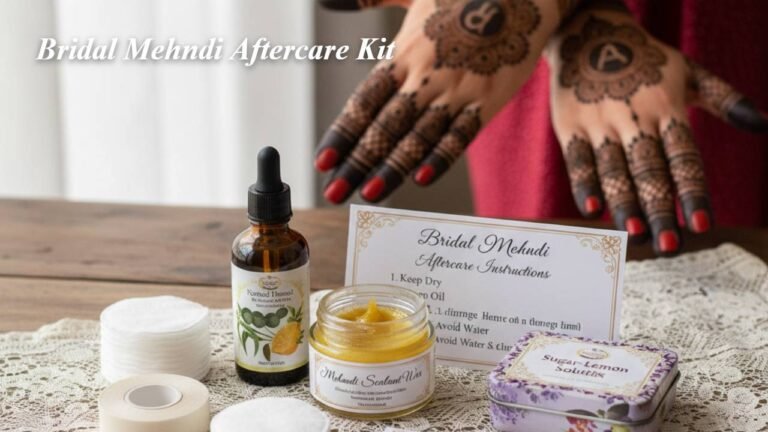
Provide written aftercare including:
- Dry scraping instructions
- Oil application guidance
- 24-hour water avoidance rule
- Safe bathing tips
Clear communication builds trust and ensures consistent results.
Long-Term Benefits of Removing Mehndi Without Water
Proper technique leads to:
- Deeper stain color
- Longer-lasting design
- Strong contrast in bridal photography
- Reduced patchiness
- Enhanced cultural authenticity
Correct removal enhances the entire mehndi experience.
Removing Mehndi Without Water: Advanced Professional Tips
For expert-level results:
- Wrap design lightly with breathable tape overnight.
- Remove paste early morning using dry method.
- Apply oil immediately.
- Avoid soap for 48 hours if possible.
- Use gloves during unavoidable water tasks.
Advanced discipline produces bridal-quality stains consistently.
Oxidation Timeline After Dry Removal
| Time After Removal | Expected Color |
|---|---|
| Immediately | Bright orange |
| 12 hours | Light brown |
| 24 hours | Medium brown |
| 48 hours | Deep maroon-brown |
Dry removal supports uninterrupted oxidation.
Frequently Asked Questions
1. How many hours should mehndi stay before dry removal?
Keep paste on for at least 6–10 hours. Bridal designs benefit from overnight retention.
2. Can I wipe residue with a damp cloth?
No. Even small moisture exposure reduces stain depth.
3. What oil is best after removing mehndi without water?
Mustard oil, coconut oil, or clove-infused oil create effective protective barriers.
4. What happens if I accidentally wash hands early?
Stain may remain lighter and fade faster due to interrupted oxidation.
5. Is dry removal necessary for Arabic mehndi too?
Yes. All styles benefit from removing mehndi without water to preserve color intensity.
Final Thoughts
Removing Mehndi Without Water protects the most critical stage of stain development. It strengthens oxidation, preserves dye binding, and ensures richer bridal tones.
Professional artists treat removal as seriously as application. Small discipline changes create dramatic improvements in color depth.
Explore premium-quality cones and expert aftercare solutions at pinsumehndiart.in to achieve consistently darker, longer-lasting mehndi results every time.
More Design Inspiration