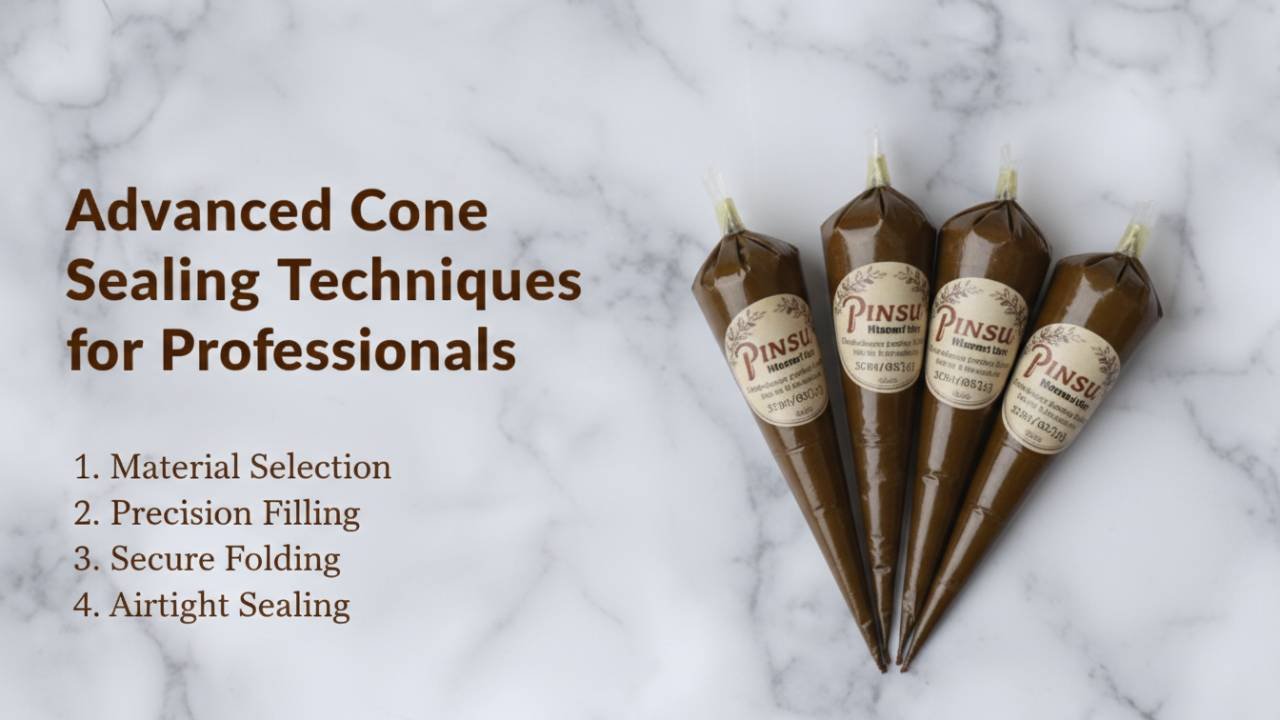
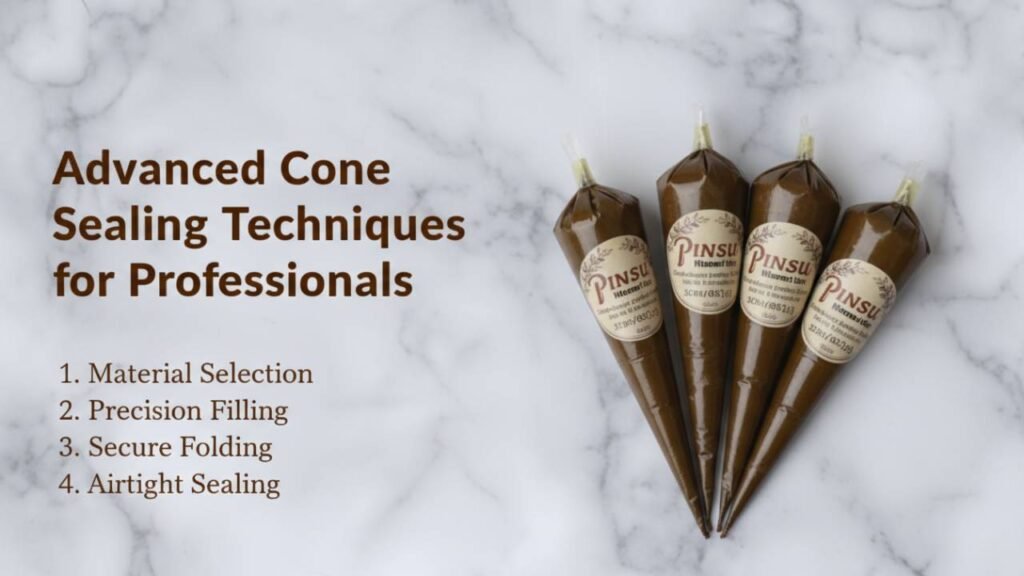
Advanced Cone Sealing Techniques for Professionals determine whether a mehndi cone performs flawlessly or fails mid-design. Many artists focus on rolling precision and paste quality. However, sealing plays an equally critical role in pressure control, paste stability, and design accuracy.
A poorly sealed cone causes leakage, air entry, pressure imbalance, and interrupted henna flow. Bridal mehndi, Arabic patterns, and intricate jaali work demand uninterrupted control. Professional cone sealing ensures that performance remains consistent from the first stroke to the final fingertip detail.
Master this with Professional Cones
The same products used in this guide are available in our shop.
This comprehensive guide explores structural mechanics, sealing variations, pressure dynamics, cultural workflow impact, and professional-level improvements.
Why Sealing Matters in Professional Mehndi Work
Cone sealing locks internal pressure.
Inside this Guide:
Improper sealing results in:
- Paste leaking from the back
- Air entering during application
- Sudden pressure bursts
- Uneven line thickness
- Reduced control during intricate work
Bridal mehndi involves long hours of detailing. Arabic floral trails require steady movement. Advanced cone sealing protects both.
Buy Mehndi Cones Pack of 24 – Natural, Organic & Dark Stain
Professional artists treat sealing as a technical discipline.
Understanding Pressure Mechanics in Mehndi Cones
A mehndi cone operates as a controlled pressure chamber.
When you squeeze:
- Pressure moves downward
- Paste exits through the tip
- Internal air compresses
If the back is loosely sealed, air enters and disrupts balance.
Buy Mehndi Cones Pack of 24 – Natural, Organic & Dark Stain
Advanced Cone Sealing Techniques for Professionals stabilize internal pressure by eliminating weak points at the closure.
Advanced Cone Sealing Techniques for Professionals – Core Methods
Different sealing styles exist for different workloads.
1. Standard Fold-and-Tape Seal
Most common method.
Process:
- Push paste downward
- Fold top twice
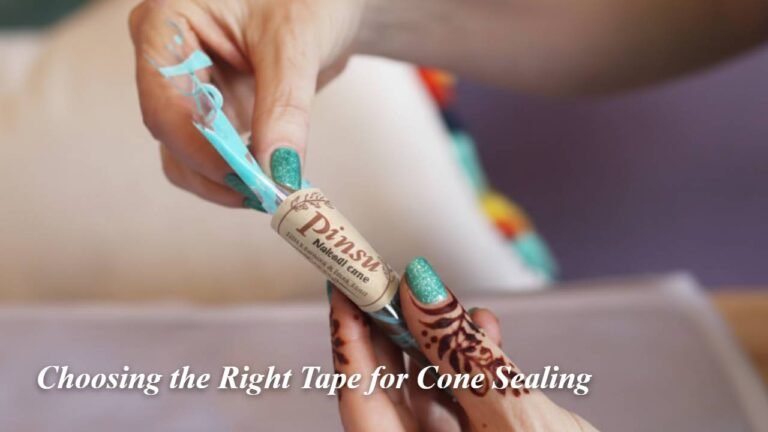
- Apply tape tightly
- Ensure no side gaps
This method works for general Arabic and festive bookings.
2. Double Compression Seal
Preferred for bridal mehndi.
Steps:
- Press paste fully downward
- Compress top to remove air
- Fold three times
- Apply double-layer tape
- Press seam firmly
Double compression minimizes air movement during long sessions.
3. Rubber Band Lock Seal
Ideal for high-volume bookings.
Process:
- Fold top securely
- Wrap strong rubber band
- Add minimal tape reinforcement
This technique provides flexibility during fast-paced work.
4. Heat-Assisted Seal (Advanced Method)
Used by experienced professionals.
Method:
- Fold tightly
- Use mild heat tool
- Lightly compress plastic edges
Heat sealing strengthens closure durability.
Caution: Excess heat damages plastic and paste.
Comparison of Sealing Techniques
| Technique | Best For | Durability | Pressure Stability | Skill Level |
|---|---|---|---|---|
| Fold & Tape | Basic bookings | Moderate | Stable | Beginner |
| Double Compression | Bridal mehndi | High | Very Stable | Advanced |
| Rubber Band Lock | Bulk work | High | Stable | Intermediate |
| Heat-Assisted | Premium work | Very High | Excellent | Professional |
Advanced Cone Sealing Techniques for Professionals favor double compression and reinforced seals.
Advanced Cone Sealing Techniques for Professionals in Bridal Mehndi
Bridal designs include:
- Mandala grids
- Dulha-dulhan portraits
- Fine mesh jaali patterns
- Cultural symbolism motifs
- Full-arm coverage
These require:
- Steady pressure
- No air entry
- No paste leakage
Double compression sealing ensures consistency across extended application sessions.
Bridal work leaves no margin for mechanical failure.
Impact of Sealing on Henna Application Techniques
Sealing directly affects:
- Line thickness control
- Curve smoothness
- Negative space precision
- Flow rhythm
In Arabic mehndi, floral strokes must glide continuously. Poor sealing interrupts rhythm and breaks flow consistency.
Advanced Cone Sealing Techniques for Professionals protect artistic execution.
Common Professional Sealing Mistakes
Even experienced artists make subtle errors.
Frequent issues include:
- Overfilling cones
- Folding without removing air
- Using weak tape
- Ignoring seam alignment
- Storing cones horizontally
Air trapped during sealing expands under pressure.
Precision requires disciplined sealing habits.
Environmental Factors Affecting Seal Integrity
Temperature and humidity influence seal strength.
| Condition | Impact | Adjustment |
|---|---|---|
| High humidity | Tape loosens | Use stronger adhesive |
| Extreme heat | Plastic softens | Store upright |
| Cold environment | Paste thickens | Compress firmly before sealing |
Advanced Cone Sealing Techniques for Professionals include environmental awareness.
Material Selection for Strong Sealing
Cone material affects seal durability.
Thin cellophane:
- Rolls tightly
- Seals compactly
- Reduces air space
Thick plastic:
- Difficult to compress
- Leaves air gaps
- Weakens fold strength
Professional artists choose high-quality plastic to support effective sealing.
Air Removal Before Sealing
Removing air is critical.
Procedure:
- Hold cone upright
- Gently tap downward
- Press paste toward tip
- Eliminate visible air pockets
- Then fold
Skipping this step compromises even the best sealing method.
Advanced Cone Sealing Techniques for Professionals – Batch Preparation Strategy
Professional artists often prepare cones in batches.
Best practices include:
- Prepare cones 12–24 hours before booking
- Store upright in airtight container
- Avoid stacking horizontally
- Inspect seals before use
- Test flow on tissue
Batch sealing requires consistency.
Quality control prevents mid-session failures.
Cultural Significance of Technical Precision
Mehndi is not casual decoration.
It carries deep symbolism in Indian, Pakistani, and Middle Eastern weddings.
Peacock motifs represent beauty.
Lotus patterns symbolize purity.
Mandala circles reflect unity.
Advanced sealing ensures these sacred elements appear flawless.
Respect for craft reflects respect for tradition.
Performance Comparison: Weak Seal vs Advanced Seal
| Feature | Weak Seal | Advanced Seal |
|---|---|---|
| Back Leakage | Common | Rare |
| Air Entry | Frequent | Minimal |
| Pressure Balance | Unstable | Controlled |
| Application Confidence | Low | High |
| Bridal Suitability | Risky | Reliable |
Professional credibility depends on mechanical reliability.
Integrating Sealing with Cone Rolling and Cutting
Sealing works alongside:
- Tight cone rolling
- Proper tip cutting
- Correct paste consistency
A perfectly sealed cone fails if rolling is loose.
Advanced Cone Sealing Techniques for Professionals complete the preparation system.
Troubleshooting Guide for Professionals
| Problem | Likely Cause | Solution |
|---|---|---|
| Paste leaks from back | Weak fold | Reinforce double compression |
| Sudden burst flow | Air trapped | Remove air before sealing |
| Tape loosens mid-session | Humidity | Use stronger tape |
| Cone collapses | Overfilled | Leave space before sealing |
Systematic troubleshooting improves efficiency.
Long-Term Benefits of Mastering Advanced Sealing
Artists who refine sealing techniques experience:
- Reduced cone wastage
- Faster execution speed
- Improved bridal portfolio quality
- Higher client satisfaction
- Greater workflow confidence
Professionalism reflects in preparation discipline.
Expert Workflow Checklist
Before every session:
- Prepare smooth paste
- Roll tightly
- Remove air
- Apply double compression seal
- Test flow
- Store properly
Consistency builds mastery.
Frequently Asked Questions
1. Which sealing technique works best for bridal mehndi?
Double compression sealing provides maximum pressure stability for long bridal sessions.
2. Can poor sealing affect stain darkness?
Indirectly yes. Inconsistent flow may alter paste thickness, affecting stain depth.
3. Is heat-assisted sealing safe?
It can strengthen closure when used carefully, but excessive heat damages plastic.
4. How much space should I leave before sealing?
Leave approximately one inch at the top to allow proper folding and pressure control.
5. Should I seal cones immediately after filling?
Remove air first, then seal carefully to prevent internal pressure imbalance.
Final Thoughts
Advanced Cone Sealing Techniques for Professionals elevate mehndi artistry beyond basic preparation. Mastering sealing ensures stable pressure, smooth flow, and reliable performance during bridal and Arabic applications.
Technical precision behind the scenes defines visible perfection on the skin. Refine your sealing method today and experience smoother execution, stronger control, and flawless mehndi delivery in every design you create.
More Design Inspiration