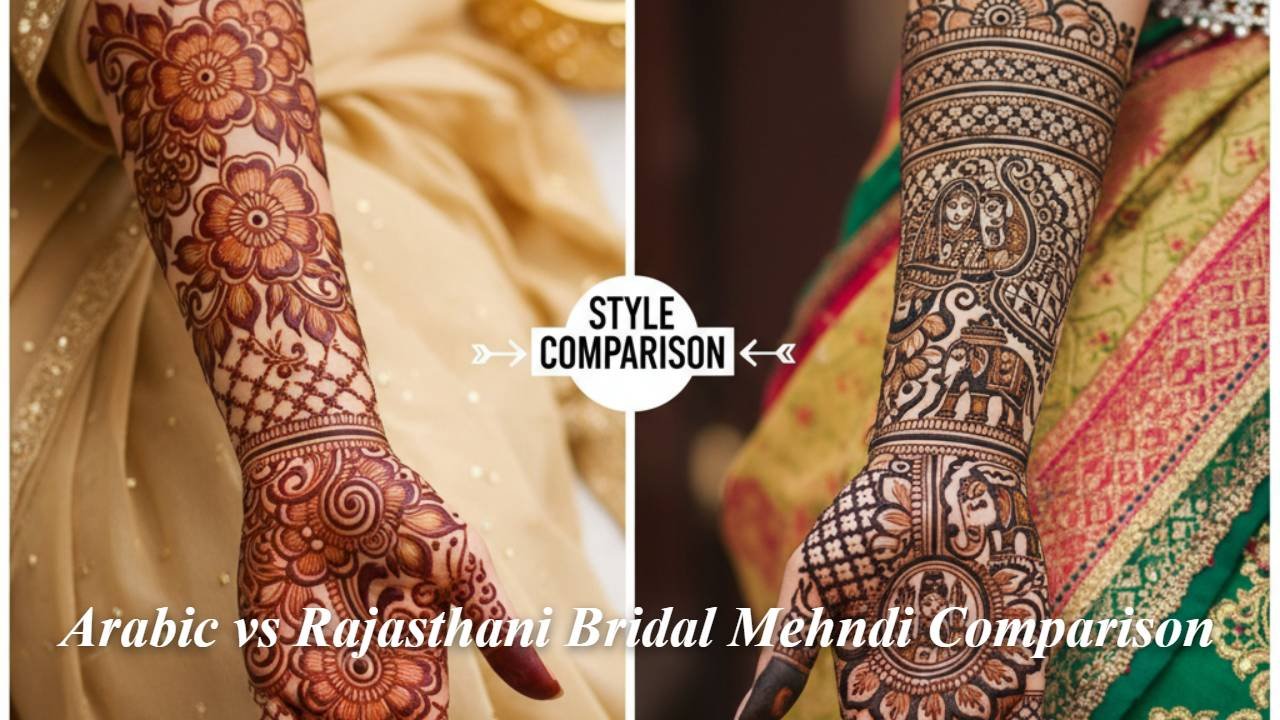
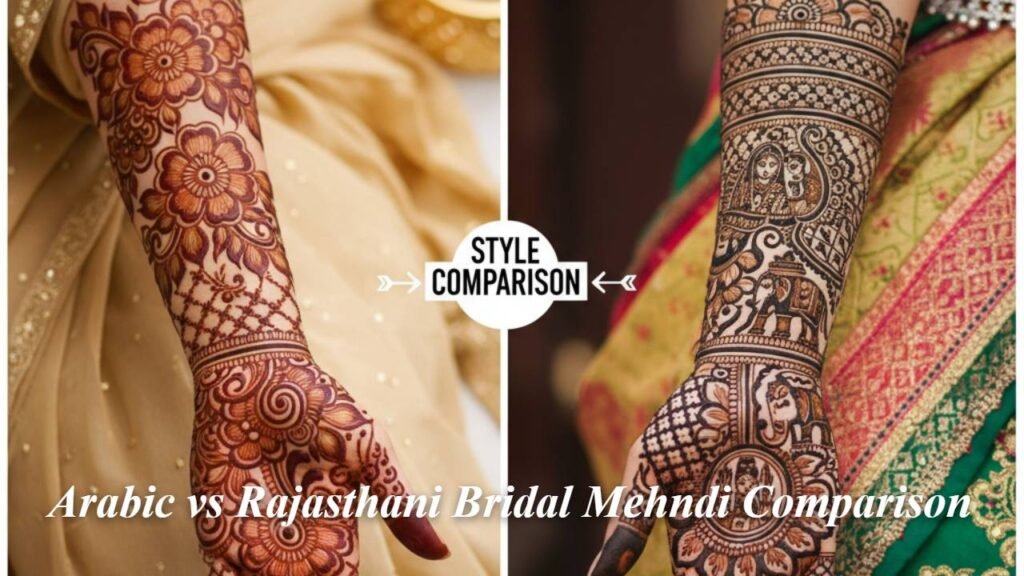
Arabic vs Rajasthani Bridal Mehndi Comparison is one of the most common questions brides ask during wedding planning. Both styles are stunning. Both carry cultural value. Yet they differ dramatically in density, symbolism, time commitment, and visual impact.
Choosing between these two iconic bridal mehndi styles requires more than aesthetic preference. You must consider outfit coordination, ceremony scale, application time, stain expectations, and personal comfort.
Master this with Professional Cones
The same products used in this guide are available in our shop.
This detailed guide breaks down their history, motifs, technical execution, and practical wedding considerations so you can make an informed decision.
Cultural Origins Behind Both Styles
Understanding heritage helps clarify stylistic differences.
Inside this Guide:
Arabic Bridal Mehndi Origins
Arabic mehndi developed across Middle Eastern regions. It emphasizes:
- Flowing floral vines
- Bold leaf strokes
- Negative space balance
- Asymmetrical elegance
Arabic designs focus on visual fluidity rather than dense coverage.
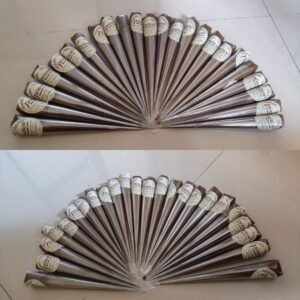
Buy Mehndi Cones Pack of 24 – Natural, Organic & Dark Stain
Rajasthani Bridal Mehndi Origins
Rajasthani mehndi reflects royal heritage and desert artistry. It is known for:
- Dense storytelling panels
- Intricate jaali (net) work
- Dulha-dulhan portraits
- Mandala-centered palms
Rajasthani bridal mehndi symbolizes prosperity, tradition, and grandeur.
This foundational contrast defines the Arabic vs Rajasthani Bridal Mehndi Comparison.
1. Design Density Differences
The first major distinction lies in coverage intensity.

Buy Mehndi Cones Pack of 12 – Natural, Organic & Dark Stain
Arabic Style Density
- Medium to light coverage
- Open spaces between patterns
- Flowing structure
Arabic bridal mehndi leaves visible skin areas for contrast.
Rajasthani Style Density
- Heavy full-hand coverage
- Layered detailing
- Minimal empty space
Rajasthani bridal mehndi often extends to elbows and sometimes beyond.
Density Comparison Table
| Feature | Arabic Bridal Mehndi | Rajasthani Bridal Mehndi |
|---|---|---|
| Coverage | Medium | Heavy |
| Negative Space | Prominent | Minimal |
| Visual Impact | Elegant & modern | Rich & traditional |
| Application Time | 3–5 hours | 6–8+ hours |
Density significantly impacts comfort and scheduling.
2. Motif & Symbolism Variation
Motif selection reflects cultural values.
Arabic Motifs
- Floral vines
- Rose patterns
- Leaf trails
- Curved strokes
Arabic designs prioritize artistic flow over narrative symbolism.
Rajasthani Motifs
- Dulha-dulhan portraits
- Royal processions
- Peacocks
- Paisleys
- Temple elements
Rajasthani bridal mehndi often tells a wedding story across both hands.
Symbolic richness strongly defines the Arabic vs Rajasthani Bridal Mehndi Comparison.
3. Symmetry & Structure
Arabic designs frequently embrace asymmetry.
Patterns may flow diagonally across the hand.
Rajasthani designs emphasize symmetry.
Both hands often mirror each other with structured panels.
Symmetry choice influences bridal photography.
4. Application Time & Comfort
Time commitment differs significantly.
Arabic Bridal Application
- 3 to 5 hours
- Suitable for minimal ceremonies
- Less physical strain
Rajasthani Bridal Application
- 6 to 9 hours
- Requires extended sitting
- Demands patience
Brides must consider energy levels when reviewing the Arabic vs Rajasthani Bridal Mehndi Comparison.
5. Outfit Coordination
Outfit style influences design selection.
Arabic Bridal Mehndi Works Best With:
- Pastel lehengas
- Indo-western gowns
- Minimal jewelry styling
- Contemporary wedding themes
Rajasthani Bridal Mehndi Pairs Well With:
- Heavy embroidered lehengas
- Traditional red bridal wear
- Royal jewelry sets
- Grand wedding décor
Styling alignment enhances overall visual harmony.
6. Stain Appearance & Visual Depth
Dense designs naturally appear darker due to concentrated dye coverage.
Rajasthani bridal mehndi often looks richer because of heavy shading.
Arabic designs may appear lighter visually, even if stain depth is strong.
Stain darkness depends more on:
- Henna quality
- Oxidation time
- Aftercare routine
Premium organic bridal cones enhance both styles equally.
7. Modern Fusion Trends
Many brides now combine both styles.
Fusion bridal mehndi may include:
- Arabic vine flow on one side
- Rajasthani storytelling panel on the other
- Balanced density variations
This hybrid approach reflects evolving wedding aesthetics.
Technical Skill Requirements
Rajasthani bridal mehndi requires:
- Micro-detail precision
- Advanced shading
- Perfect symmetry
Arabic bridal mehndi demands:
- Controlled line flow
- Balanced spacing
- Clean curvature
Both styles require professional expertise.
Cultural Significance Comparison
Rajasthani bridal mehndi carries stronger ritual symbolism.
Heavy coverage traditionally represented wealth and celebration.
Arabic bridal mehndi focuses more on visual elegance than ceremonial storytelling.
The Arabic vs Rajasthani Bridal Mehndi Comparison often comes down to cultural preference versus modern styling.
Planning Timeline Considerations
Schedule mehndi two days before the wedding for both styles.
Suggested Timeline
| Day | Task |
|---|---|
| Day -3 | Skin preparation |
| Day -2 | Mehndi application |
| Day -1 | Stain development |
| Wedding Day | Peak color |
Rajasthani designs require more session time, so plan accordingly.
Budget Considerations
Rajasthani bridal mehndi generally costs more due to:
- Extended application time
- Higher detailing complexity
- Portrait inclusions
Arabic bridal mehndi is often slightly more affordable.
Cost varies by artist expertise and location.
Pros and Cons Summary
| Factor | Arabic Bridal | Rajasthani Bridal |
|---|---|---|
| Time Efficiency | Faster | Longer |
| Design Weight | Light-medium | Heavy |
| Cultural Symbolism | Moderate | Strong |
| Comfort Level | High | Moderate |
| Visual Drama | Elegant | Grand |
This comparison simplifies decision-making.
Who Should Choose Arabic Bridal Mehndi?
Choose Arabic style if you:
- Prefer minimalist elegance
- Have limited session time
- Wear modern bridal attire
- Want lighter visual density
Who Should Choose Rajasthani Bridal Mehndi?
Choose Rajasthani style if you:
- Love traditional grandeur
- Prefer dense coverage
- Value symbolic storytelling
- Have extended ceremony schedule
Understanding your personal aesthetic helps navigate the Arabic vs Rajasthani Bridal Mehndi Comparison.
Common Mistakes Brides Make
Avoid these errors:
- Choosing heavy Rajasthani design without sufficient time
- Selecting Arabic style while wearing ultra-heavy attire
- Ignoring aftercare instructions
- Booking inexperienced artists
Preparation prevents disappointment.
Frequently Asked Questions
1. Which style produces darker stain?
Both can produce deep stain with quality henna and proper aftercare.
2. Is Arabic bridal mehndi less traditional?
It is less dense but still culturally meaningful.
3. How long does Rajasthani bridal mehndi take?
Usually between 6 and 9 hours.
4. Can I mix both styles?
Yes. Fusion bridal mehndi is increasingly popular.
5. Which style is better for modern weddings?
Arabic works well for contemporary themes, while Rajasthani suits grand traditional events.
Final Thoughts
Arabic vs Rajasthani Bridal Mehndi Comparison ultimately reflects personal style, cultural values, and wedding scale. Arabic designs deliver flowing elegance and comfort. Rajasthani designs offer royal richness and storytelling depth. Both styles create stunning bridal visuals when executed by skilled artists using premium-quality cones.
Explore professional bridal mehndi artistry crafted to match your wedding vision and achieve flawless stain with precision and elegance.
More Design Inspiration