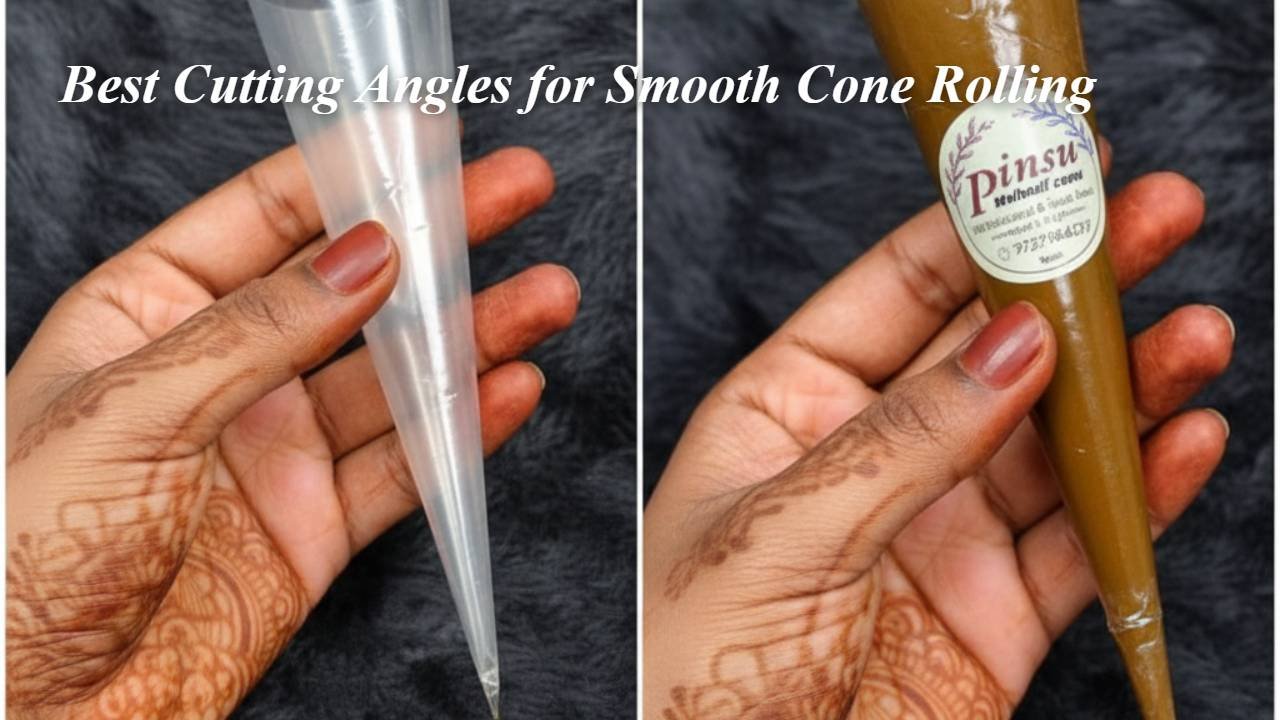
Best Cutting Angles for Smooth Cone Rolling determine whether your mehndi lines glide effortlessly or break mid-pattern. Every professional mehndi artist eventually realizes that cone performance begins long before henna touches skin. Precision cutting directly impacts pressure control, stain consistency, and design accuracy.
Cone angle affects how henna paste flows through the tip. Incorrect angles cause clogging, uneven lines, and inconsistent Arabic curves. Proper cutting enhances bridal detailing, mandala symmetry, and intricate jaal work.
Master this with Professional Cones
The same products used in this guide are available in our shop.
This comprehensive guide explains the science, technique, cultural workflow, and professional standards behind selecting the correct cutting angle for smooth cone rolling.
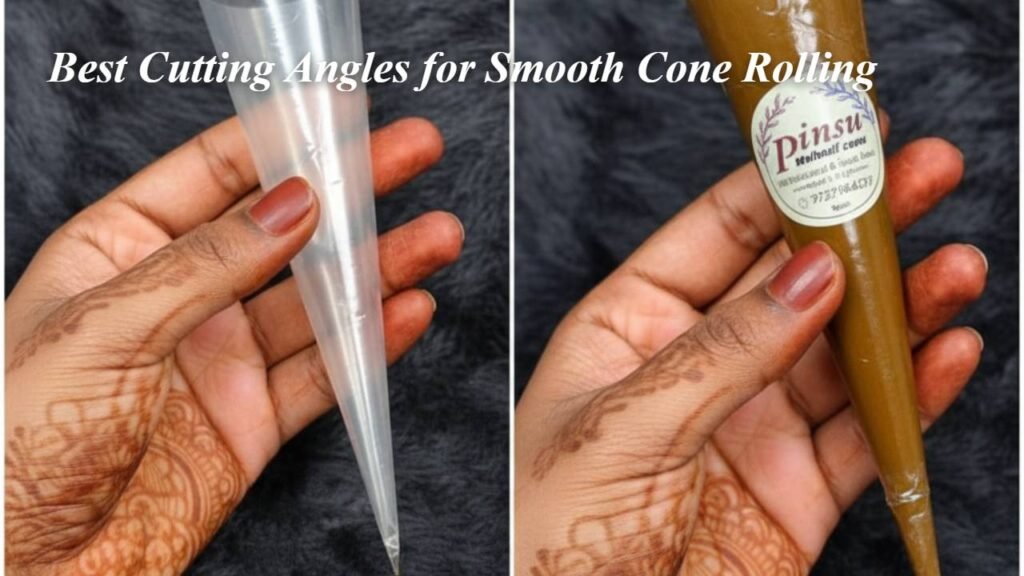
Why Cutting Angle Matters in Mehndi Cone Performance
Mehndi application relies on controlled paste release. Cone geometry shapes that control.
Inside this Guide:
A poorly cut cone results in:
- Sudden paste bursts
- Uneven line thickness
- Frequent wiping
- Broken paisley curves
- Weak negative space control
Angle precision determines:
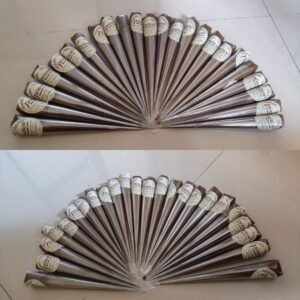
Buy Mehndi Cones Pack of 24 – Natural, Organic & Dark Stain
- Flow stability
- Pressure distribution
- Line sharpness
- Design accuracy
Professional artists treat cone cutting as a technical skill, not a casual step.
Understanding the Structure of a Mehndi Cone
Before discussing the Best Cutting Angles for Smooth Cone Rolling, we must understand cone anatomy.
A standard mehndi cone includes:
- Plastic or cellophane sheet
- Inner paste chamber
- Rolled tip channel
- Final cutting point
The final cut defines the diameter and angle of paste release.
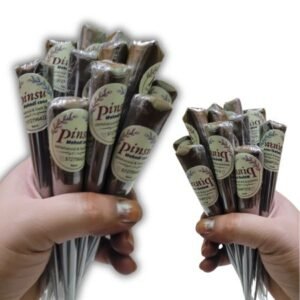
Buy Mehndi Cones Pack of 12 – Natural, Organic & Dark Stain
Best Cutting Angles for Smooth Cone Rolling Explained
Angle measurement refers to the degree at which you cut the cone tip relative to its pointed axis.
Common Cutting Angles in Professional Practice
| Cutting Angle | Flow Type | Best For | Control Level |
|---|---|---|---|
| 30° Angle | Fine, controlled flow | Bridal detailing | Very High |
| 45° Angle | Balanced flow | Arabic patterns | High |
| 60° Angle | Thick, bold flow | Festive designs | Moderate |
| Straight Cut (90°) | Unstable burst flow | Rarely recommended | Low |
Most experienced artists prefer 30° to 45° angles.
Best Cutting Angles for Smooth Cone Rolling in Bridal Mehndi
Bridal mehndi demands microscopic precision.
Design elements include:
- Dulha-dulhan portraits
- Intricate jaali patterns
- Symmetrical mandalas
- Micro florals
- Cultural storytelling motifs
A 30° cutting angle supports:
- Thin, consistent lines
- Controlled pressure
- Detailed meshwork
- Clean negative spacing
Bridal mehndi rarely tolerates thick uncontrolled lines.
Best Cutting Angles for Smooth Cone Rolling in Arabic Designs
Arabic mehndi emphasizes bold florals and flowing diagonals.
Here, a 45° angle works best.
Why?
- Allows slightly thicker lines
- Maintains curve fluidity
- Supports quick strokes
- Prevents breakage in long petals
Arabic patterns depend on rhythm. Balanced angles maintain that rhythm.
Scientific Explanation Behind Angle Performance
Angle affects pressure dynamics inside the cone.
Smaller angles:
- Narrow exit channel
- Increase pressure resistance
- Improve precision
Larger angles:
- Wider exit channel
- Reduce resistance
- Increase paste output
Smooth cone rolling ensures internal paste alignment. Cutting angle finalizes external flow behavior.
Relationship Between Cone Rolling and Cutting Angle
Rolling technique directly affects how well the chosen angle performs.
Improper rolling causes:
- Air pockets
- Uneven paste distribution
- Side leakage
- Flow interruptions
Best practice for smooth cone rolling:
- Roll tightly from one corner
- Maintain consistent pressure
- Avoid internal folds
- Seal securely
Only after proper rolling should you apply the selected cutting angle.
Best Cutting Angles for Smooth Cone Rolling: Common Mistakes
Many artists sabotage their own work.
Frequent errors include:
- Cutting too much at once
- Using blunt scissors
- Ignoring paste thickness
- Adjusting angle mid-application
- Testing directly on client skin
Professional workflow demands test lines on tissue before application.
Paste Consistency and Cutting Angle Compatibility
Henna paste thickness influences angle performance.
| Paste Texture | Recommended Angle | Reason |
|---|---|---|
| Thick bridal paste | 30° | Enhances control |
| Medium consistency | 45° | Balanced flow |
| Slightly thin paste | 30° or smaller | Prevents flooding |
| Very thin paste | Not recommended | Causes spread |
Best Cutting Angles for Smooth Cone Rolling always align with paste viscosity.
Impact on Line Control and Symmetry
Fine lines create elegant symmetry in:
- Rajasthani bridal designs
- Mughal-inspired meshwork
- Traditional Indian motifs
- Contemporary minimalist patterns
Small angle cuts maintain uniformity.
Large cuts distort mandala grids and ruin symmetry balance.
Precision begins at the cone tip.
Cultural Importance of Precision in Mehndi
Mehndi carries symbolic meaning in South Asian weddings.
Peacock motifs represent beauty.
Lotus flowers symbolize purity.
Mandala circles signify unity.
These elements demand clean lines.
Improper cutting angles compromise cultural detailing.
Artists serving Indian, Pakistani, and Middle Eastern clients must respect this precision standard.
Advanced Professional Technique: Micro Angle Adjustment
Experienced artists fine-tune angles subtly.
Instead of major cuts, they:
- Trim 1 mm increments
- Maintain angle consistency
- Check flow under steady pressure
- Adjust only when necessary
This controlled method preserves smooth cone rolling integrity.
Comparing Cutting Angle Performance in Real Scenarios
| Scenario | Recommended Angle | Reason |
|---|---|---|
| Full bridal hand | 30° | Fine detailing |
| Arabic backhand | 45° | Bold flow |
| Quick festive booking | 45°–60° | Speed |
| Practice sessions | 45° | Balanced learning |
| Portrait detailing | 25°–30° | Ultra precision |
Angle selection reflects design intention.
Best Cutting Angles for Smooth Cone Rolling: Tool Selection Matters
Professional results depend on tools.
Use:
- Sharp precision scissors
- Thin plastic sheets
- Consistent rolling pressure
- Fresh henna paste
Avoid:
- Thick packaging plastic
- Dull blades
- Uneven plastic folds
Quality tools enhance angle accuracy.
Environmental Factors That Affect Cutting Performance
Humidity softens cone plastic.
Heat thins henna paste.
Cold thickens paste texture.
Adjust angle slightly based on environment.
For example:
- High humidity may require slightly smaller cuts
- Cold weather may need marginally larger openings
Professional artists adapt dynamically.
Training Exercises to Master Cutting Angles
Improvement requires practice.
Try:
- Line consistency drills
- Mandala repetition grids
- Arabic petal flow exercises
- Controlled pressure tests
Track results after each angle adjustment.
Document which angle supports your natural hand pressure.
Long-Term Benefits of Mastering the Best Cutting Angles for Smooth Cone Rolling
Artists who perfect this skill achieve:
- Consistent bridal portfolios
- Faster execution speed
- Reduced paste wastage
- Improved stain distribution
- Higher client satisfaction
Cone cutting skill elevates your overall brand positioning.
Precision reflects professionalism.
Integration with Modern Mehndi Trends
Contemporary mehndi includes:
- Minimalist finger trails
- Negative space art
- Fusion geometric layouts
- Personalized initials
Fine angle control supports modern design trends without compromising traditional craftsmanship.
Expert Workflow Summary
Professional mehndi artists follow this order:
- Prepare fresh henna paste
- Select quality plastic
- Roll tightly for smooth cone rolling
- Cut at 30° or 45° based on design
- Test on tissue
- Begin application
This systematic approach ensures predictable performance.
Frequently Asked Questions
1. What is the ideal angle for bridal mehndi cones?
A 30° angle provides fine lines and high control for intricate bridal detailing.
2. Can I adjust the cutting angle after starting application?
You can trim slightly, but major adjustments risk uneven line thickness.
3. Why does my cone clog even with correct cutting?
Clogging often results from coarse paste or improper rolling rather than angle selection.
4. Is a straight 90° cut ever recommended?
Straight cuts usually cause unstable flow and are not ideal for professional work.
5. How often should I practice angle control?
Regular practice improves muscle memory and pressure consistency, especially for bridal and Arabic styles.
Final Thoughts
Best Cutting Angles for Smooth Cone Rolling shape the foundation of professional mehndi artistry. Mastering this technical detail transforms application quality, enhances design precision, and elevates bridal performance standards.
Artists who refine cone cutting gain better control, cleaner symmetry, and stronger portfolio consistency.
If you are serious about upgrading your mehndi craftsmanship, start refining your cutting precision today and experience the difference in every single line.
More Design Inspiration