Common Mehndi Aftercare Myths continue to confuse brides, beginners, and even experienced henna lovers. Every wedding season, new advice circulates about what makes mehndi darker, last longer, or look richer. Some suggestions come from tradition. Others spread through social media without scientific backing.
Natural henna staining follows a clear biological and chemical process. Lawsone binds with keratin. Oxidation deepens the color. Skin structure determines intensity. When aftercare myths interfere with this process, stain depth suffers.
Master this with Professional Cones
The same products used in this guide are available in our shop.
This comprehensive guide separates fact from fiction and explains the science behind proper mehndi aftercare for bridal mehndi, Arabic patterns, and traditional Indian designs.
Why Aftercare Matters in Henna Staining
Before addressing Common Mehndi Aftercare Myths, we must understand how staining works.
Inside this Guide:
Henna color development depends on:
- Paste contact duration
- Heat retention
- Oxidation time
- Moisture control
- Water avoidance
After paste removal, the stain remains fragile for 24–48 hours. Proper care during this window determines final depth and longevity.

Buy Mehndi Cones Pack of 12 – Natural, Organic & Dark Stain
Myth 1: Washing Hands Immediately Does Not Affect Color
One of the most widespread Common Mehndi Aftercare Myths suggests that washing hands right after paste removal is harmless.
Reality
Water interrupts oxidation. Oxidation deepens the stain from bright orange to rich brown. Washing too early can:
- Lighten the final color
- Cause uneven fading
- Reduce longevity
| Action | Impact on Stain |
|---|---|
| Scraping paste gently | Preserves depth |
| Washing immediately | Weakens oxidation |
| Waiting 12–24 hours | Maximizes darkening |
Avoid water for at least 12 hours after removal.
Myth 2: More Lemon-Sugar Makes Mehndi Darker
Lemon-sugar sealant helps paste stick longer. However, excessive use can cause problems.
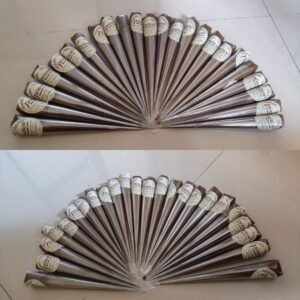
Buy Mehndi Cones Pack of 24 – Natural, Organic & Dark Stain
Reality
Over-saturating the design in humid conditions may:
- Cause smudging
- Delay drying
- Create uneven texture
Balanced application supports adhesion without over-moisturizing.
Myth 3: Keeping Mehndi for 24 Hours Guarantees Black Color
Many believe extreme duration ensures darker results.
Reality
Dye penetration peaks within 6–8 hours. After that, benefits plateau if paste has fully dried.
| Duration | Effect |
|---|---|
| 4 Hours | Moderate stain |
| 6–8 Hours | Strong stain |
| 24 Hours | Minimal additional benefit |
Extended time without proper moisture control may even cause cracking.
Myth 4: Instant Dark Stain Means High Quality
Some chemical cones produce dark color immediately after removal.
Reality
Natural henna always starts orange and darkens gradually. Instant black color often indicates synthetic additives such as PPD, which can cause skin reactions.
Authentic bridal mehndi follows a natural oxidation process.
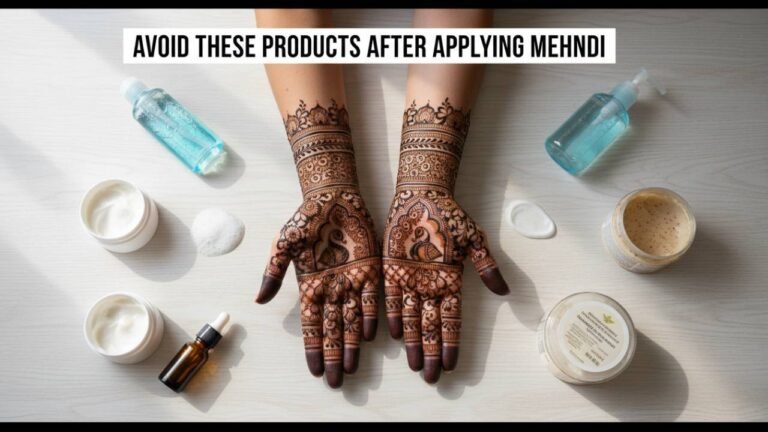
Myth 5: Applying Vicks or Balm Makes Mehndi Darker
This is one of the most repeated Common Mehndi Aftercare Myths.
Reality
Strong balms may create warmth, but excessive use can irritate skin. Controlled heat improves oxidation, but heavy topical products do not magically deepen stain.
Mild natural oils work better.
Myth 6: Cold Weather Does Not Affect Stain
Temperature significantly influences oxidation speed.
Reality
Cold slows molecular activity. Warmth enhances dye migration.
Winter brides often need:
- Clove steam
- Warm room temperature
- Protective overnight care
Ignoring temperature reduces depth.
Myth 7: Mehndi Fades Because of Low-Quality Cone Only
While paste quality matters, fading often results from improper aftercare.
Factors Affecting Longevity
- Frequent hand washing
- Friction
- Skin turnover rate
- Exposure to cleaning chemicals
Proper care can extend lifespan up to two weeks.
Myth 8: Scrubbing Faded Areas Restores Color
Some believe exfoliating will reveal darker stain underneath.
Reality
Henna binds to outer skin cells. Scrubbing removes stained cells and accelerates fading.
Avoid exfoliation until stain fades naturally.
Myth 9: Darker Palms Mean Better Aftercare
Many clients compare palm darkness to arm intensity.
Reality
Palms stain darker due to thicker keratin layers and higher heat retention. Arms naturally remain lighter regardless of aftercare.
| Body Area | Typical Depth |
|---|---|
| Palms | Deep brown |
| Soles | Darkest |
| Arms | Medium brown |
| Back of hands | Light-medium |
Biology determines contrast, not care mistakes.
The Science of Oxidation and Aftercare
Understanding oxidation helps debunk Common Mehndi Aftercare Myths.
Immediately after scraping paste:
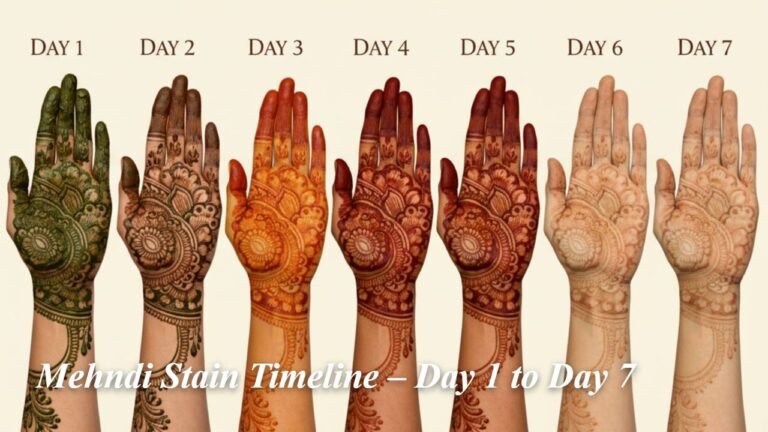
- Stain appears bright orange.
- Oxygen exposure strengthens pigment bonds.
- Color deepens over 24–48 hours.
Water, friction, and cold disrupt this progression.
Bridal Mehndi and Aftercare Discipline
Bridal mehndi includes intricate motifs like:
- Mandalas
- Paisleys
- Floral vines
- Dulha–Dulhan portraits
Dense coverage benefits from:
- Overnight warmth
- Oil protection
- Minimal water exposure
Traditional wedding rituals often reflect practical stain-preserving wisdom.
Arabic Mehndi and Aftercare Differences
Arabic patterns feature flowing curves and open spaces. Thin lines require:
- Controlled drying
- Balanced oiling
- Reduced friction
Because line thickness varies, improper care can create uneven fading.
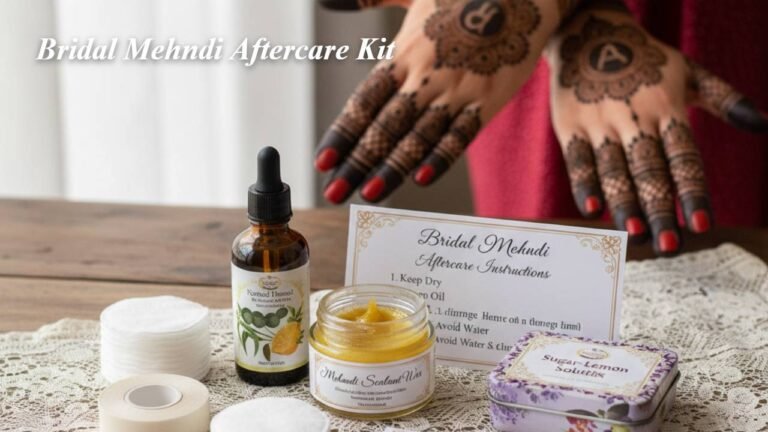
Proper Aftercare Guidelines
To replace myths with facts, follow these evidence-based steps:
Immediately After Removal
- Scrape paste gently.
- Avoid water.
- Apply light natural oil.
First 24 Hours
- Keep hands warm.
- Avoid soap.
- Reduce friction.
Long-Term Maintenance
- Wear gloves during cleaning.
- Avoid harsh sanitizers.
- Moisturize regularly.
Structured care ensures consistent results.
Cultural Beliefs vs Scientific Reality
Many aftercare practices stem from tradition. Some align with science, while others rely on symbolism.
For example:
- Dark stain linked to marital love.
- Overnight wrapping for protection.
- Warm oils before wedding rituals.
While symbolic meaning enriches the experience, scientific understanding strengthens predictable outcomes.
Comparing Myths and Facts
| Myth | Scientific Explanation |
|---|---|
| Washing early is safe | Interrupts oxidation |
| Instant black is natural | Likely chemical additive |
| More sealant equals darker stain | Excess moisture causes smudging |
| Scrubbing revives color | Removes stained skin cells |
| Arms should match palms | Skin structure differs |
Clear information empowers clients.
Professional Artist Recommendations
Experienced mehndi artists prioritize:
- Fresh organic henna cones
- Controlled environment
- Balanced sealant use
- Structured night care routine
Education eliminates anxiety and builds trust.
Frequently Asked Questions
1. How long should I avoid water after mehndi?
Avoid water for at least 12 hours to support oxidation.
2. Does applying oil daily help?
Light oiling protects against water exposure and extends longevity.
3. Is darker stain always better quality?
Not necessarily. Natural variation occurs based on skin type.
4. Why does my mehndi fade faster on arms?
Arms have thinner skin and faster turnover rate.
5. Can I make mehndi black naturally?
Natural henna turns deep brown, not black.
Final Thoughts
Common Mehndi Aftercare Myths often create confusion and unrealistic expectations. Understanding the science of dye binding, oxidation, skin structure, and environmental factors allows you to replace misinformation with proven techniques. Bridal mehndi, Arabic designs, and traditional patterns all benefit from disciplined, evidence-based care.
Choose premium organic henna cones, follow structured aftercare steps, and trust the natural process to achieve beautifully rich, long-lasting results every time.
More Design Inspiration