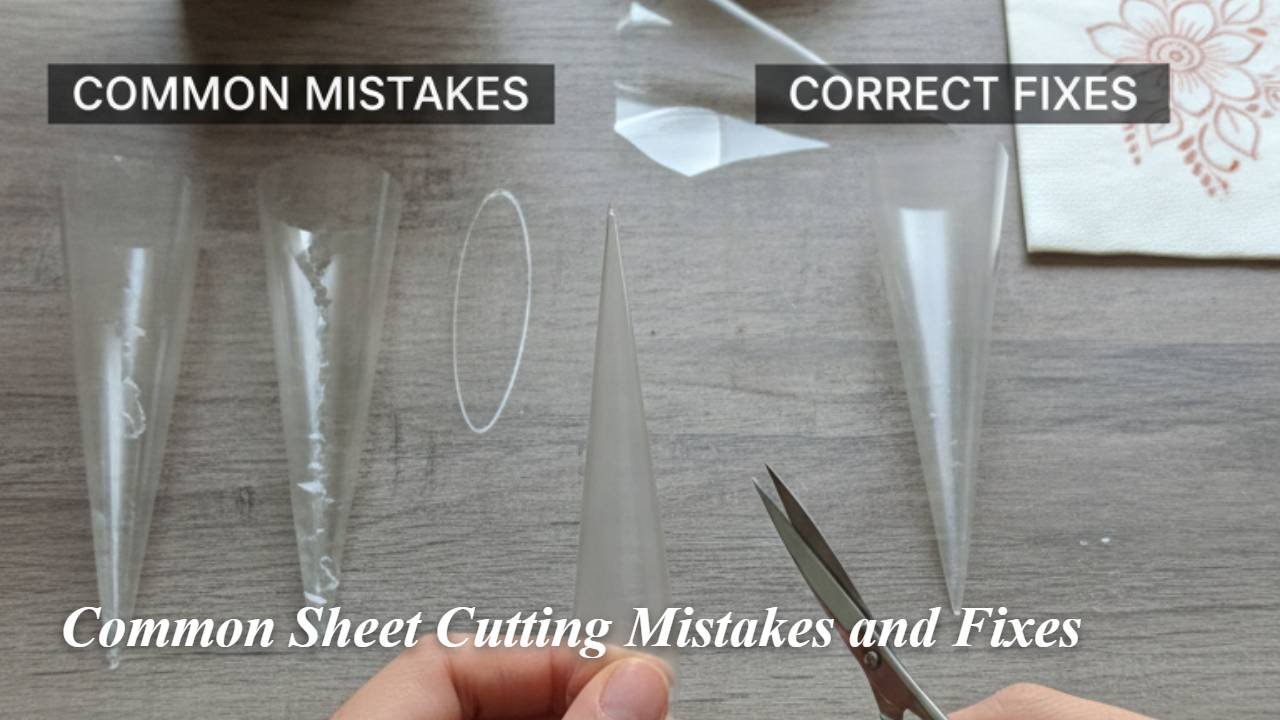
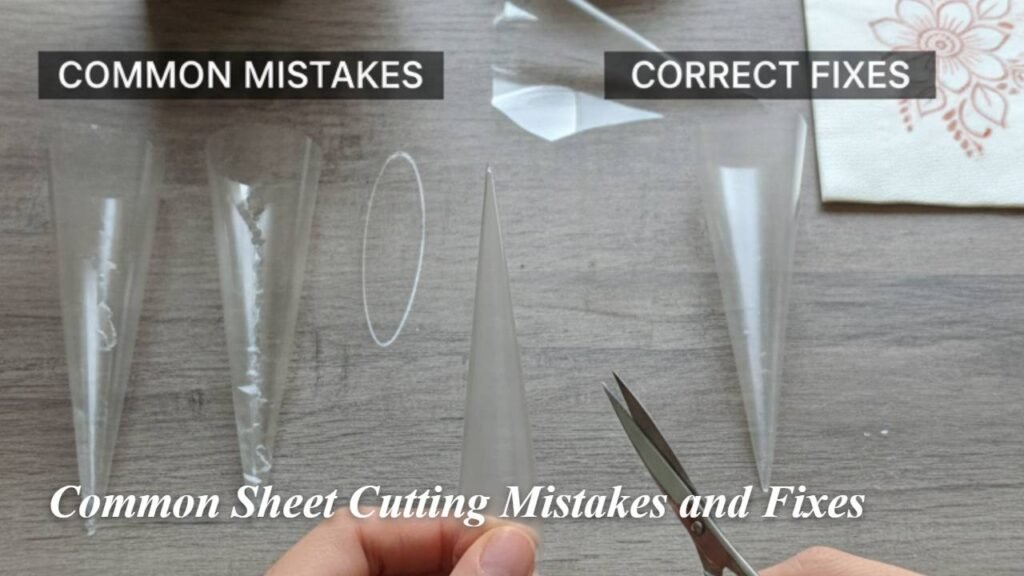
Common Sheet Cutting Mistakes and Fixes directly impact the quality of every mehndi cone you prepare. Many artists focus heavily on paste consistency and cone rolling technique, yet overlook sheet cutting precision. However, improper cutting causes uneven tips, air gaps, unstable seams, and inconsistent henna flow.
For bridal mehndi, Arabic patterns, and intricate jaali meshwork, technical accuracy begins at the sheet level. A poorly cut sheet disrupts symmetry before the design even starts.
Master this with Professional Cones
The same products used in this guide are available in our shop.
This comprehensive guide explores frequent cutting errors, professional corrections, and advanced techniques to ensure flawless cone preparation.
Why Sheet Cutting Precision Matters in Mehndi Art
Cone cutting shapes internal structure.
Inside this Guide:
Improper sheet cutting leads to:
- Blunt cone tips
- Loose rolling tension
- Uneven seam alignment
- Air bubble formation
- Flow instability
Bridal mandala grids demand fine line control. Arabic florals require smooth, uninterrupted strokes. Small structural flaws create visible design defects.

Buy Mehndi Cones Pack of 12 – Natural, Organic & Dark Stain
Professional artistry depends on mechanical precision.
Understanding the Role of Sheet Geometry
Before examining Common Sheet Cutting Mistakes and Fixes, it is important to understand sheet geometry.
Cone structure depends on:
- Diagonal angle accuracy
- Edge symmetry
- Uniform dimensions
- Clean, straight cuts
Even slight misalignment changes the final cone shape.
Buy Mehndi Cones Pack of 24 – Natural, Organic & Dark Stain
Precision cutting creates structural balance.
Common Sheet Cutting Mistakes and Fixes – Incorrect Sheet Size
The Mistake
Cutting sheets too small or too large.
Small sheets:
- Create unstable cones
- Limit paste capacity
- Reduce pressure control
Oversized sheets:
- Cause excessive overlap
- Increase seam bulk
- Complicate tip formation
The Fix
Use standardized dimensions:
| Cone Type | Recommended Sheet Size |
|---|---|
| Standard | 6 x 8 inches |
| Bridal | 7 x 9 inches |
| Practice | 5 x 7 inches |
Consistency improves rolling accuracy.
Common Sheet Cutting Mistakes and Fixes – Uneven Diagonal Cuts
The Mistake
Cutting without alignment guides.
Uneven diagonals cause:
- Crooked cone tips
- Misaligned seams
- Inconsistent pressure channel
The Fix
- Use a ruler for straight cuts
- Mark light guidelines
- Cut on flat surface
- Avoid freehand rushing
Controlled cutting ensures balanced structure.
Common Sheet Cutting Mistakes and Fixes – Blunt Scissors Usage
The Mistake
Using dull scissors that tear edges.
Torn edges:
- Create micro gaps
- Reduce seam strength
- Trap air during rolling
The Fix
- Use sharp precision scissors
- Clean blades regularly
- Replace worn tools
Professional tools elevate preparation quality.
Impact on Bridal Mehndi Applications
Bridal mehndi includes:
- Portrait motifs
- Dense jaali mesh
- Mandala grids
- Cultural symbolism elements
Imprecise sheet cutting distorts cone tip formation. Distorted tips affect line thickness.
Fine detailing demands razor-sharp cone tips.
Structural integrity begins with clean cuts.
Common Sheet Cutting Mistakes and Fixes – Inconsistent Batch Cutting
The Mistake
Cutting sheets individually without measurement.
Batch inconsistency leads to:
- Variable cone size
- Uneven paste capacity
- Workflow inefficiency
The Fix
Adopt batch cutting technique:
- Stack sheets evenly
- Align edges
- Cut multiple sheets together
- Verify uniformity
Standardization enhances professional efficiency.
Common Sheet Cutting Mistakes and Fixes – Ignoring Sheet Thickness
Thickness influences cutting behavior.
| Thickness Level | Cutting Behavior | Risk |
|---|---|---|
| Thin (20–25 micron) | Easy to cut | May tear |
| Standard (30–35 micron) | Balanced | Ideal |
| Thick (40+ micron) | Harder to cut | Uneven edges |
Choosing appropriate thickness simplifies precision cutting.
Material selection impacts performance.
How Sheet Cutting Affects Henna Flow
Cone tip formation directly influences:
- Paste pressure release
- Line consistency
- Negative space clarity
- Curve smoothness
Crooked sheet geometry produces uneven tip channel.
Uneven channel causes sudden paste bursts.
Flow precision begins at sheet preparation.
Common Sheet Cutting Mistakes and Fixes – Rushing the Process
Time pressure during wedding season encourages shortcuts.
Rushed cutting results in:
- Jagged edges
- Measurement errors
- Poor seam overlap
- Weak structural stability
Professional artists schedule preparation time before peak bookings.
Preparation discipline reduces execution stress.
Comparison: Properly Cut vs Poorly Cut Sheets
| Feature | Properly Cut Sheet | Poorly Cut Sheet |
|---|---|---|
| Diagonal Alignment | Symmetrical | Crooked |
| Tip Sharpness | Precise | Blunt |
| Seam Strength | Stable | Weak |
| Air Bubble Risk | Low | High |
| Flow Stability | Consistent | Interrupted |
Visual design quality reflects structural preparation.
Cultural Relevance of Precision
Mehndi symbolizes joy, prosperity, and sacred celebration.
Traditional Indian bridal mehndi showcases:
- Detailed storytelling
- Intricate symbolism
- Balanced symmetry
Sheet cutting precision ensures cultural motifs remain clean and refined.
Respect for craft includes attention to preparation.
Advanced Professional Techniques
Experienced artists enhance sheet cutting through:
- Template tracing
- Pre-marked measurement boards
- Quality control inspection
- Light sanding of rough edges
- Using cutting mats for stability
These small improvements prevent mechanical errors.
Consistency defines professionalism.
Environmental Considerations
Wasted sheets contribute to plastic waste.
Reducing cutting mistakes:
- Minimizes material waste
- Improves sustainability
- Lowers bulk purchasing costs
Efficient preparation supports responsible artistry.
Integration with Cone Rolling and Sealing
Sheet cutting works alongside:
- Tight cone rolling
- Air removal before sealing
- Correct tip trimming
Imprecision at the cutting stage multiplies errors later.
Holistic preparation improves overall cone performance.
Troubleshooting Guide
| Issue | Likely Cause | Correction |
|---|---|---|
| Crooked cone tip | Uneven diagonal | Recut sheet properly |
| Loose seam | Incorrect sheet size | Standardize dimensions |
| Air gaps | Torn edges | Use sharper scissors |
| Paste bursts | Misaligned geometry | Review cutting alignment |
Structured troubleshooting prevents recurring mistakes.
Professional Workflow Checklist
Before rolling cones:
- Verify sheet thickness
- Confirm uniform size
- Inspect edges
- Align diagonal cuts
- Store flat
Routine inspection prevents structural flaws.
Long-Term Benefits of Precision Cutting
Artists who master Common Sheet Cutting Mistakes and Fixes achieve:
- Faster preparation
- Reduced waste
- Cleaner bridal detailing
- Better flow control
- Higher client satisfaction
Technical mastery strengthens brand credibility.
Frequently Asked Questions
1. What is the ideal sheet size for professional mehndi cones?
Standard 6 x 8 inches works for most applications, while bridal work may require slightly larger sheets.
2. Can uneven cutting affect stain darkness?
Indirectly yes. Poor flow control may alter paste thickness and stain consistency.
3. Should beginners use pre-cut sheets?
Pre-cut sheets help early learning, but mastering manual cutting builds professional independence.
4. How often should I replace scissors?
Replace or sharpen scissors once cutting edges begin tearing rather than slicing cleanly.
5. Does sheet thickness influence cutting accuracy?
Yes. Standard thickness sheets provide the best balance between flexibility and clean cutting.
Final Thoughts
Common Sheet Cutting Mistakes and Fixes highlight the importance of technical precision in mehndi artistry. Sheet preparation forms the structural base of every cone, influencing rolling tension, pressure stability, and intricate bridal detailing.
Professional success depends on disciplined preparation habits. Refine your sheet cutting process today and experience smoother flow, sharper tips, and flawless mehndi execution in every design you create.
More Design Inspiration