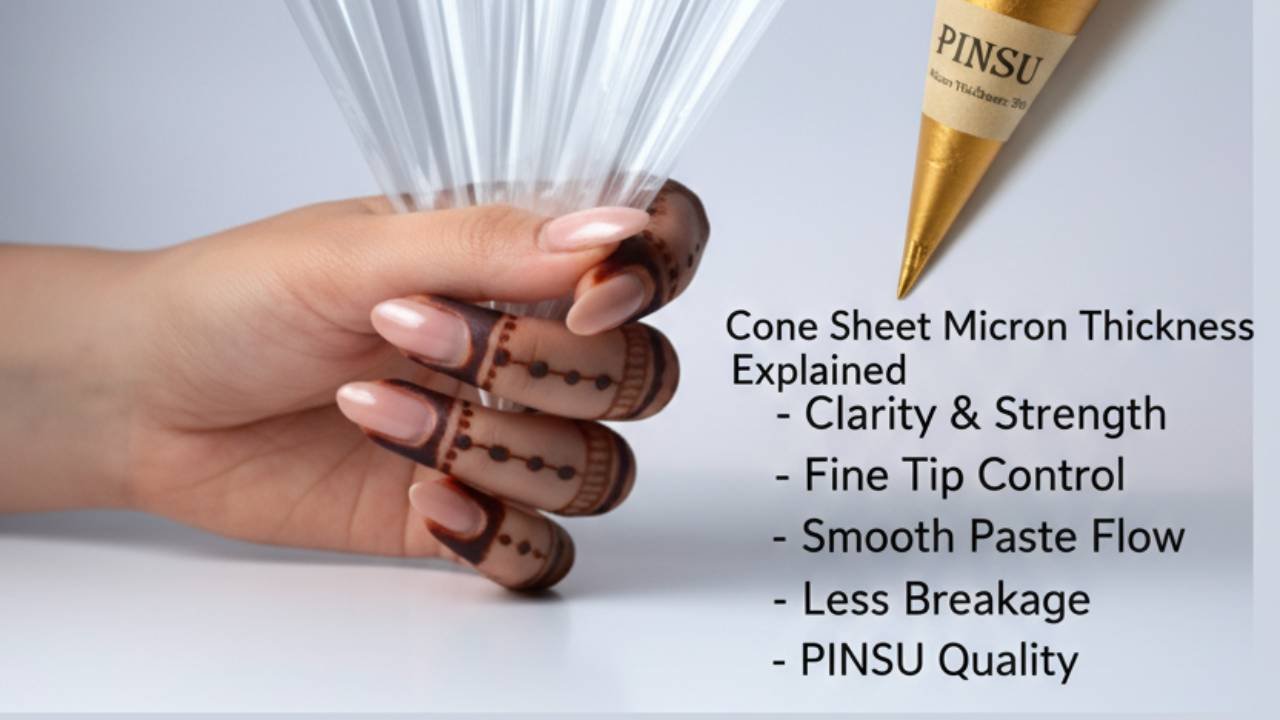
Cone Sheet Micron Thickness Explained is a critical technical topic for serious mehndi artists who want flawless line precision and consistent cone performance. Many artists focus on henna paste quality, rolling technique, and sealing methods. However, sheet thickness measured in microns silently determines pressure stability, tip sharpness, and flow consistency.
Choosing the wrong micron thickness can cause tearing, blunt tips, uneven pressure, and hand fatigue. Bridal mehndi, Arabic patterns, intricate jaali work, and modern minimalist designs all respond differently to sheet thickness.
Master this with Professional Cones
The same products used in this guide are available in our shop.
This comprehensive guide breaks down the science, practical application, performance impact, and professional decision-making behind selecting the correct micron thickness for cone sheets.
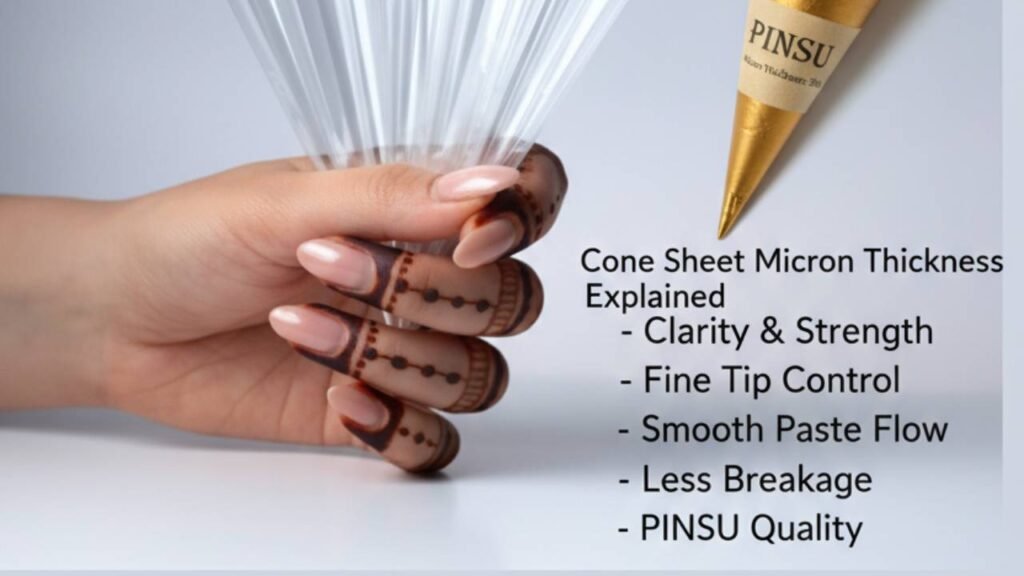
What Does Micron Thickness Mean?
Before diving deeper into Cone Sheet Micron Thickness Explained, it is important to understand the term “micron.”
Inside this Guide:
A micron (µm) equals one-thousandth of a millimeter.
For cone sheets, micron thickness indicates:

Buy Mehndi Cones Pack of 12 – Natural, Organic & Dark Stain
- Material strength
- Flexibility level
- Tear resistance
- Structural stability
Even a 5-micron difference can significantly impact cone behavior.
Common Micron Ranges Used in Mehndi Cones
Most cellophane or plastic sheets used in mehndi cones fall within these categories:
| Micron Thickness | Flexibility | Durability | Typical Use |
|---|---|---|---|
| 20–25 µm | Very flexible | Low | Fine detailing |
| 30–35 µm | Balanced | Moderate | Professional use |
| 40–50 µm | Firm | High | Bold patterns |
| 60+ µm | Very stiff | Very high | Rarely used |
Understanding these ranges forms the foundation of Cone Sheet Micron Thickness Explained.
How Micron Thickness Affects Rolling Precision
Sheet thickness directly influences how tightly you can roll a cone.
Buy Mehndi Cones Pack of 24 – Natural, Organic & Dark Stain
Thin Sheets (20–25 µm)
Advantages:
- Easy to roll tightly
- Sharp tip formation
- Lightweight grip
Limitations:
- Tear risk
- Weak seam strength
- Less durability in humid conditions
Thin sheets are ideal for micro detailing in bridal mehndi.
Medium Thickness (30–35 µm)
Advantages:
- Balanced flexibility
- Strong seam alignment
- Stable pressure control
- Reliable durability
This range remains the industry standard.
Most professional artists prefer this thickness for general use.
Thick Sheets (40–50 µm)
Advantages:
- High tear resistance
- Durable under long pressure
- Suitable for bold Arabic strokes
Limitations:
- Harder to roll tightly
- Slightly blunt tip formation
Thicker sheets reduce risk of collapse but may sacrifice micro precision.
Cone Sheet Micron Thickness Explained for Bridal Mehndi
Bridal mehndi includes:
- Mandala grids
- Dense jaali meshwork
- Dulha-dulhan portraits
- Cultural storytelling elements
Fine detailing requires:
- Stable pressure
- Extremely sharp tips
- Smooth flow
For bridal work:
- 25–30 µm sheets work best
- Tight rolling is essential
- Fine tip cut (25–30° angle) recommended
Precision outweighs extreme durability.
Cone Sheet Micron Thickness Explained for Arabic Patterns
Arabic designs emphasize:
- Bold florals
- Flowing petals
- Diagonal compositions
- Open spacing
Here, durability becomes more important.
Recommended range:
- 30–35 µm
- Slightly larger tip cut (35–45°)
Balanced thickness supports smooth, confident strokes.
Pressure Stability and Micron Thickness
Cone performance depends on internal pressure balance.
Thin sheets:
- Compress easily
- React quickly to squeeze
- Require controlled hand pressure
Thick sheets:
- Resist deformation
- Maintain steady internal structure
- Provide consistent flow under strong squeeze
Understanding this relationship clarifies Cone Sheet Micron Thickness Explained in mechanical terms.
Comparison Table – Precision vs Durability
| Factor | 20–25 µm | 30–35 µm | 40–50 µm |
|---|---|---|---|
| Tip Sharpness | Excellent | Very Good | Moderate |
| Tear Resistance | Low | Medium | High |
| Bridal Suitability | High | Very High | Moderate |
| Arabic Suitability | Moderate | High | Very High |
| Beginner-Friendly | Moderate | High | Moderate |
Balance determines performance.
Environmental Impact on Thickness Behavior
Humidity and heat influence material flexibility.
Thin sheets soften quickly in humid climates.
Thick sheets maintain structure but may feel rigid in cold weather.
Climate awareness supports smarter material selection.
Storage conditions matter as much as thickness.
Grip Comfort and Hand Fatigue
Hand ergonomics vary with micron thickness.
Thin sheets:
- Lightweight
- Comfortable for long sessions
- May require gentle handling
Thick sheets:
- Slightly heavier
- Provide firmer grip
- Reduce collapse risk
Comfort affects artistic flow.
Cost Considerations
Micron thickness influences price.
Thicker sheets often cost more due to higher material use.
However:
- Thin sheets may tear, increasing waste
- Medium thickness offers best cost-to-performance ratio
Bulk purchasing decisions should consider durability and rejection rate.
Cost efficiency aligns with proper thickness choice.
Cultural and Artistic Relevance
Mehndi artistry reflects centuries-old tradition.
Rajasthani bridal designs demand micro precision.
Gujarati motifs emphasize symmetry.
Pakistani jaali meshwork requires controlled line flow.
Arabic patterns celebrate bold fluidity.
Each style benefits from specific thickness selection.
Material choice supports cultural authenticity.
Common Mistakes When Selecting Micron Thickness
Avoid these errors:
- Choosing ultra-thin sheets for bulk bookings
- Using thick sheets for fine bridal detailing
- Ignoring climate factors
- Mixing thickness levels without labeling
- Assuming thicker always means better
Understanding Cone Sheet Micron Thickness Explained prevents performance frustration.
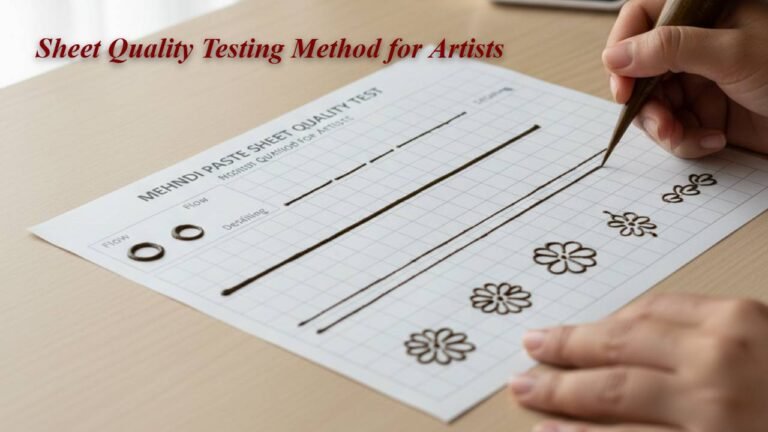
Professional Testing Method
Before committing to large inventory:
- Roll sample cones
- Test fine lines
- Evaluate pressure response
- Check seam durability
- Observe comfort during 20-minute trial
Practical testing ensures reliability.
Integration with Cone Size and Tip Cutting
Micron thickness works alongside:
- Sheet size
- Rolling tightness
- Tip diameter
- Sealing technique
Even perfect thickness fails without proper preparation.
Holistic approach enhances performance.
Long-Term Benefits of Proper Thickness Selection
Artists who master Cone Sheet Micron Thickness Explained experience:
- Consistent line precision
- Reduced cone failures
- Faster execution
- Improved portfolio quality
- Higher client satisfaction
Material discipline supports creative excellence.
Frequently Asked Questions
1. What micron thickness is best for bridal mehndi?
25–30 µm sheets provide sharp tips and fine line control for detailed work.
2. Is thicker sheet always better?
Not necessarily. Thicker sheets improve durability but may reduce tip sharpness.
3. Can thin sheets tear easily?
Yes. Ultra-thin sheets require careful handling and precise rolling.
4. What thickness works best for beginners?
30–35 µm sheets offer the best balance between flexibility and durability.
5. Does thickness affect stain quality?
Indirectly. Stable pressure and consistent flow influence paste placement and stain development.
Final Thoughts
Cone Sheet Micron Thickness Explained reveals how a small technical detail dramatically influences mehndi performance. Thickness affects tip sharpness, pressure control, seam strength, durability, and comfort.
Bridal mehndi, Arabic patterns, and modern minimalist designs each require tailored thickness selection. Choose wisely, test carefully, and refine your preparation process to achieve smoother flow, sharper lines, and consistently professional results in every design you create.
More Design Inspiration