Why Dark Color Claims Can Be Misleading
Dark mehndi color claims attract attention, especially for bridal mehndi and festive designs where deep brown or maroon stains symbolize beauty and prosperity. Many cones advertise “instant dark,” “black in 30 minutes,” or “guaranteed darkest stain.” These promises sound appealing, yet they often ignore the science behind natural henna.
Understanding why dark mehndi color claims can be misleading protects both artists and clients. Deep stain development depends on plant chemistry, skin interaction, oxidation time, and proper aftercare. This comprehensive guide explains the truth behind stain science, marketing exaggeration, and how professionals can identify authentic quality.
Master this with Professional Cones
The same products used in this guide are available in our shop.
The Science Behind Natural Henna Staining
Henna contains a natural dye molecule called lawsone. When applied to skin, lawsone binds with keratin in the outer layer.
The stain develops in stages:
Inside this Guide:
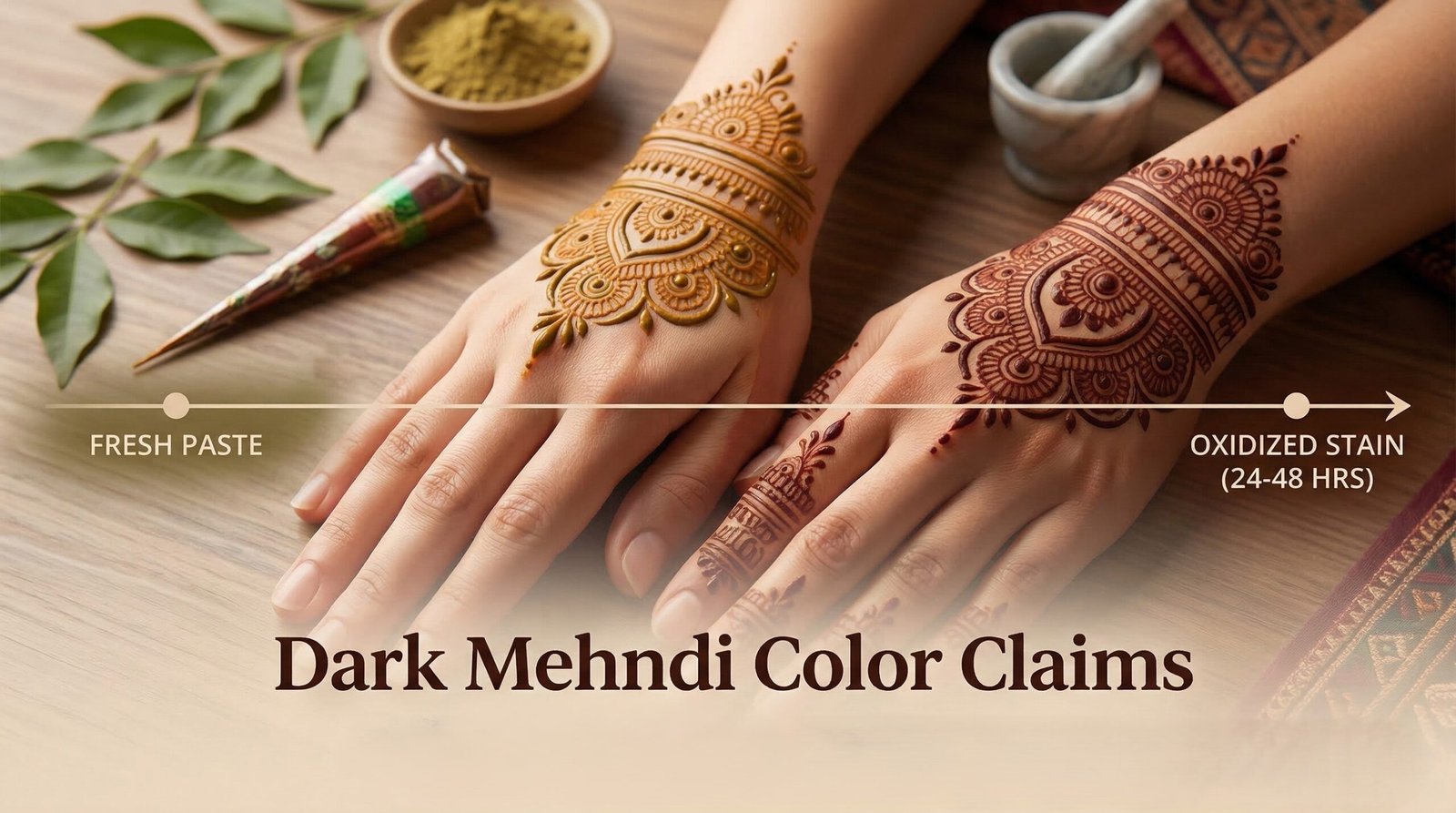
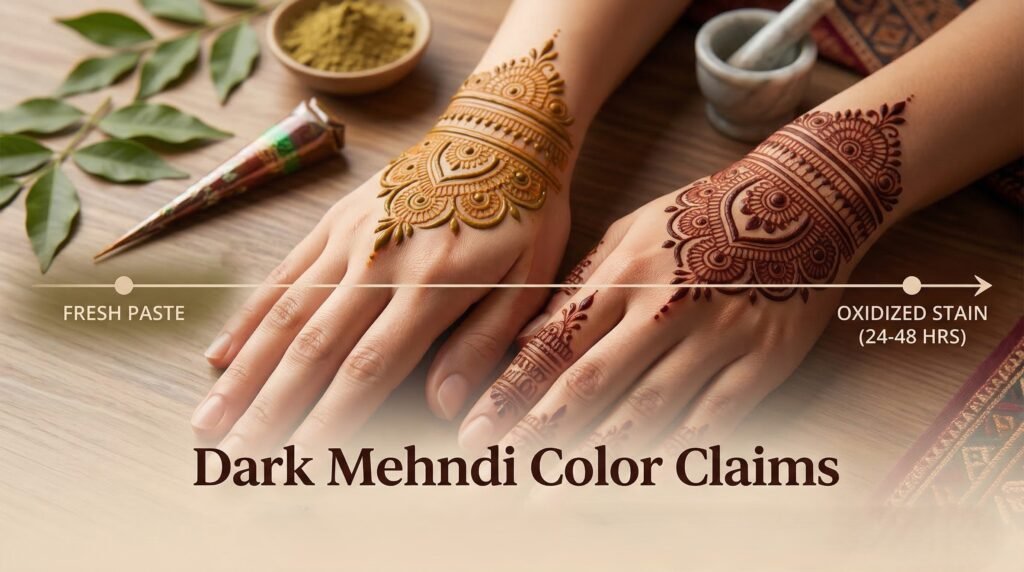
- Bright orange immediately after paste removal
- Orange-brown within 12 hours
- Deep brown or maroon within 24–48 hours
Natural oxidation requires time. Any claim of instant black contradicts henna chemistry.
Dark mehndi color claims often ignore this biological process.
Buy Mehndi Cones Pack of 12 – Natural, Organic & Dark Stain
Instant Dark Promises vs Oxidation Reality
Many cones promise rapid color change. However, natural henna never produces deep brown within one hour.
Oxidation Timeline Comparison
| Time After Removal | Natural Henna | Suspicious Claim |
|---|---|---|
| Immediately | Orange | Dark brown |
| 12 Hours | Medium brown | Already black |
| 48 Hours | Deep maroon | Unchanged |
Dark mehndi color claims promising instant results usually indicate chemical additives.
Chemical Additives Behind False Claims
Some products contain para-phenylenediamine (PPD) or synthetic dyes to create immediate dark color.
These additives may:
Buy Mehndi Cones Pack of 12 – Natural, Organic & Dark Stain
- Cause skin irritation
- Lead to allergic reactions
- Produce unnatural black stains
- Increase long-term sensitivity
Natural henna produces brown tones, not jet black.
Understanding dark mehndi color claims requires awareness of these risks.
The Role of Skin Biology
Stain depth depends on keratin levels in different body areas.
Stain Depth by Body Location
| Area | Expected Color |
|---|---|
| Palms | Deep brown |
| Soles | Very dark |
| Back of hand | Medium brown |
| Arms | Light brown |
Marketing promises rarely explain that stain intensity varies by body location.
No cone guarantees uniform darkness across all skin types.
Freshness vs Marketing Language
Fresh henna powder releases more dye. Old powder produces lighter stains.
However, dark mehndi color claims often focus on packaging slogans rather than production date.
- Manufacturing date
- Batch number
- Proper storage guidance
Freshness matters more than advertising words.
Essential Oils and Dye Penetration
High terpene essential oils improve dye binding.
Quality oils such as:
- Cajeput
- Tea tree
- Lavender (high terpene)
enhance stain development gradually.
Fake marketing may attribute darkness solely to “special secret formula,” ignoring oil science.
Dark mehndi color claims frequently oversimplify the chemistry involved.
Climate and Temperature Influence
Heat enhances stain development. Cold slows oxidation.
Climate Impact Table
| Climate Condition | Effect on Stain |
|---|---|
| Warm & humid | Faster oxidation |
| Cold weather | Slower development |
| Excess heat | Premature dye release |
Marketing claims rarely account for environmental variables.
Even premium cones require proper climate management.
Aftercare Determines Final Color
Proper aftercare includes:
- Keeping paste on 6–8 hours
- Avoiding water for 24 hours
- Applying natural oil
- Maintaining warmth
Without correct aftercare, stain remains lighter.
Dark mehndi color claims ignore user responsibility in achieving final results.
Cultural Symbolism and Color Expectations
In Indian bridal traditions, deep maroon stains symbolize affection and prosperity. Families often associate darker color with positive blessings.
Arabic patterns emphasize bold contrast. Moroccan geometric designs rely on sharp definition.
Emotional expectations make dark mehndi color claims especially powerful marketing tools.
However, authenticity should support tradition, not exploit it.
Powder Quality and Sifting Standards
Fine-sifted henna produces smooth paste and better dye penetration.
Coarse powder reduces:
- Flow consistency
- Stain reliability
- Design clarity
Darkness depends on preparation quality more than label promises.
Shelf Life Myths
Natural henna paste is perishable.
Claims such as:
- “Stays fresh for 12 months at room temperature”
- “No refrigeration required”
often indicate preservatives.
Shelf Life Reality
| Storage Method | Natural Henna Stability |
|---|---|
| Frozen | 3–6 months |
| Refrigerated | 1–2 weeks |
| Room Temperature | Few days in warm climate |
Long shelf life without cooling raises questions.
Bridal Mehndi and Realistic Expectations
Bridal mehndi involves dense detailing and long retention time. Dark stain develops through:
- Proper dye release
- Controlled temperature
- Correct aftercare
Instant dark promises create unrealistic expectations for brides.
Professional artists educate clients about natural oxidation stages.
Design Style and Perception of Darkness
Indian intricate patterns appear darker due to dense filling.
Arabic designs rely on bold outlines and negative space, making mid-tone stains appear stronger.
Perception influences how darkness is interpreted.
Marketing rarely explains this visual factor.
Red Flags in Marketing Language
Watch for:
- “Guaranteed darkest ever”
- “Black in minutes”
- “Permanent stain”
- “Zero aftercare needed”
Exaggerated claims often hide incomplete ingredient disclosure.
Dark mehndi color claims should align with scientific reality.
Professional Evaluation Checklist
Before trusting marketing promises:
- Check ingredient list
- Confirm production date
- Conduct patch test
- Observe oxidation timeline
- Verify supplier credibility
Critical evaluation protects artistry and safety.
Long-Term Brand Trust
Artists who avoid misleading products maintain:
- Consistent stain depth
- Strong bridal portfolios
- Higher client satisfaction
- Professional credibility
Educating clients about realistic stain development builds authority.
Frequently Asked Questions (FAQ)
1. Why does my henna start orange instead of dark brown?
Natural henna oxidizes gradually. Orange is the first stage of normal development.
2. Can any natural cone produce instant black color?
No. Instant black indicates synthetic additives.
3. How long does it take for deep brown color to develop?
Typically 24–48 hours after paste removal.
4. Are darker stains always better?
Deep brown is culturally valued in bridal mehndi, but natural tones vary by skin type.
5. How can I ensure consistent dark results?
Use fresh henna, proper essential oils, correct storage, and follow complete aftercare.
Final Thoughts
Dark mehndi color claims often simplify complex chemistry into attractive slogans. True stain depth depends on fresh henna, proper dye release, skin biology, climate, and aftercare. Instant dark promises usually contradict natural oxidation science and may signal chemical additives. Artists who understand the truth behind marketing claims protect both their craft and their clients.
Choose high-quality, transparently formulated mehndi cones that respect tradition, science, and the beauty of naturally developing deep brown stains.
More Design Inspiration