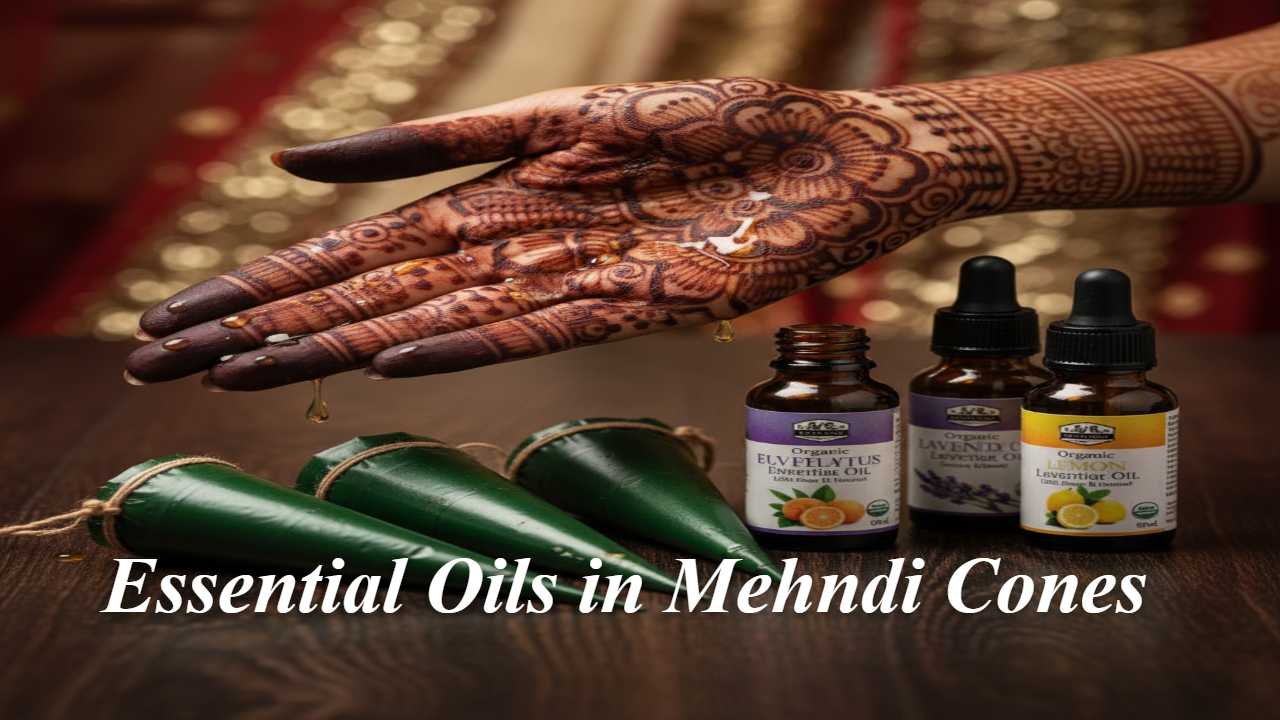
Essential oils in mehndi cones play a decisive role in stain depth, color development, and overall cone performance. Many artists focus on fresh henna powder and cone wrapping techniques, yet overlook the chemistry behind terpene-rich oils. Without the right essential oil blend, even premium henna leaves fail to deliver a deep maroon bridal stain.
Understanding which essential oils truly enhance dye release separates professional mehndi artists from hobbyists. This guide explains the science, practical application methods, safety standards, and cultural expectations behind high-performing oil blends.
Master this with Professional Cones
The same products used in this guide are available in our shop.
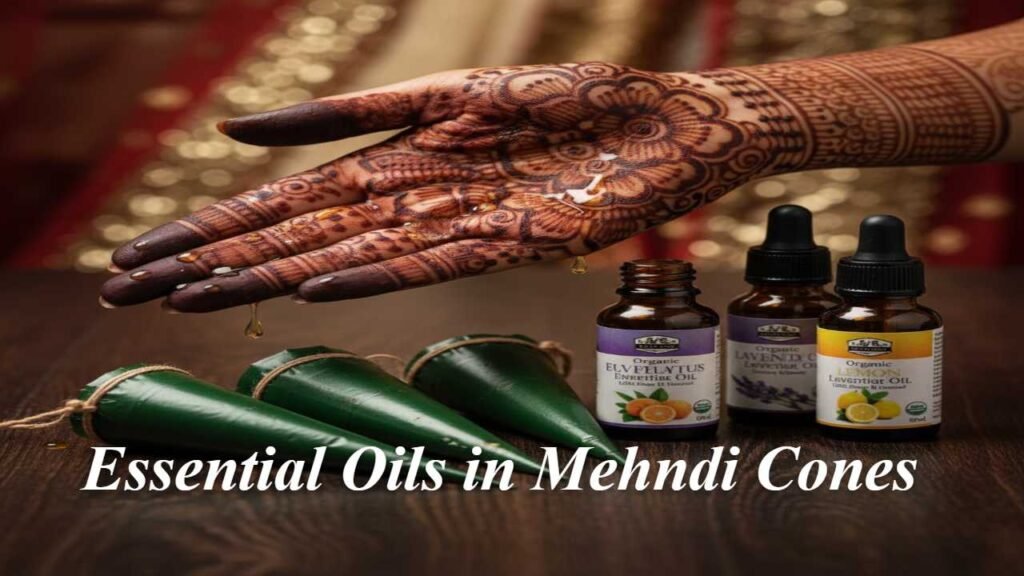
Why Essential Oils in Mehndi Cones Matter
Henna contains lawsone, a natural dye molecule that binds to keratin in skin. Terpenes found in certain essential oils enhance this binding process.
When the correct oil is used:
Inside this Guide:
- Dye release improves
- Oxidation deepens
- Stain longevity increases
- Color transitions from orange to dark brown effectively
When the wrong oil is added:
- Stain appears weak
- Color fades quickly
- Paste texture destabilizes
- Skin irritation risk rises
Professional cone formulation depends on choosing oils rich in monoterpene alcohols.
Buy Mehndi Cones Pack of 24 – Natural, Organic & Dark Stain
The Science Behind Essential Oils in Mehndi Cones
Terpenes act as penetration enhancers. They help lawsone molecules bind more efficiently to the skin’s keratin layer.
High-performance oils contain:
- Monoterpene alcohols
- Natural skin-safe compounds
- Balanced volatility
Low-performance oils contain:
- Synthetic fragrance additives
- Heavy carrier oils
- Minimal terpene concentration
Only specific essential oils in mehndi cones support optimal dye release.
Buy Mehndi Cones Pack of 12 – Natural, Organic & Dark Stain
1. Cajeput Oil – The Gold Standard
Cajeput oil consistently ranks among the most effective essential oils in mehndi cones.
Why It Works
- High terpene content
- Strong dye-release acceleration
- Excellent bridal stain depth
Ideal Usage
- 10–15 ml per 100g henna powder
- Combined with acidic liquid for balanced paste
Cajeput supports deep maroon stains often desired in bridal mehndi ceremonies.
2. Tea Tree Oil – Reliable and Accessible
Tea tree oil offers strong performance with better availability.
Benefits
- Good terpene concentration
- Antimicrobial properties
- Smooth paste integration
Although slightly milder than cajeput, tea tree remains one of the most practical essential oils in mehndi cones for consistent results.
3. Lavender Oil – Gentle Yet Effective
High-terpene lavender oil performs well when sourced correctly.
Important Note
Not all lavender oils are equal. Only varieties rich in monoterpene alcohols support dye release.
Lavender is ideal for:
- Sensitive skin clients
- Festival designs
- Moderate stain expectations
Bridal artists often blend lavender with cajeput for balanced strength.
4. Oils That Do NOT Work
Many beginners mistakenly add random oils.
Avoid:
- Eucalyptus fragrance oil
- Coconut oil
- Olive oil
- Synthetic perfume oils
- Mustard oil
These oils either dilute dye strength or disrupt paste consistency.
Essential Oil Performance Comparison
| Oil Type | Terpene Level | Bridal Suitable | Skin Sensitivity Risk | Stain Depth |
|---|---|---|---|---|
| Cajeput | High | Yes | Moderate | Very Dark |
| Tea Tree | Medium-High | Yes | Low | Dark |
| Lavender (Terpene Rich) | Medium | Yes | Very Low | Medium-Dark |
| Coconut Oil | None | No | Low | Weak |
| Fragrance Oil | None | No | High | Unpredictable |
Choosing correct essential oils in mehndi cones ensures both safety and performance.
How Essential Oils Influence Arabic and Bridal Mehndi Designs
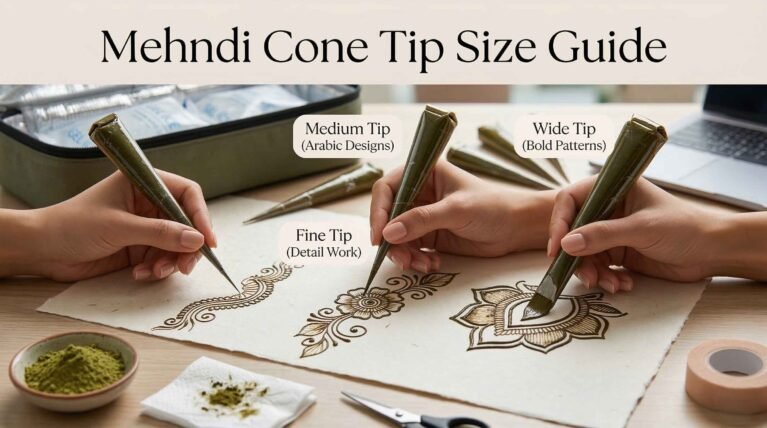
Different design styles demand different stain performance levels.
Bridal Mehndi
- Dense patterns
- Fine lace detailing
- Full-hand coverage
- Cultural symbolism such as peacocks and mandalas
Deep stain enhances visual richness in wedding photography.
Arabic Mehndi
- Bold floral vines
- Negative space emphasis
- Faster application
Smooth paste flow matters more than extreme stain darkness, but oil quality still affects final color.
Proper Mixing Techniques with Essential Oils
Adding essential oils incorrectly reduces effectiveness.
Recommended Mixing Process
- Sift henna powder finely.
- Add acidic liquid gradually.
- Incorporate essential oils slowly.
- Rest paste 8–24 hours.
- Test dye release before cone filling.
Resting allows terpene interaction with lawsone molecules.
Ideal Oil Percentage Guidelines
Too little oil limits dye enhancement. Too much oil causes skin irritation.
Standard Ratio
- 10–15 ml essential oil per 100g henna powder
Adjust based on:
- Climate
- Humidity
- Client skin type
- Desired stain intensity
Balanced formulation keeps essential oils in mehndi cones effective and safe.
Cultural Significance of Deep Henna Stains
In Indian weddings, darker stains symbolize deeper affection and prosperity. Families often associate strong color with good fortune.
Gulf and Moroccan traditions emphasize contrast and geometric clarity. Reliable oil blends support bold definition.
Oil selection therefore carries cultural responsibility beyond chemistry.
Storage and Shelf Life of Oil-Enhanced Cones
Essential oils increase dye release but also affect storage stability.
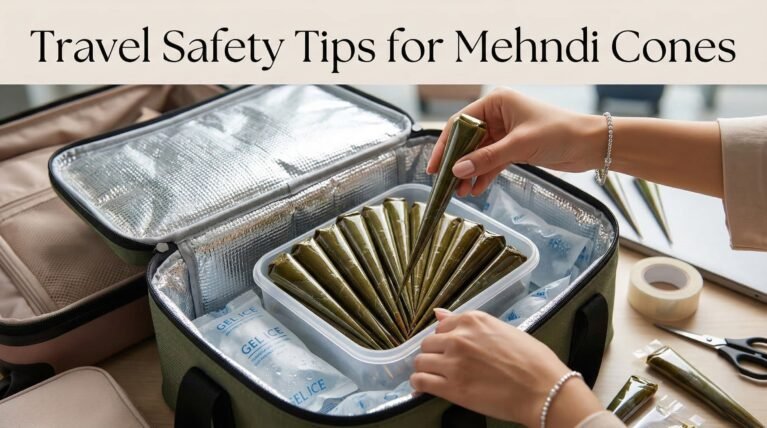
Best Storage Practices
- Freeze cones immediately
- Avoid repeated thawing
- Use airtight packaging
- Label preparation date
High-quality essential oils in mehndi cones remain effective for several months when frozen.
Safety Considerations
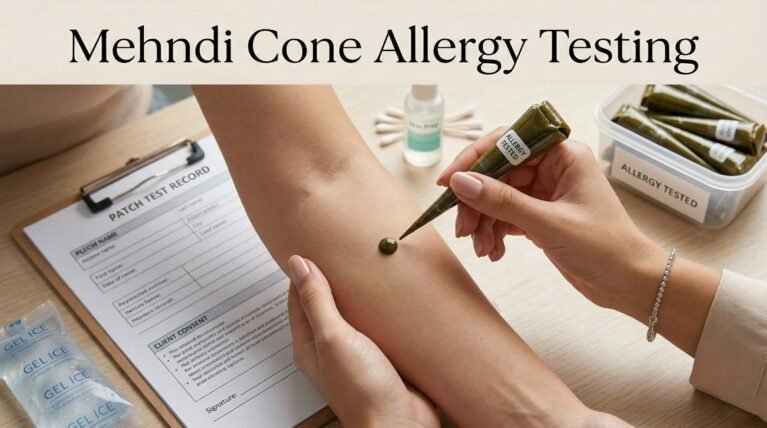
Skin safety should never be compromised for stain intensity.
Perform Patch Testing
Apply small dot before large bridal session.
Avoid Black Henna Additives
PPD causes severe allergic reactions.
Use Pure Essential Oils Only
Verify supplier transparency and batch purity.
Professional artists prioritize both beauty and client safety.
Advanced Blending Strategies
Experienced mehndi artists often combine oils.
Popular Blend Example
- 60% Cajeput
- 30% Tea Tree
- 10% Lavender
This blend balances:
- Strong dye release
- Pleasant aroma
- Reduced irritation risk
Careful experimentation within safe limits improves stain reliability.
How Essential Oils Build Brand Authority
For brands like pinsumehndiart.in, ingredient transparency strengthens trust.
Clients value:
- Natural formulation
- Safe bridal application
- Consistent dark stain results
Clear communication about essential oils in mehndi cones positions your brand as technically informed and trustworthy.
Troubleshooting Weak Stains
If stain appears light:
- Check oil freshness
- Confirm correct ratios
- Ensure adequate resting time
- Verify henna crop quality
Oil potency declines when stored improperly. Always use fresh batches.
Frequently Asked Questions (FAQ)
1. Which essential oil gives the darkest henna stain?
Cajeput oil typically delivers the deepest stain when properly blended.
2. Can I mix multiple essential oils in mehndi cones?
Yes. Balanced blends often improve performance and reduce skin sensitivity.
3. How long should paste rest after adding essential oils?
Allow 8–24 hours for optimal dye release before cone filling.
4. Are essential oils safe for sensitive skin?
High-quality lavender or properly diluted blends are generally safer, but patch testing remains essential.
5. Do essential oils replace fresh henna quality?
No. Fresh henna powder remains the foundation. Oils enhance but cannot fix weak dye content.
Final Thoughts
Henna artistry blends chemistry, culture, and craftsmanship. Essential oils in mehndi cones directly influence stain richness, longevity, and design precision. Artists who understand terpene science and safe blending techniques consistently achieve deeper bridal results and smoother Arabic patterns.
Explore professionally formulated cones crafted with carefully selected essential oils in mehndi cones and elevate every design into a truly powerful masterpiece.
More Design Inspiration