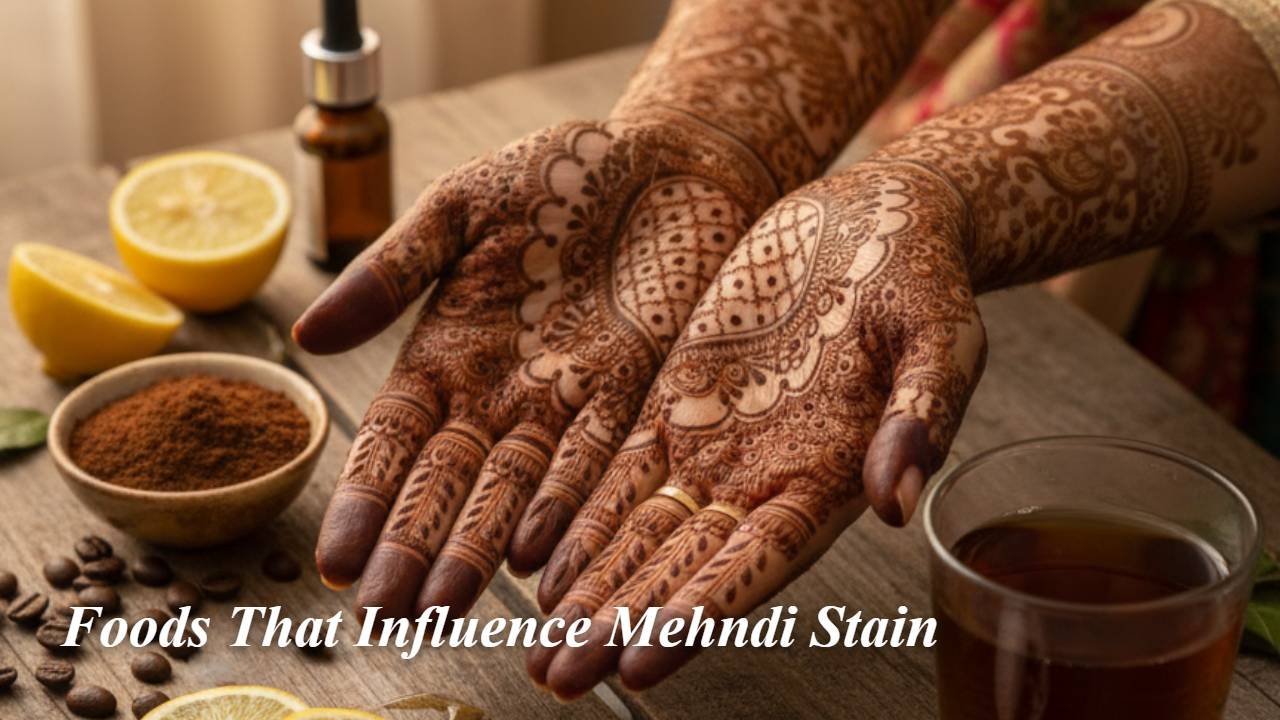
Foods That Influence Mehndi Stain remain one of the most discussed yet least understood topics in henna artistry. Brides often ask whether eating certain foods can make their bridal mehndi darker. Artists hear advice about drinking tea, avoiding cold drinks, or eating spicy meals before application.
While mehndi staining primarily depends on dye release, oxidation, and skin chemistry, diet can indirectly affect final color depth. Body temperature, circulation, hydration, and skin condition all influence how lawsone binds with keratin. Food choices play a supporting role in these processes.
Master this with Professional Cones
The same products used in this guide are available in our shop.
This guide explores the science, cultural beliefs, and practical realities behind how nutrition may impact stain development.
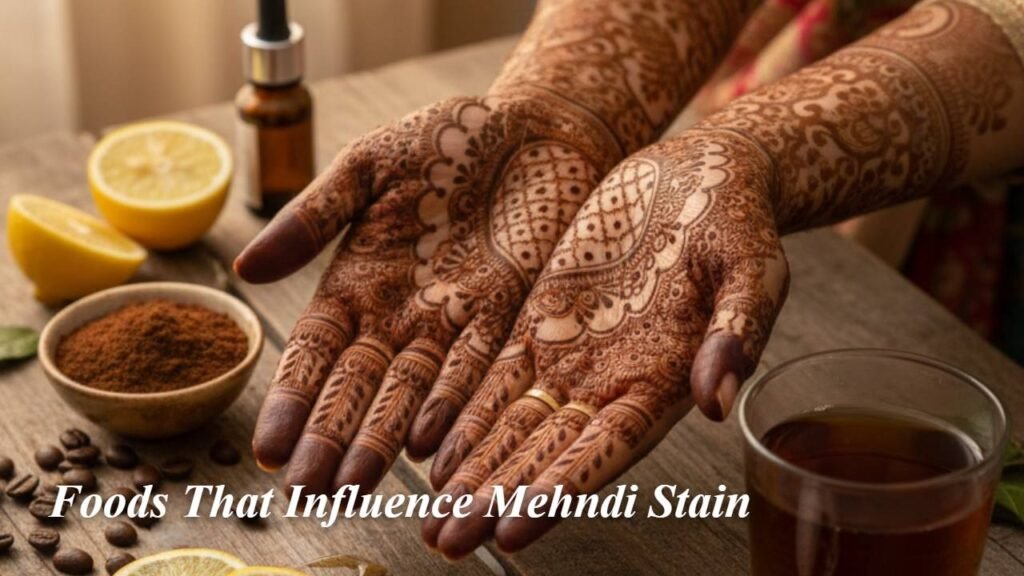
The Science Behind Foods That Influence Mehndi Stain
To understand how foods that influence mehndi stain work, we must begin with the staining process itself. Henna contains lawsone, a natural dye molecule. When applied to skin, lawsone binds with keratin proteins in the upper epidermis.
Inside this Guide:
The depth of staining depends on:
- Skin thickness
- Body heat
- Oxidation speed
- Contact duration
- Aftercare
Food does not directly color the stain. However, it affects internal factors like metabolism and circulation that influence dye binding efficiency.
Buy Mehndi Cones Pack of 12 – Natural, Organic & Dark Stain
Body Heat: The Critical Link Between Diet and Stain Depth
One of the strongest connections between foods that influence mehndi stain involves body temperature. Warm skin accelerates dye migration and oxidation.
Certain foods increase thermogenesis, the process by which the body generates heat.
Heat-Enhancing Foods
| Food Type | Examples | Effect on Body |
|---|---|---|
| Spices | Ginger, black pepper, cloves | Increase circulation |
| Warm beverages | Tea, herbal infusions | Raise internal warmth |
| Protein-rich foods | Lentils, eggs | Support metabolism |
| Iron-rich foods | Spinach, dates | Improve blood flow |
Improved circulation supports deeper stain development, especially for bridal mehndi designs.
Hydration and Skin Health
Hydrated skin supports better dye absorption. Dehydrated skin may appear dry or flaky, reducing stain uniformity.
Buy Mehndi Cones Pack of 24 – Natural, Organic & Dark Stain
Foods Supporting Hydration
- Coconut water
- Fresh fruits like watermelon
- Cucumbers
- Citrus fruits
Proper hydration enhances skin elasticity, which may improve even stain distribution in intricate Arabic patterns and dense bridal motifs.
Foods That Influence Mehndi Stain Through Circulation
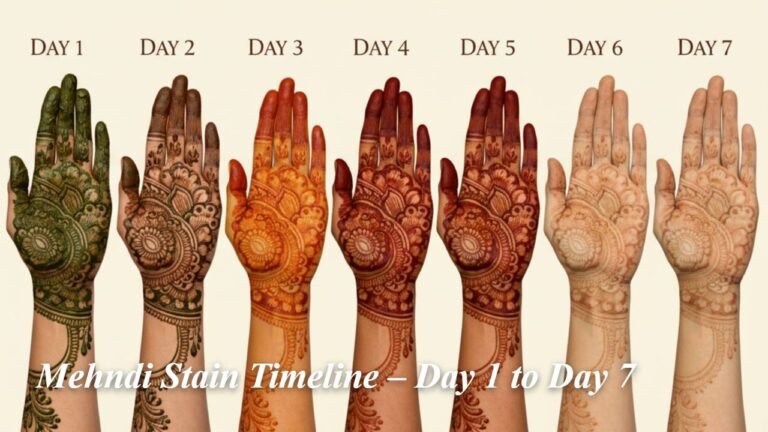
Improved blood circulation enhances oxygen delivery to the skin. Since oxidation deepens henna color, good circulation indirectly supports darker results.
Circulation-Boosting Nutrients
| Nutrient | Food Sources | Benefit |
|---|---|---|
| Iron | Spinach, beetroot | Enhances blood oxygen |
| Vitamin C | Oranges, amla | Improves iron absorption |
| Omega-3 | Flaxseeds, walnuts | Supports healthy skin |
| B Vitamins | Whole grains | Boosts metabolic rate |
Healthy circulation creates optimal conditions for oxidation and pigment stabilization.
Cultural Beliefs About Foods That Influence Mehndi Stain
In Indian wedding traditions, brides are often encouraged to:
- Drink warm milk with turmeric
- Avoid cold beverages
- Consume sweets for energy
- Eat iron-rich foods
These beliefs connect warmth and vitality with darker mehndi. While not scientifically proven as direct coloring agents, these foods support metabolic balance and heat retention.
Middle Eastern traditions also recommend avoiding chilled drinks before Arabic mehndi sessions to maintain warmth.
North African customs sometimes include herbal teas before application.
Traditional wisdom often aligns with physiological principles.
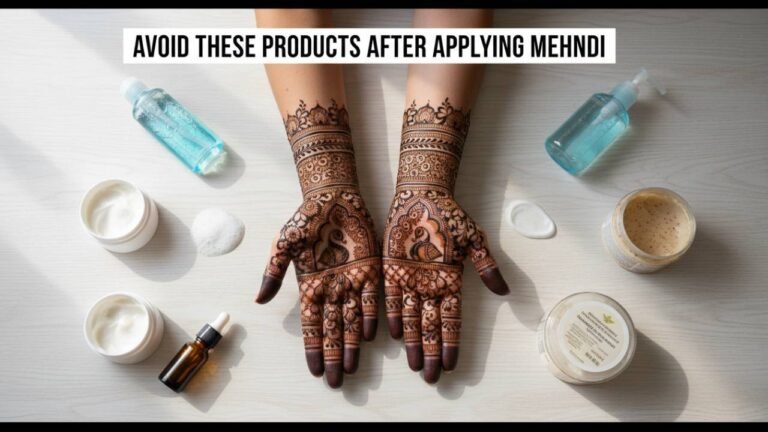
Foods to Avoid Before Mehndi Application
Some foods may indirectly hinder stain development.
Cooling Foods
| Cooling Item | Potential Impact |
|---|---|
| Ice-cold beverages | Lower skin temperature |
| Excessive dairy | May slow metabolism temporarily |
| High-sugar processed foods | Inflammation risk |
| Alcohol | Dehydration |
Lower body temperature reduces dye migration speed and slows oxidation.
Avoiding extreme cold intake before bridal mehndi sessions may help maintain warmth.
Protein and Skin Regeneration
Protein supports skin repair and keratin production. Since henna binds to keratin, healthy protein intake may improve stain clarity over time.
Protein sources include:
- Lentils
- Chickpeas
- Eggs
- Paneer
- Nuts
Balanced nutrition strengthens skin structure, benefiting long-term mehndi artistry results.
Comparing Dietary Influence vs Technical Factors
While foods that influence mehndi stain play a supportive role, technical aspects remain dominant.
| Factor | Level of Influence |
|---|---|
| Paste quality | Very high |
| Dye release preparation | Very high |
| Contact duration | High |
| Body heat | High |
| Diet | Moderate |
| Aftercare | Very high |
Diet enhances conditions but does not replace proper henna application techniques.
Bridal Mehndi and Pre-Event Nutrition
Bridal mehndi often involves:
- Extended sitting hours
- Emotional excitement
- Increased circulation
- Longer paste contact
Proper nutrition before the event helps brides maintain energy and warmth. Warm herbal teas, balanced meals, and hydration contribute to comfort during long sessions.
Dense Rajasthani bridal mehndi designs benefit from consistent warmth and stable circulation.
Foods That Influence Mehndi Stain in Arabic Designs
Arabic mehndi features open patterns with bold strokes. Because paste layers are thinner, heat and circulation play a slightly larger role in stain depth.
Maintaining warmth through diet can support oxidation during the first 24 hours.
Hydration helps preserve skin elasticity, improving clarity of flowing floral vines.
The Role of Iron in Henna Staining
Iron improves oxygen transport in blood. Oxygen exposure strengthens lawsone bonds during oxidation.
Iron-rich foods include:
- Spinach
- Beetroot
- Pomegranate
- Dates
Although iron intake does not directly darken stain, healthy oxygen circulation supports deeper oxidation over time.
Night Care and Dietary Support
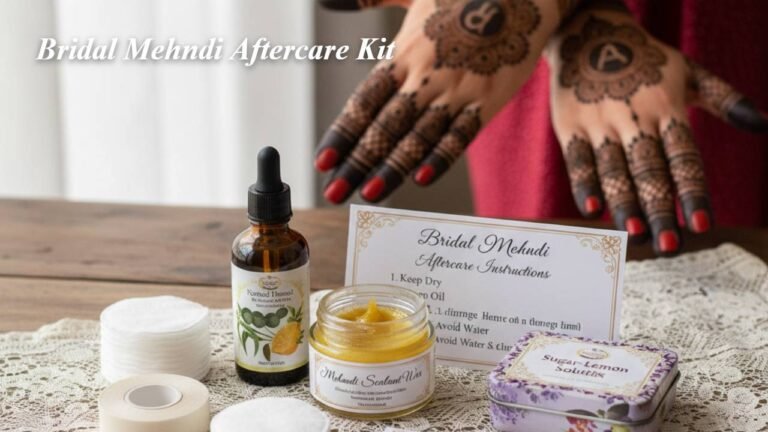
Combining a proper night care routine with supportive diet maximizes results.
Ideal approach:
- Eat balanced, warm meals
- Stay hydrated
- Avoid chilled drinks
- Follow structured overnight aftercare
Diet and aftercare together enhance natural stain development.
Myth vs Reality: Foods That Influence Mehndi Stain
| Myth | Reality |
|---|---|
| Eating jaggery makes mehndi black | No direct effect |
| Drinking coffee darkens stain | Indirect warmth support only |
| Avoiding rice improves color | No proven link |
| Spicy food guarantees dark stain | Only supports circulation |
Scientific understanding prevents unrealistic expectations.
Practical Pre-Mehndi Dietary Plan
24 Hours Before Application
- Consume iron-rich vegetables
- Drink herbal tea
- Avoid excessive cold drinks
Day of Application
- Eat balanced meals
- Stay hydrated
- Avoid heavy junk food
After Application
- Maintain warmth
- Follow overnight care
- Continue hydration
This structured approach supports optimal stain development.
Regional Styles and Nutritional Influence
Different regional mehndi styles respond differently to environmental and internal conditions.
Indian Bridal Style
Dense coverage benefits from warmth and circulation.
Arabic Style
Thin strokes rely more on oxidation speed.
Moroccan Geometric Designs
Require even skin texture for clarity.
Balanced diet improves skin condition across all styles.
Expert Perspective on Foods That Influence Mehndi Stain
Professional artists agree that:
- Quality henna remains the foundation.
- Heat and oxidation determine depth.
- Diet supports internal conditions.
Foods act as secondary enhancers rather than primary stain determinants.
Clients should focus first on:
- Fresh organic henna cones
- Proper paste duration
- Effective night care
Diet fine-tunes the environment but does not override technique.
Frequently Asked Questions
1. Can eating certain foods make mehndi darker instantly?
No. Foods support circulation and warmth but do not directly color the stain.
2. Should I avoid cold drinks before bridal mehndi?
Avoiding chilled beverages may help maintain body heat during application.
3. Do iron-rich foods darken henna?
Iron improves oxygen circulation, which supports oxidation indirectly.
4. Does sugar intake affect stain depth?
Excess sugar may cause inflammation but does not directly impact henna color.
5. Is diet more important than paste quality?
No. Paste preparation and aftercare have a greater impact than food choices.
Final Thoughts
Foods That Influence Mehndi Stain contribute indirectly by supporting circulation, hydration, and body warmth. While nutrition cannot replace high-quality henna or proper application techniques, it enhances the internal conditions needed for deep oxidation and rich stain development.
Bridal mehndi, Arabic patterns, and festive designs all benefit from balanced diet combined with structured aftercare. For consistently darker, longer-lasting results, pair healthy habits with premium organic cones from Pinsu Mehndi Art and elevate your henna experience to the next level.
More Design Inspiration