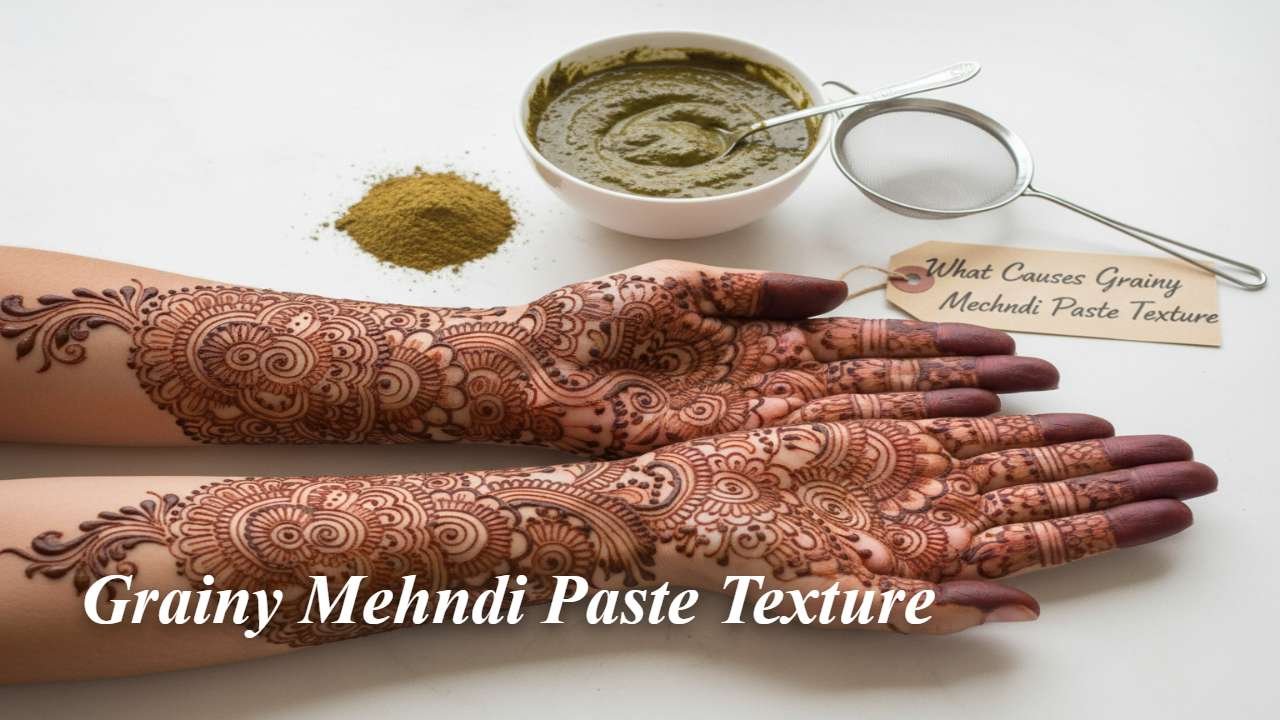
Grainy mehndi paste texture is one of the most frustrating issues artists face, especially during bridal mehndi sessions or detailed Arabic pattern work. When paste feels rough, clogs the cone tip, or produces uneven lines, the final design suffers. Many beginners assume the problem lies in technique. In reality, texture issues usually begin long before application.
Understanding why grainy mehndi paste texture develops allows artists to prevent clogged cones, weak stain development, and inconsistent line flow. This comprehensive guide explores the scientific, technical, and practical causes behind rough henna paste and explains how to maintain smooth, professional-quality consistency.
Master this with Professional Cones
The same products used in this guide are available in our shop.
Why Paste Texture Matters in Mehndi Art
Smooth paste ensures:
- Clean, crisp outlines
- Fine detailing in bridal mehndi
- Even shading in mandala designs
- Controlled flow in Arabic floral patterns
- Balanced symmetry in Moroccan geometric styles
Grainy mehndi paste texture disrupts precision and compromises stain penetration.
Inside this Guide:
Poor Henna Powder Sifting
The most common cause of grainy mehndi paste texture is insufficient sifting.
Henna powder must be finely milled and triple-sifted. Large leaf particles or stem fibers remain in poorly processed powder.
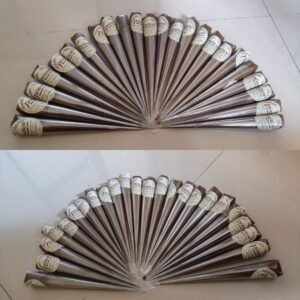
Buy Mehndi Cones Pack of 24 – Natural, Organic & Dark Stain
Effects of Coarse Powder
- Tip clogging
- Broken lines
- Uneven paste flow
- Rough surface finish
Powder Quality Comparison
| Feature | Fine Sifted Powder | Coarse Powder |
|---|---|---|
| Particle Size | Microfine | Visible fibers |
| Paste Smoothness | Creamy | Grainy |
| Cone Flow | Consistent | Blocked |
| Bridal Suitability | Excellent | Poor |
High-quality powder forms the foundation for smooth texture.
Old or Improperly Stored Henna
Age affects powder structure. Exposure to moisture, heat, and air changes particle behavior.
Old henna may:
- Clump together
- Absorb humidity
- Lose elasticity
Grainy mehndi paste texture often signals that the powder has degraded due to poor packaging or storage.
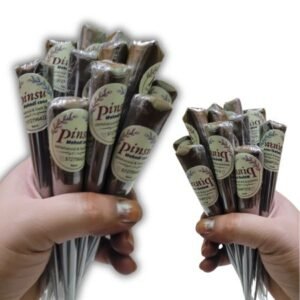
Buy Mehndi Cones Pack of 12 – Natural, Organic & Dark Stain
Always check production date and storage history.
Incorrect Liquid Ratio During Mixing
Too little liquid creates thick, lumpy paste. Too much liquid separates particles unevenly.
Proper hydration requires:
- Gradual liquid addition
- Thorough mixing
- Adequate resting time
Inconsistent mixing leaves dry pockets inside the paste, contributing to grainy mehndi paste texture.
Insufficient Dye Release Rest Time
Henna requires 8–24 hours of rest for optimal dye release.
If used too early:
- Paste feels rough
- Color binding weakens
- Texture remains unstable
Resting allows particles to hydrate fully and smooth out naturally.
Skipping rest time is a hidden cause of grainy mehndi paste texture.
Essential Oil Imbalance
Essential oils improve elasticity and dye penetration. Incorrect oil quantity affects texture.
Too Little Oil
- Dry paste
- Cracking during application
Too Much Oil
- Slippery separation
- Uneven consistency
Balanced oil ratio stabilizes paste smoothness.
Temperature and Climate Influence
Climate directly impacts paste consistency.
High Heat
- Accelerates drying
- Causes surface crust formation
- Leads to clumping
High Humidity
- Introduces moisture imbalance
- Creates sticky texture
Cold Conditions
- Thickens paste excessively
- Slows particle integration
Climate management prevents unwanted grainy mehndi paste texture.
Improper Straining Before Filling Cones
Even finely sifted powder benefits from straining after mixing.
Professional artists strain paste through nylon or stocking material to remove residual fibers.
Skipping this step increases the risk of clogged tips.
Straining dramatically reduces grainy mehndi paste texture.
Water Quality and Mineral Content
Hard water contains minerals that interfere with smooth mixing.
Mineral-rich water may:
- Create tiny clumps
- Reduce elasticity
- Alter dye release
Using distilled or filtered water improves consistency.
Sugar Ratio and Moisture Balance
Sugar helps retain moisture during application.
Insufficient sugar leads to:
- Rapid drying
- Rough surface formation
Excess sugar causes:
- Sticky texture
- Flow instability
Balanced sugar content supports paste smoothness.
Cone Storage and Air Exposure
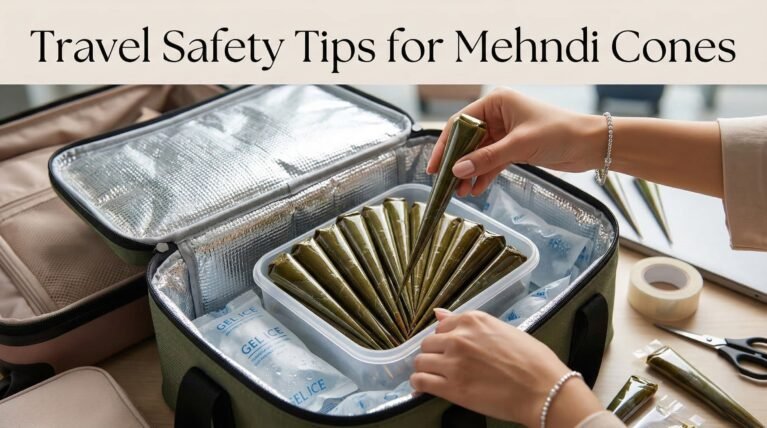
Prepared paste inside cones must remain airtight.
Air exposure dries outer layers first. Dried particles mix with fresh paste during pressure application, creating grainy mehndi paste texture.
Freezing cones immediately after preparation prevents this issue.
Impact on Bridal Mehndi and Detailed Designs
Bridal mehndi involves:
- Dense filling patterns
- Ultra-fine shading
- Multiple layered motifs
Grainy paste ruins detailing precision and causes frustration during long sessions.
Arabic floral patterns require flowing curves. Rough texture breaks the continuity of vines and petals.
Moroccan geometric designs demand perfect symmetry. Uneven paste flow disrupts structure.
Texture control directly influences artistic excellence.
Scientific Explanation Behind Rough Texture
Henna particles absorb liquid gradually. When hydration remains uneven, dry micro-clusters form.
Oxygen exposure also alters particle cohesion.
Proper mixing, resting, and straining ensure complete hydration and particle integration.
Smooth paste reflects stable molecular bonding and moisture balance.
Prevention Checklist for Professionals
To prevent grainy mehndi paste texture:
- Use triple-sifted henna
- Store powder in airtight packaging
- Add liquid gradually
- Rest paste minimum 8 hours
- Strain before cone filling
- Freeze cones immediately
- Avoid repeated thaw cycles
Consistency builds confidence and professional authority.
Quick Diagnostic Table
| Symptom | Likely Cause | Solution |
|---|---|---|
| Frequent tip clogging | Coarse powder | Use finer sift |
| Lumpy paste | Poor mixing | Mix thoroughly |
| Dry cracking | Low oil | Adjust oil ratio |
| Sticky flow | Excess sugar | Reduce quantity |
| Random clumps | No straining | Strain before use |
Systematic troubleshooting eliminates texture issues.
Long-Term Benefits of Smooth Paste
Maintaining smooth consistency results in:
- Deep stain penetration
- Cleaner bridal photography
- Faster application time
- Reduced product waste
- Higher client satisfaction
Texture control enhances artistic precision across all mehndi styles.
Frequently Asked Questions (FAQ)
1. Why does my cone clog repeatedly?
Grainy mehndi paste texture often results from coarse powder or skipping the straining step.
2. Can old henna cause rough paste?
Yes. Aged powder absorbs moisture unevenly and creates clumps.
3. Does climate affect paste smoothness?
High humidity and extreme heat significantly alter consistency.
4. Should I strain paste every time?
Yes. Straining removes fibers and ensures smoother flow.
5. How can I fix grainy paste once mixed?
You may re-strain and adjust liquid slightly, but prevention remains more effective.
Final Thoughts
Texture defines control in mehndi artistry. Grainy mehndi paste texture compromises precision, stain depth, and overall design quality. Fine powder selection, proper mixing, climate awareness, and disciplined straining create smooth, professional-level results. Artists who master paste consistency elevate bridal, Arabic, and regional designs with flawless execution.
Choose high-quality henna and refined preparation methods to ensure every design flows smoothly from cone to skin.
More Design Inspiration