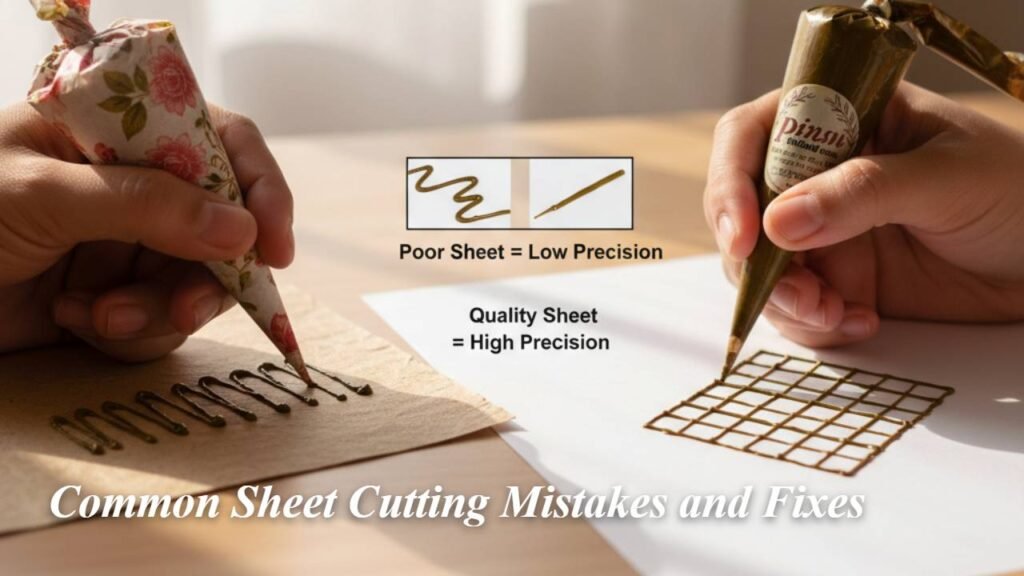
How Sheet Quality Impacts Line Precision is a critical topic that many mehndi artists underestimate. While henna paste quality and hand control receive most attention, the sheet used to roll the cone quietly determines whether your lines appear sharp, smooth, and controlled.
A perfectly mixed paste cannot compensate for poor sheet structure. Low-grade material leads to uneven pressure, unstable seams, and inconsistent flow. Bridal mehndi, Arabic patterns, intricate jaali work, and fine mandala grids all depend on micro-level precision.
Master this with Professional Cones
The same products used in this guide are available in our shop.
This comprehensive guide explores the technical, structural, cultural, and practical reasons why sheet quality directly influences line precision in professional mehndi artistry.
Why Line Precision Defines Professional Mehndi
Line precision separates beginner work from expert craftsmanship.
Inside this Guide:
Precise lines create:
- Balanced mandala symmetry
- Clean negative space
- Controlled paisley curves
- Elegant Arabic florals
- Sharp portrait detailing
Imprecise lines appear shaky, thick, or broken.
Buy Mehndi Cones Pack of 24 – Natural, Organic & Dark Stain
Many artists blame their hand stability. In reality, sheet quality often plays a major role.
Understanding Cone Mechanics Before Exploring How Sheet Quality Impacts Line Precision
A mehndi cone functions as a controlled pressure chamber.
When squeezed:
- Pressure builds inside the cone.
- Paste moves toward the tip.
- Release depends on channel alignment.
Sheet material affects:

Buy Mehndi Cones Pack of 12 – Natural, Organic & Dark Stain
- Internal channel stability
- Seam strength
- Tip sharpness
- Air pocket formation
Any structural weakness disrupts line consistency.
How Sheet Quality Impacts Line Precision Through Thickness
Sheet thickness directly influences cone performance.
| Thickness Level | Impact on Line Precision | Best Use |
|---|---|---|
| 20–25 micron | Very fine control, fragile | Bridal detailing |
| 30–35 micron | Balanced precision | General professional use |
| 40+ micron | Strong but slightly rigid | Bold Arabic designs |
Ultra-thin sheets allow sharper tip formation but tear easily.
Standard thickness offers ideal balance between control and durability.
Thick sheets may resist tight rolling, reducing tip sharpness.
Surface Texture and Transparency
Surface texture influences rolling smoothness.
Glossy transparent sheets provide:
- Clear visibility during filling
- Clean seam alignment
- Smooth folding
- Reduced friction
Matte or cloudy sheets:
- Hide air pockets
- Create uneven folds
- Reduce structural clarity
Visual control enhances mechanical precision.
How Sheet Quality Impacts Line Precision in Bridal Mehndi
Bridal mehndi demands extreme detail.
Design elements include:
- Dense jaali meshwork
- Mandala grids
- Dulha-dulhan portraits
- Fine paisley outlines
- Cultural symbolism motifs
Fine detailing requires:
- Stable pressure
- Sharp tip formation
- No seam leakage
Low-grade sheets produce blunt tips.
Blunt tips cause thick, uncontrolled lines.
Professional bridal work requires high-grade cellophane.
How Sheet Quality Impacts Line Precision in Arabic Patterns
Arabic mehndi focuses on bold florals and flowing strokes.
While lines are thicker than bridal designs, flow stability remains critical.
Inferior sheets create:
- Sudden paste bursts
- Interrupted petals
- Uneven floral outlines
High-quality sheets maintain consistent internal pressure, preserving stroke rhythm.
Smooth flow defines Arabic elegance.
Seam Strength and Pressure Stability
Sheet flexibility affects seam durability.
Weak sheets:
- Stretch under pressure
- Allow micro air entry
- Collapse during long sessions
Strong sheets:
- Hold structure
- Maintain channel alignment
- Support steady squeeze control
Seam strength equals flow stability.
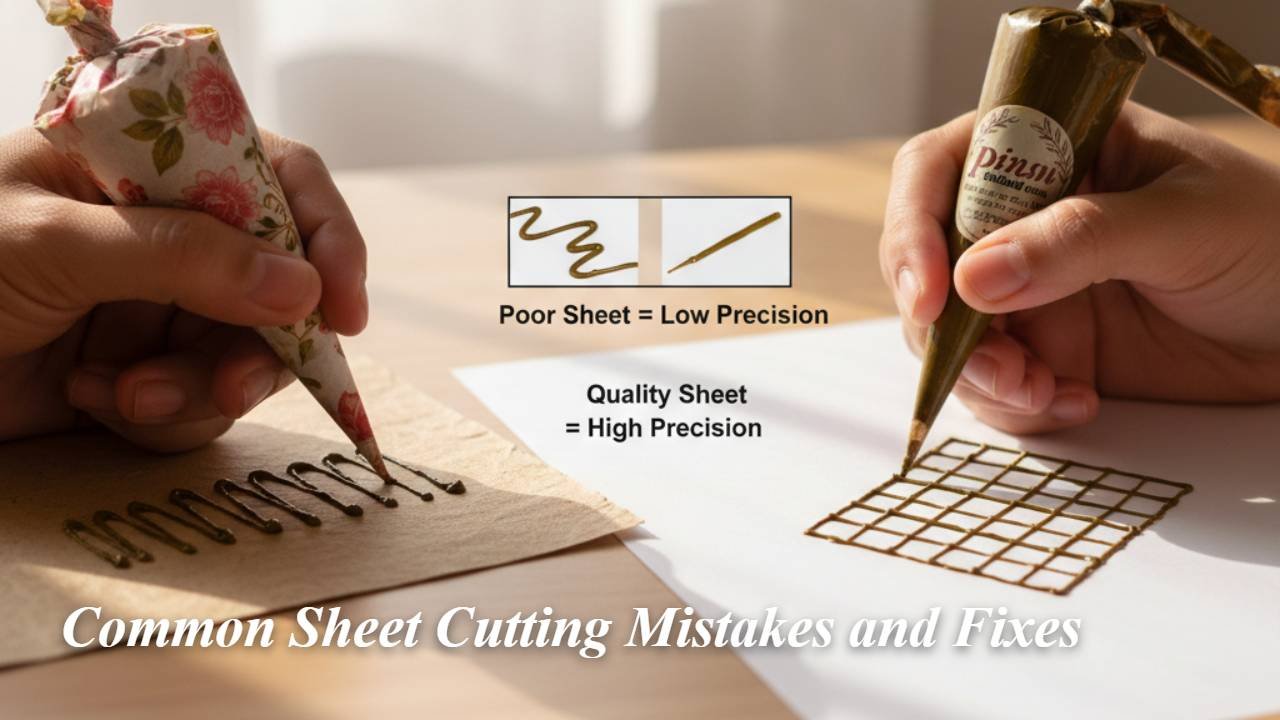
Comparison: High-Quality vs Low-Quality Sheets
| Feature | High-Quality Sheet | Low-Quality Sheet |
|---|---|---|
| Flexibility | Balanced | Uneven |
| Tear Resistance | Strong | Weak |
| Transparency | Clear | Cloudy |
| Tip Sharpness | Precise | Blunt |
| Flow Stability | Consistent | Interrupted |
Mechanical reliability defines artistic outcome.
Air Bubble Prevention and Line Accuracy
How Sheet Quality Impacts Line Precision becomes clear when considering air pockets.
Low-quality sheets:
- Develop wrinkles
- Trap air during rolling
- Create uneven internal channels
Air pockets cause sudden bursts.
Burst flow ruins mandala symmetry.
Premium sheets reduce air entrapment risk.
The Role of Cutting Accuracy
Even the best sheet fails if poorly cut.
However, high-quality material allows:
- Cleaner diagonal cuts
- Smooth edges
- Minimal tearing
Clean edges support tight rolling.
Tight rolling produces narrow tip channels.
Narrow channels enhance fine line precision.
Environmental Resistance and Performance
Humidity and temperature influence sheet behavior.
Low-grade sheets react quickly to moisture.
Moisture exposure leads to:
- Curling
- Warping
- Reduced stiffness
Warped sheets cannot form sharp tips.
Stable sheets resist environmental stress.
Consistency protects precision.
Cultural Significance of Precision in Mehndi
Mehndi represents celebration, blessings, and sacred artistry.
Traditional Indian bridal designs rely on symmetry.
Rajasthani styles showcase dense storytelling patterns.
Gujarati motifs emphasize balance.
Pakistani designs feature fine jaali work.
Every cultural detail requires controlled line execution.
Material precision supports cultural authenticity.
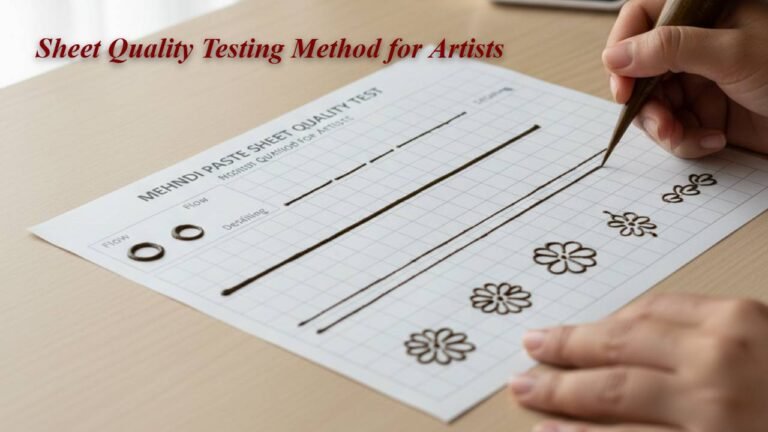
Professional Testing Method
Before committing to bulk inventory, test sheet quality.
Testing Checklist
- Roll sample cones
- Inspect seam alignment
- Test fine line strokes
- Draw small mandala circles
- Check for burst flow
Performance testing prevents quality compromise.
How Sheet Quality Impacts Line Precision Over Long Sessions
Bridal sessions may last 4–6 hours.
Low-grade sheets fatigue faster.
Extended pressure weakens structure.
Tip alignment shifts subtly.
Line thickness becomes inconsistent.
Premium sheets maintain structural integrity for long durations.
Endurance matters in professional bookings.
Financial Impact of Quality Choice
High-quality sheets may cost more upfront.
However, they:
- Reduce cone failures
- Decrease paste waste
- Improve efficiency
- Protect brand reputation
Consistent precision supports premium pricing.
Long-term savings outweigh short-term cost reduction.
Sustainability Considerations
Eco-friendly sheet alternatives must also meet precision standards.
When selecting sustainable options:
- Check flexibility
- Test seam durability
- Evaluate moisture resistance
Environmental responsibility should not compromise line quality.
Balanced decision-making builds responsible artistry.
Integration with Paste and Sealing
Sheet quality works alongside:
- Proper paste consistency
- Air removal techniques
- Correct sealing methods
Precision results from complete system alignment.
Neglecting any component reduces overall performance.
Professional Workflow Strategy
To maximize line precision:
- Choose standard 30–35 micron sheets
- Store flat to prevent curling
- Cut with sharp scissors
- Roll tightly
- Remove air before sealing
- Test before application
Systematic preparation ensures predictable flow.
Long-Term Benefits of Investing in Quality
Artists who prioritize sheet quality experience:
- Cleaner portfolios
- Higher client satisfaction
- Faster execution speed
- Reduced mechanical frustration
- Improved design confidence
Precision supports creative freedom.
Frequently Asked Questions
1. Can sheet quality really affect fine detailing?
Yes. Tip sharpness and pressure stability depend directly on material quality.
2. What thickness works best for bridal mehndi?
30–35 micron sheets provide ideal balance between flexibility and durability.
3. Does transparency matter?
Clear sheets allow better seam alignment and air detection during filling.
4. Can poor sheets cause uneven stain?
Indirectly. Uneven paste flow affects paste thickness, which influences stain consistency.
5. Is premium sheet investment worth it?
For professional artists handling bridal and high-detail work, premium sheets protect quality and reputation.
Final Thoughts
How Sheet Quality Impacts Line Precision defines the hidden engineering behind flawless mehndi artistry. Every paisley curve, mandala grid, and Arabic floral stroke begins with structural integrity at the sheet level.
Technical discipline in material selection elevates artistic performance. Invest in high-quality sheets, refine your preparation workflow, and experience sharper lines, smoother flow, and consistently professional results in every mehndi design you create.
More Design Inspiration