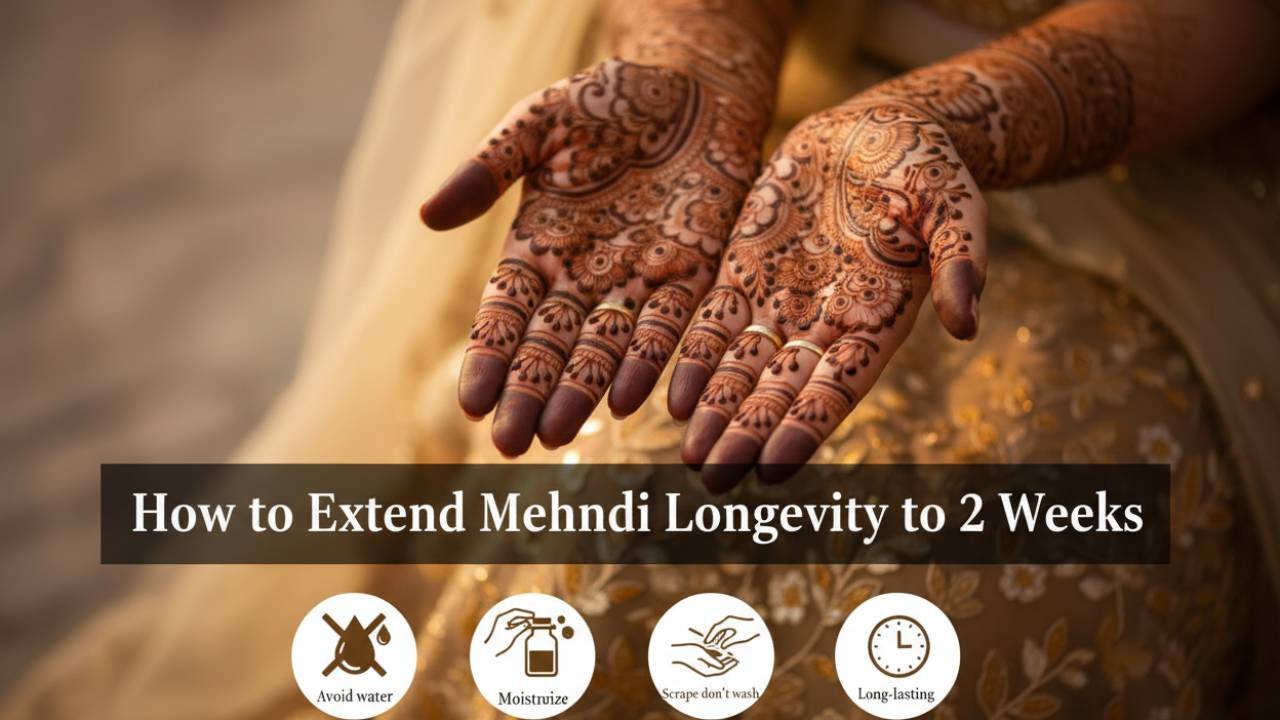
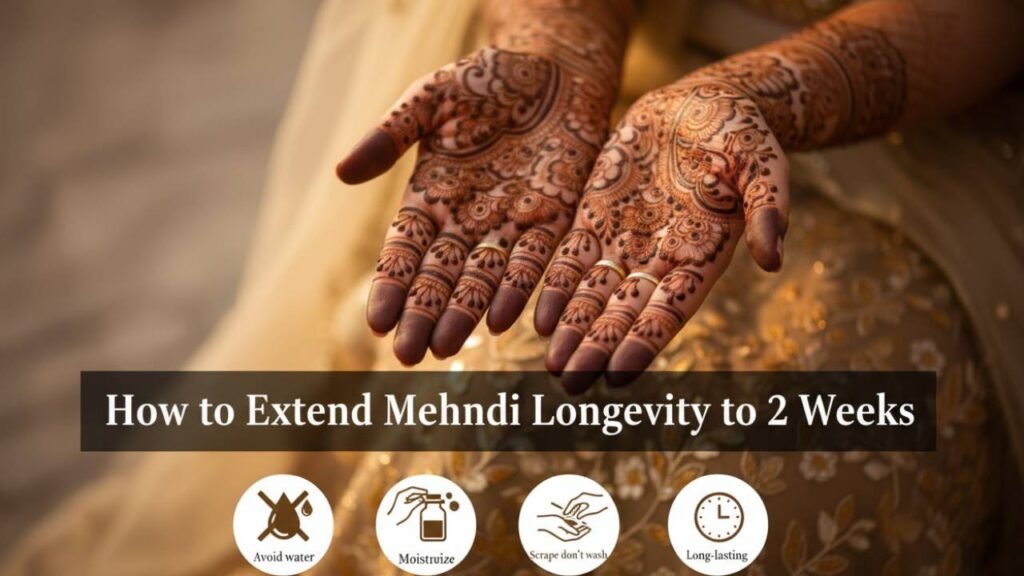
How to Extend Mehndi Longevity to 2 Weeks is a goal for every bride, mehndi lover, and professional henna artist. Natural henna typically lasts 7 to 10 days, depending on skin type and aftercare. However, with the right preparation, application technique, and maintenance routine, you can push that lifespan closer to two full weeks.
Mehndi longevity depends on more than just paste quality. It involves skin biology, keratin binding, oxidation, moisture control, and protection from friction. Bridal mehndi, Arabic patterns, and traditional Indian designs all benefit from structured care that preserves stain depth and prevents premature fading.
Master this with Professional Cones
The same products used in this guide are available in our shop.
This comprehensive guide breaks down every stage of the process—from pre-application preparation to long-term preservation—so you can maximize stain duration naturally and safely.
Understanding the Science Behind Mehndi Longevity
To master How to Extend Mehndi Longevity to 2 Weeks, you must first understand how henna stains the skin.
Inside this Guide:
Henna contains lawsone, a dye molecule that binds to keratin in the outer skin layer. This layer naturally sheds over time. As dead skin cells exfoliate, the stain fades.
Longevity depends on:
Buy Mehndi Cones Pack of 12 – Natural, Organic & Dark Stain
- Depth of dye penetration
- Thickness of skin
- Skin turnover rate
- Water exposure
- Aftercare routine
Palms and soles last longer because they contain thicker stratum corneum layers.
Step 1: Skin Preparation Before Application
Proper preparation determines how deeply the dye penetrates.
Clean the Skin
- Wash hands with mild soap.
- Remove oils, lotions, and sunscreen.
- Pat completely dry.
Avoid Exfoliation Right Before Application
Light exfoliation one day prior helps remove dead skin cells. Avoid scrubbing immediately before applying mehndi, as irritation may reduce stain consistency.
Healthy skin allows better dye bonding and supports extended longevity.
Buy Mehndi Cones Pack of 12 – Natural, Organic & Dark Stain
Step 2: Use High-Quality Natural Henna
No guide on How to Extend Mehndi Longevity to 2 Weeks is complete without emphasizing paste quality.
Premium organic henna cones provide:
- Strong dye release
- Smooth application
- Rich stain potential
Low-quality cones result in weak initial color, which fades faster.
Step 3: Optimal Paste Retention Time
Keeping paste on for the correct duration significantly affects longevity.
| Duration | Resulting Stain Depth | Longevity Potential |
|---|---|---|
| 3–4 Hours | Moderate | 5–7 days |
| 6 Hours | Strong | 8–10 days |
| 8+ Hours | Deep | Up to 14 days |
Overnight retention produces the most durable stain, especially for bridal mehndi.
Step 4: Controlled Drying and Sealant Use
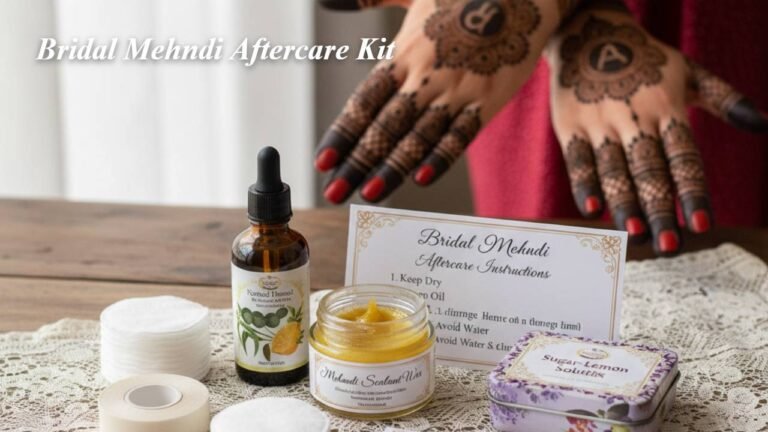
Lemon-sugar sealant helps paste adhere longer. Proper adhesion increases dye penetration.
Guidelines:
- Apply lightly after paste partially dries.
- Avoid over-saturation.
- Maintain warm environment.
Balanced moisture ensures deeper binding, which directly supports extended mehndi lifespan.
Step 5: Proper Paste Removal
Scrape paste gently instead of washing.
Why?
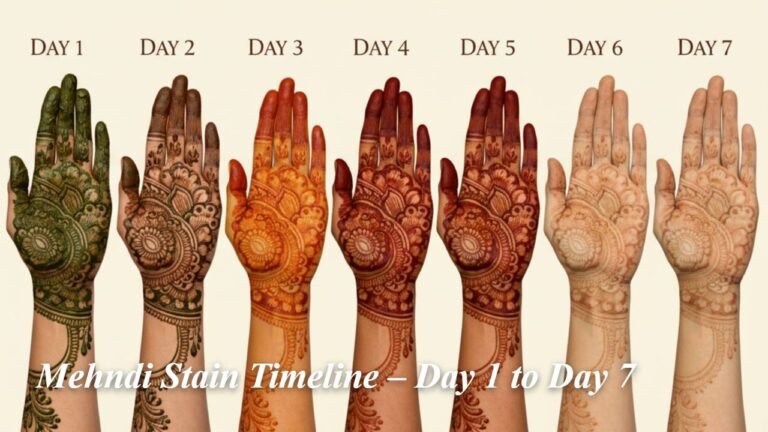
Water interrupts oxidation. Oxidation deepens color during the first 24–48 hours. Strong oxidation correlates with longer-lasting stain.
After scraping:
- Avoid water for 12–24 hours.
- Apply light natural oil.
This step plays a critical role in how to extend mehndi longevity to 2 weeks effectively.
Step 6: Protect the Stain During the First 48 Hours
The first two days determine long-term durability.
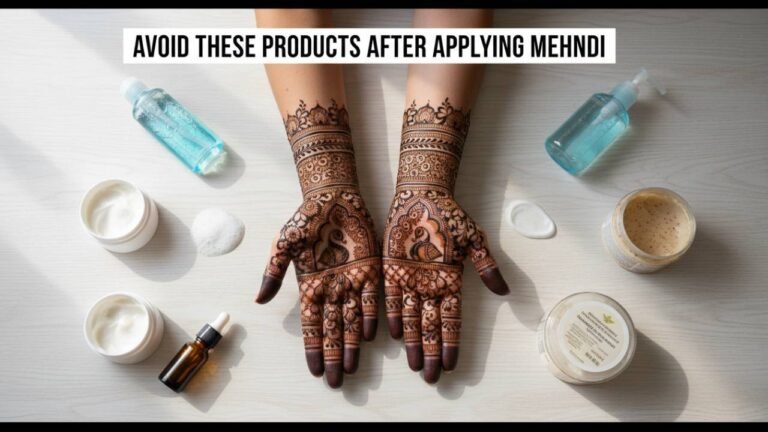
Avoid:
- Soap
- Excessive water
- Sanitizer
- Friction
Apply protective oils such as:
- Coconut oil
- Olive oil
- Mustard oil
Oils create a barrier against water exposure, preserving pigment intensity.
Step 7: Minimize Water Exposure
Frequent washing is the biggest enemy of longevity.
Strategies:
- Wear gloves while washing dishes.
- Avoid long showers in hot water.
- Pat dry immediately after washing hands.
Water softens the outer skin layer and accelerates shedding.
Step 8: Reduce Friction and Exfoliation
Skin naturally sheds over time. Excess friction speeds up fading.
Avoid:
- Scrubs
- Loofahs
- Harsh towels
- Tight clothing rubbing against designs
Arabic patterns with fine lines fade faster if exposed to constant friction.
Step 9: Maintain Skin Moisture Balance
Dry skin cracks and sheds faster. Proper hydration slows exfoliation.
| Skin Condition | Effect on Longevity |
|---|---|
| Well-hydrated | Extended stain life |
| Overly dry | Faster fading |
| Excessively oily | Slight lightening |
Light daily oiling preserves skin barrier integrity.
Bridal Mehndi and Long-Term Preservation
Bridal mehndi features dense motifs like mandalas, paisleys, and dulha-dulhan portraits. These areas often last longer due to heavy dye concentration.
For brides aiming for two-week longevity:
- Keep hands warm during first night.
- Avoid heavy household chores.
- Protect designs during rituals involving water.
Structured care ensures rich brown tones remain visible throughout wedding celebrations.
Arabic Mehndi Longevity Considerations
Arabic designs often feature open spaces and thinner lines. These areas fade faster than dense bridal patterns.
To extend lifespan:
- Focus on moisturizing.
- Avoid excessive sanitizer use.
- Reduce exposure to rain or humidity.
Thin lines require gentle handling for maximum preservation.
Seasonal Impact on Longevity
Summer
Warm weather enhances oxidation but increases sweating. Protect stain with oil barriers.
Winter
Cold slows oxidation but reduces sweating. Keep hands warm during early hours.
Monsoon
Humidity increases water exposure risk. Control moisture and apply protective oils.
Seasonal awareness improves results.
Diet and Internal Factors
Hydration and circulation indirectly affect longevity.
Helpful habits:
- Drink sufficient water.
- Maintain balanced diet.
- Avoid excessive alcohol.
Healthy skin retains pigment more effectively.
Comparing Longevity Across Body Areas
| Body Area | Average Longevity |
|---|---|
| Palms | 10–14 days |
| Soles | 12–16 days |
| Arms | 7–10 days |
| Back of hands | 6–8 days |
Palms and soles naturally support extended duration due to thicker skin layers.
Common Mistakes That Reduce Longevity
Avoid these errors:
- Using chemical black cones.
- Washing hands immediately after removal.
- Scrubbing faded areas.
- Ignoring night care routine.
- Using strong cleaning agents without gloves.
Each mistake shortens stain lifespan.
Realistic Expectations
Natural henna cannot permanently stain skin. Two weeks represents the upper limit for most individuals.
Factors such as:
- Skin turnover speed
- Occupation
- Hygiene routine
- Climate
All influence longevity.
Following a structured approach significantly increases the chance of reaching the 14-day mark.
Frequently Asked Questions
1. Can mehndi really last 2 weeks?
Yes. With deep dye penetration and proper care, palms can retain visible stain for up to 14 days.
2. Does darker initial color mean longer lifespan?
Generally yes. Deeper initial oxidation often correlates with slower fading.
3. Can I reapply oil daily?
Yes. Light oiling protects pigment from water damage.
4. Why does my mehndi fade in one week?
Frequent washing, friction, or low-quality paste may reduce longevity.
5. Do Arabic designs last as long as bridal mehndi?
Dense bridal patterns usually last longer than thin Arabic designs.
Final Thoughts
How to Extend Mehndi Longevity to 2 Weeks depends on preparation, paste quality, controlled drying, disciplined aftercare, and daily protection. Deep dye penetration combined with minimized water exposure and reduced friction significantly improves stain durability.
Bridal mehndi, Arabic patterns, and festive designs can maintain rich brown tones for nearly two weeks when treated carefully.
Choose premium organic cones, follow structured care routines, and protect your design consistently to enjoy long-lasting, beautifully vibrant mehndi that stays stunning far beyond the first week.
More Design Inspiration