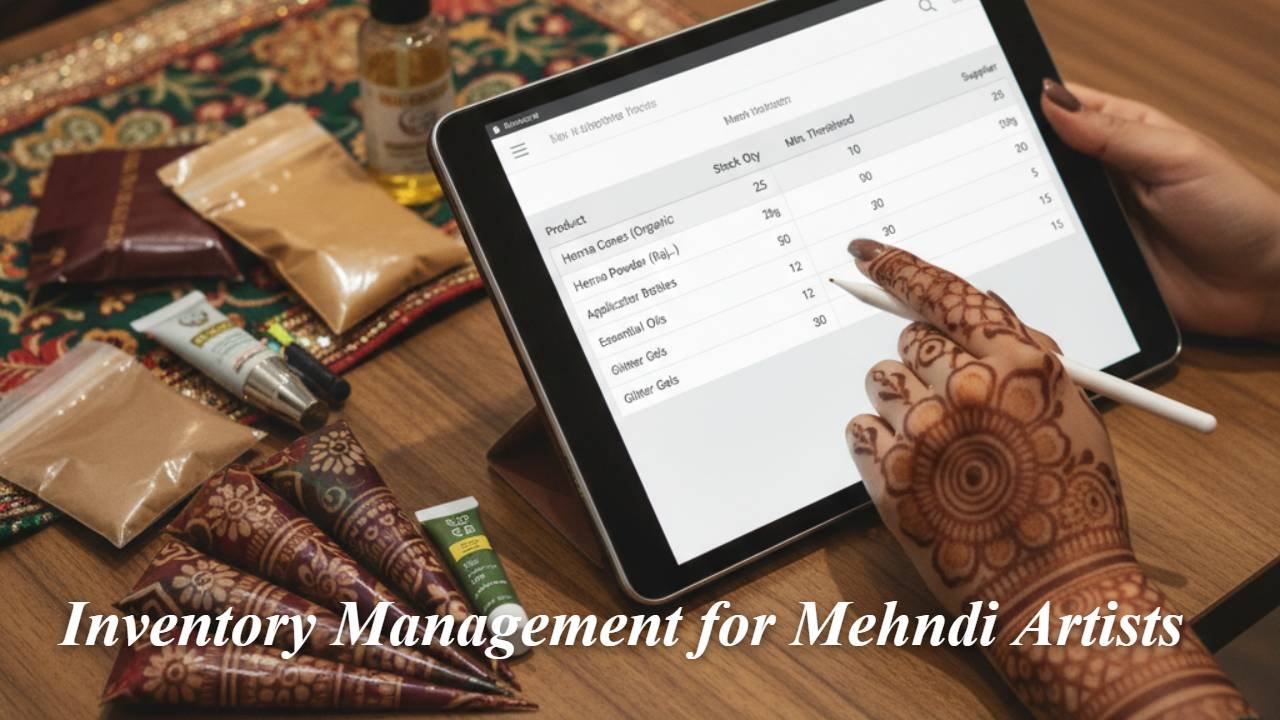
Inventory Management for Mehndi Artists is one of the most overlooked yet essential systems in building a profitable mehndi business. While most artists focus on bridal design perfection, Arabic pattern flow, and stain depth, poor stock control can quietly reduce profit margins and create last-minute stress.
From premium organic cones to essential oils, transparent sheets, sealants, gloves, and packaging supplies, every item directly impacts stain quality and service efficiency. Without structured tracking, materials expire, cones dry out, or bulk festival demand causes shortages.
Master this with Professional Cones
The same products used in this guide are available in our shop.
This comprehensive guide explains how to build a professional Inventory Management for Mehndi Artists system that supports bridal excellence, high-volume festival bookings, and long-term growth.
Why Inventory Management Matters in Mehndi Business
Mehndi artistry relies heavily on material quality. Unlike many services, henna paste freshness determines final stain results.
Inside this Guide:
Poor inventory control leads to:
- Expired cones
- Inconsistent paste texture
- Wasted supplies
- Emergency purchases at higher prices
- Missed booking opportunities
A structured Inventory Management for Mehndi Artists system ensures reliability and financial discipline.
Buy Mehndi Cones Pack of 24 – Natural, Organic & Dark Stain
Core Inventory Categories for Mehndi Artists
Before building a management system, categorize supplies.
Primary Categories
| Category | Examples |
|---|---|
| Henna Cones | Organic cones, bulk packs |
| Liquids | Essential oils, sealant spray |
| Tools | Scissors, pins, tape |
| Protective Items | Gloves, tissues |
| Sheets & Practice Material | Transparent sheets |
| Packaging | Aftercare kits |
Clear categorization simplifies tracking.
Understanding Henna Shelf Life
Henna is perishable.
Fresh paste produces deep reddish-brown stains within 24–48 hours. Improper storage reduces dye potency.
Buy Mehndi Cones Pack of 12 – Natural, Organic & Dark Stain
Storage Guidelines
- Refrigerate cones
- Avoid direct sunlight
- Use airtight containers
- Rotate older stock first
Shelf-life awareness strengthens Inventory Management for Mehndi Artists.
Step 1: Implement Stock Tracking Sheet
Use Excel or inventory apps.
Basic Tracking Columns
| Item | Quantity | Purchase Date | Expiry | Usage Rate |
|---|
Tracking prevents guesswork.
Step 2: Calculate Usage Rate
Understanding usage improves forecasting.
Example:
- Bridal full-arm booking uses 6–8 cones
- Festival guest palm uses 1 cone per 8–10 clients
Usage data supports smarter purchasing decisions.
Step 3: Apply FIFO Method (First In, First Out)
Always use older stock before new batches.
FIFO reduces waste and maintains stain consistency.
Professional Inventory Management for Mehndi Artists relies heavily on FIFO rotation.
Step 4: Maintain Safety Stock Level
Safety stock protects against sudden demand spikes.
Recommended Safety Buffer
| Item | Minimum Backup |
|---|---|
| Cones | 20% above weekly need |
| Oils | 2 weeks reserve |
| Gloves | 1 month reserve |
Buffer planning prevents last-minute stress.
Step 5: Plan for Wedding Season Demand
Wedding season increases consumption drastically.
Estimate:
- Average monthly bridal bookings
- Assistant usage rate
- Guest mehndi events
Forecasting strengthens your Inventory Management for Mehndi Artists during peak season.
Step 6: Separate Bridal and Festival Stock
Bridal bookings require premium cones with maximum freshness.
Festival season can use faster-moving bulk stock.
Segmentation prevents accidental mixing of batches.
Step 7: Track Expiry Dates Carefully
Henna potency declines with time.
Mark:
- Manufacturing date
- Expiry date
- Batch number
Clear labeling enhances control.
Step 8: Monitor Waste Percentage
Track damaged cones or dried paste.
Waste Monitoring Table
| Month | Purchased | Used | Wasted | % Waste |
|---|
Waste analysis improves purchase planning.
Step 9: Manage Transparent Sheet Inventory
Transparent sheets are used for:
- Practice
- Bridal pre-drawing
- Workshop training
Organize by thickness:
| Thickness | Use |
|---|---|
| 100 micron | Practice |
| 150 micron | Bridal layout |
| 200 micron | Teaching demos |
Categorization enhances professional efficiency.
Step 10: Organize Toolkit for Mobility
For destination weddings and bulk bookings:
- Portable storage boxes
- Separated compartments
- Cold storage bags for cones
Organized kits improve workflow.
Step 11: Bulk Buying Strategy
Bulk purchasing reduces per-unit cost.
However, overbuying risks expiry.
Calculate monthly consumption before placing bulk orders.
Balanced purchasing defines effective Inventory Management for Mehndi Artists.
Step 12: Integrate Inventory with Profit Calculation
Inventory cost directly impacts profit margin.
If cone wastage increases, net profit decreases.
Include inventory tracking in financial review.
Step 13: Use Digital Alerts
Set reminders for:
- Reorder threshold
- Expiry approaching
- Seasonal restocking
Automation simplifies management.
Step 14: Maintain Hygiene Inventory Control
Hygiene affects reputation.
Track:
- Gloves
- Sanitizers
- Disposable tissues
- Cleaning wipes
Cleanliness reflects professionalism.
Inventory Planning for Different Mehndi Styles
Rajasthani Bridal Mehndi
- Higher cone usage
- Longer session time
- Greater oil consumption
Arabic Patterns
- Moderate cone use
- Faster execution
Understanding style consumption patterns supports accurate stock planning.
Avoid Common Inventory Mistakes
- Buying cones without checking expiry
- Ignoring refrigeration
- Mixing old and new batches
- No tracking system
- Overestimating demand
Avoiding these errors strengthens operational efficiency.
Financial Benefits of Inventory Discipline
Structured Inventory Management for Mehndi Artists reduces waste and improves margins.
Profit Comparison Example
| Scenario | Waste % | Profit Margin |
|---|---|---|
| No tracking | 15% | Lower |
| Structured system | 3% | Higher |
Better control equals higher profitability.
Seasonal Inventory Strategy
Before:
- Wedding season
- Karwa Chauth
- Eid
- Diwali
Increase safety stock gradually.
After season ends, reduce bulk ordering.
Seasonal planning stabilizes business.
Expanding Into Product Sales
If selling:
- Wholesale cones
- Aftercare kits
- Sheet rolls
Inventory control becomes even more critical.
Separate service stock from retail stock.
Weekly Inventory Routine
| Day | Task |
|---|---|
| Monday | Count cone stock |
| Wednesday | Check refrigeration |
| Friday | Update tracking sheet |
| Sunday | Forecast next week usage |
Consistency builds discipline.
Long-Term Growth Through Inventory Systems
Artists who scale successfully rely on systems.
Inventory stability enables:
- Handling bulk wedding bookings
- Expanding into workshops
- Launching product lines
- Increasing booking capacity
Structured stock control supports sustainable growth.
Frequently Asked Questions
1. How long do henna cones last?
Fresh cones typically remain effective for 3–6 months if refrigerated.
2. Should I bulk buy cones?
Yes, but only based on accurate consumption forecasting.
3. What is FIFO in inventory?
First In, First Out method to use older stock first.
4. How often should I review stock?
Weekly during peak season, bi-weekly otherwise.
5. Does inventory tracking improve profit?
Yes, reduced waste increases net margin.
Final Thoughts
Mastering Inventory Management for Mehndi Artists transforms your artistry into a structured, profitable business. Fresh cones, organized supplies, seasonal forecasting, and waste control ensure consistent stain quality and reliable service delivery.
When your inventory system supports your creative excellence, you eliminate stress and maximize profitability.
If you are ready to enhance your stock management while maintaining premium stain performance, explore high-quality cones and artist essentials designed to support professional-grade mehndi operations.
More Design Inspiration