A bad mehndi cone can ruin more than just your design—it can spoil a bridal moment or even cause a serious skin reaction. Knowing how to spot expired or chemically unsafe paste is essential, especially if you often buy pre-made cones or store leftover paste. Here’s a professional checklist that tells you exactly when it’s time to toss that cone.
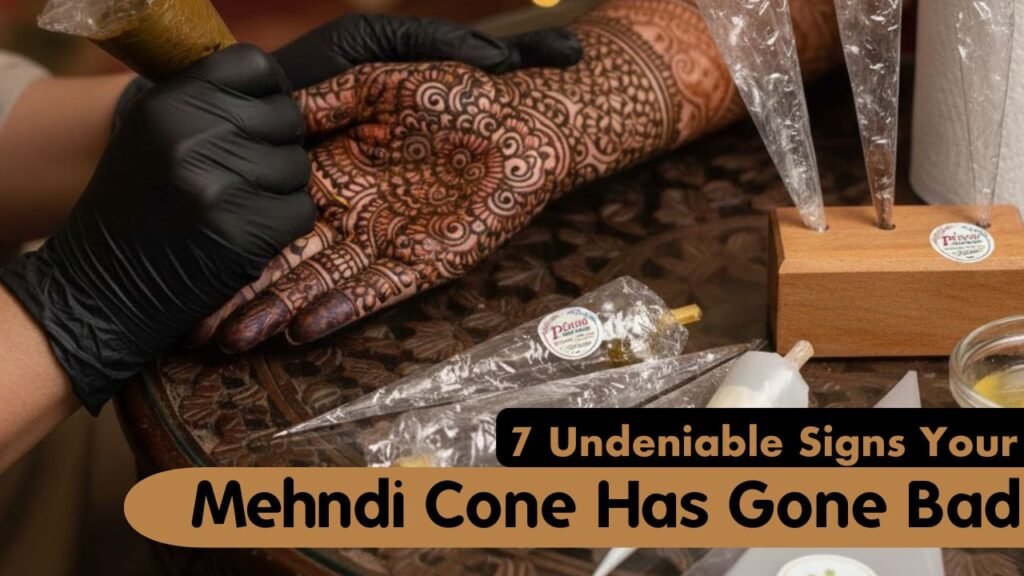
Don’t Risk the Stain: A Professional Checklist for Identifying Expired Henna Paste
Henna paste can fail in two main ways: natural decay (leading to weak stains) or chemical contamination (dangerous for your skin). To avoid both, watch for these visual, sensory, and performance warning signs.
Master this with Professional Cones
The same products used in this guide are available in our shop.
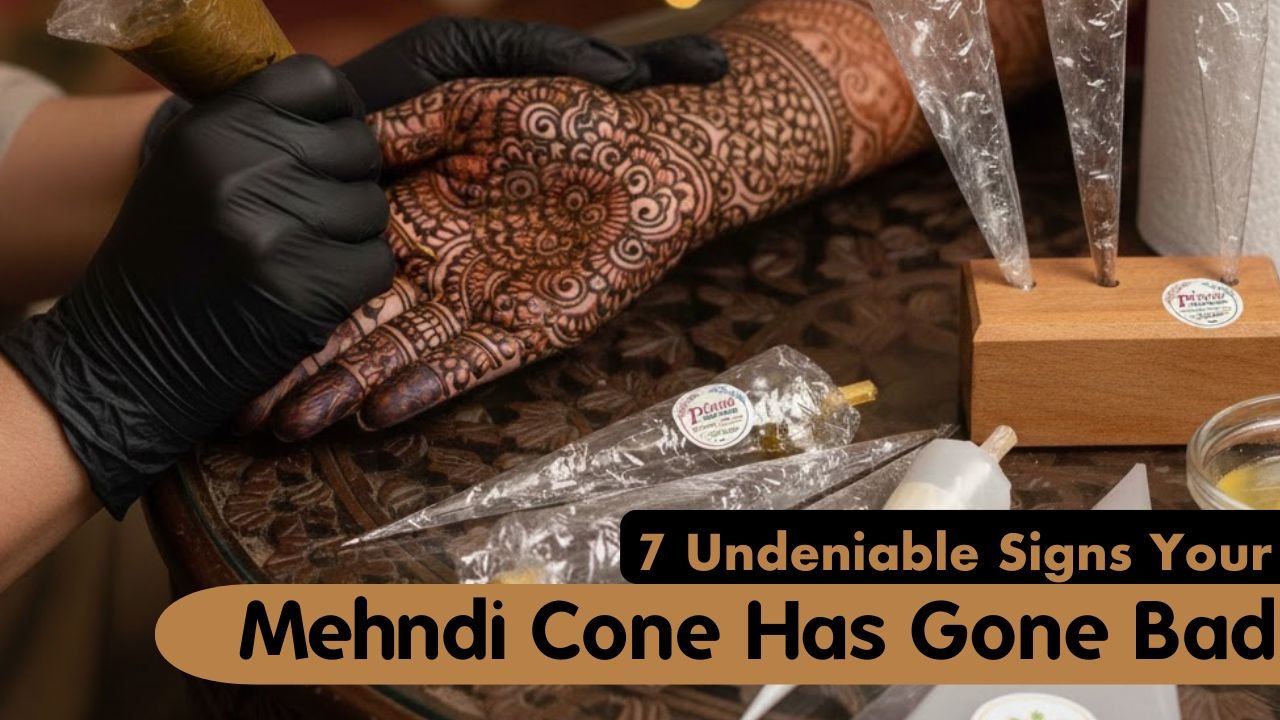
🚨 The 7 Undeniable Signs Your Mehndi Cone Has Gone Bad (Checklist)
1. Color Change (Visual Warning)
Fresh natural paste should be vibrant olive-green. If it turns dull brown, grey, or yellow, the Lawsone molecule has started decaying, meaning your stain will be weak.
2. Consistency Failure (Visual Warning)
Check for liquid separation, watery paste, or gritty texture. This destroys Flow Control, making detailed patterns frustrating or impossible to draw.
Inside this Guide:
3. Smell Test (Metallic Aroma)
Natural henna has a mild earthy, slightly terpeney scent. A sharp, metallic, rancid, or chemically sweet smell signals oxidation or the presence of harmful additives like PPD. Never ignore this warning.
4. The Lawsone Test (Functional Check)
Apply a small dot on your palm. If the stain turns pale yellow or orange within 15 minutes, the paste has lost dye potency. Even if the cone looks fine, it’s dead for professional use.
Buy Mehndi Cones Pack of 12 – Natural, Organic & Dark Stain
5. Flow/Drawing Failure (Functional Check)
If the paste breaks, crumbles, or clogs the tip, even after kneading, it has lost viscosity and moisture content, making it almost impossible to achieve smooth lines.
6. Burning Sensation (Health Risk)
If your skin tingles, itches, or burns, wash the paste off immediately. This is a classic PPD (Para-Phenylenediamine) reaction, indicating chemical contamination.
7. Black Residue Test (Health Risk)
Natural henna never stains instantly black. If your paste stains instantly black, immediately throw out the cone as it almost certainly contains PPD, posing a severe health risk. This is critical when buying unverified or cheap cones.
Why Mehndi Cones Go Bad
- Exposure to air: Leaving a cone unsealed accelerates oxidation.
- Improper freezing: Repeated thawing or not using a deep freezer speeds up paste decay.
- Old powder: Using expired henna powder produces weak paste from the start.
Quick Reference Table: Signs Your Mehndi Cone Has Gone Bad
| Sign | What to Look For | Risk |
| Color Change | Dull brown/grey/yellow | Weak stain |
| Consistency | Watery, gritty, separated | Broken Flow Control |
| Odor | Metallic, rancid, chemically sweet | Oxidation/Chemical presence |
| Pale Stain | Yellow/orange within 15 mins | Dead Lawsone |
| Flow Failure | Crumbles or clogs tip | Low viscosity |
| Burning Sensation | Tingling, itching, burning | Chemical PPD |
| Black Residue | Instant black stain | Dangerous PPD chemical dye |
Featured Snippet Q&A Examples
How Do I Know If My Natural Henna Cone is Expired?
An expired natural henna cone will smell metallic or stale, appear dull brown/grey, and produce a pale yellow/orange stain immediately after removal due to Lawsone decay.
Buy Mehndi Cones Pack of 12 – Natural, Organic & Dark Stain
What Does Bad Mehndi Paste Smell Like?
Bad paste smells metallic, rancid, or chemically sweet because of oxidation or chemical additives. Natural henna should never have a harsh chemical smell.
Conclusion and Call to Action
When in doubt, throw it out. Weak natural paste may only ruin your design, but chemical cones can cause lasting damage. Always prioritize skin safety: If it tingles, burns, or stains black instantly, discard the cone immediately. Always test your cone on a small patch first.
More Design Inspiration