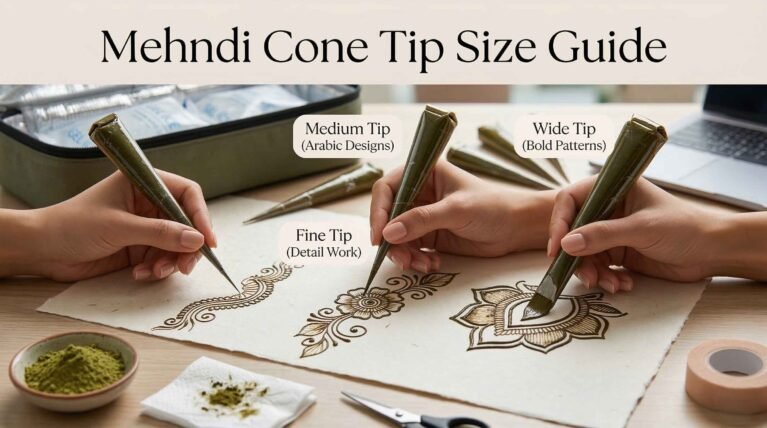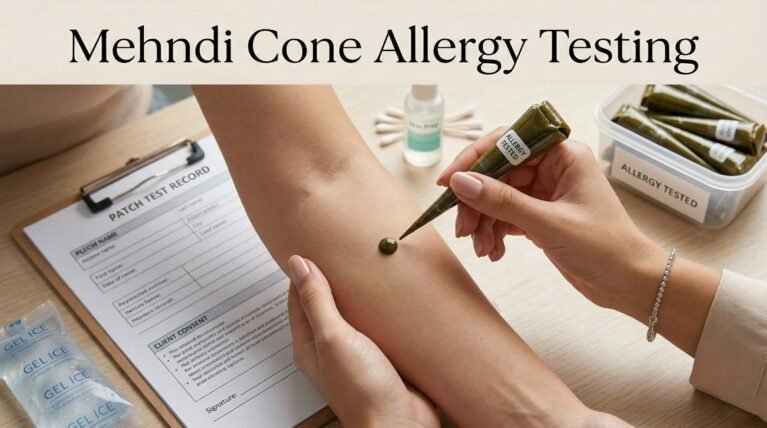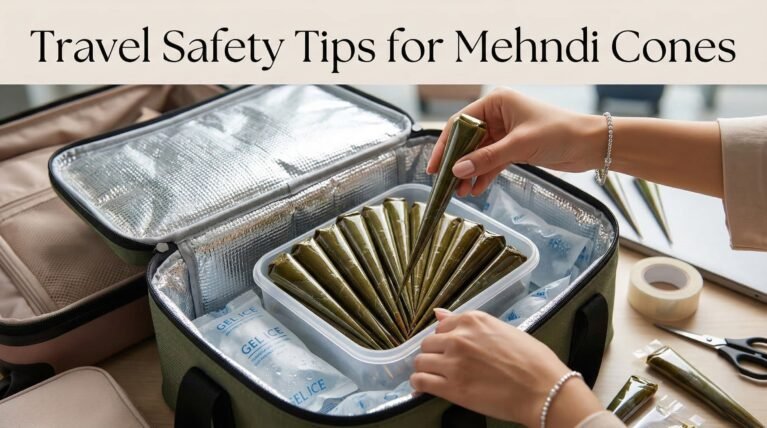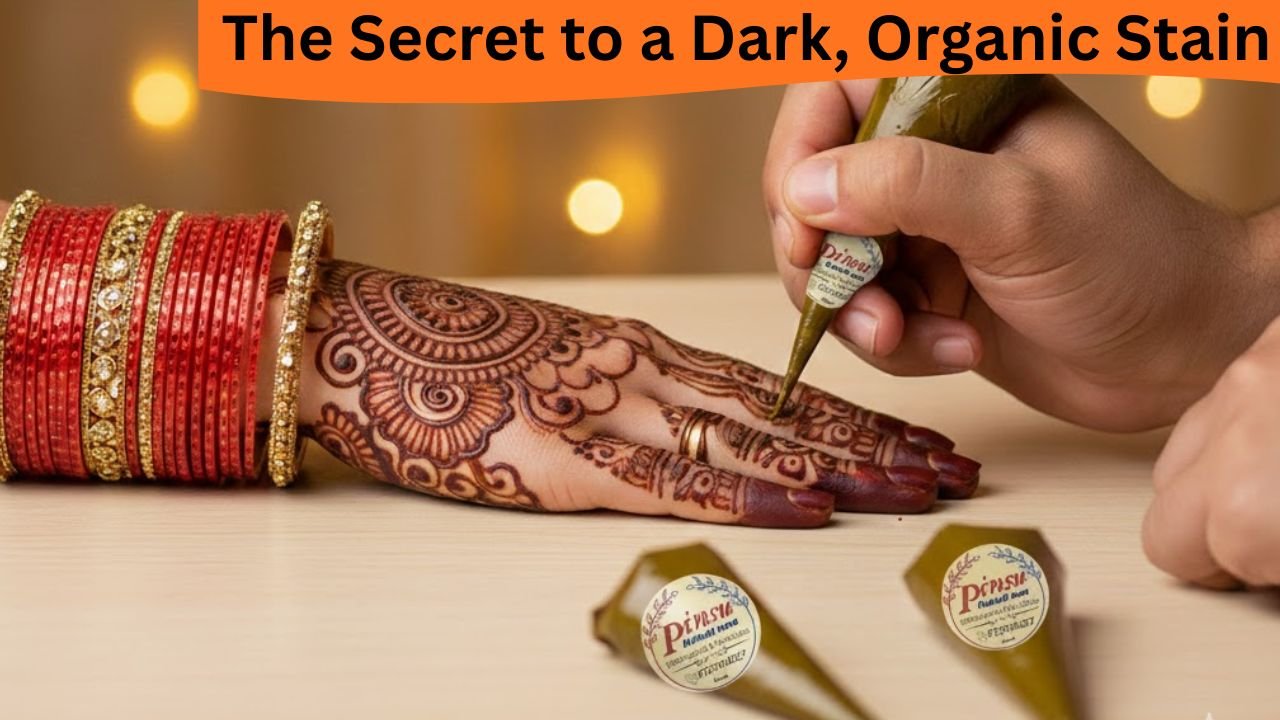
The four core ingredients of a natural mehndi cone are Henna Powder, Essential Oils, Sugar, and Liquid.
A dark maroon mehndi stain has always symbolized love, celebration, and good fortune in Indian culture. Brides look for it, families expect it, and professional artists build their reputation on it. Everyone wants the same outcome: a perfect mehndi cone with smooth flow, stringy consistency, and high lawsone content that delivers a deep, long-lasting stain without damaging the skin.
Master this with Professional Cones
The same products used in this guide are available in our shop.
Problems begin when shortcuts replace fundamentals. Many cones in the market rely on fast-acting chemicals instead of real henna chemistry. True color depends on balance, patience, and ingredient quality. Whether you are a bride checking for safety or an artist preparing your first batch, understanding these four components decides your final result.
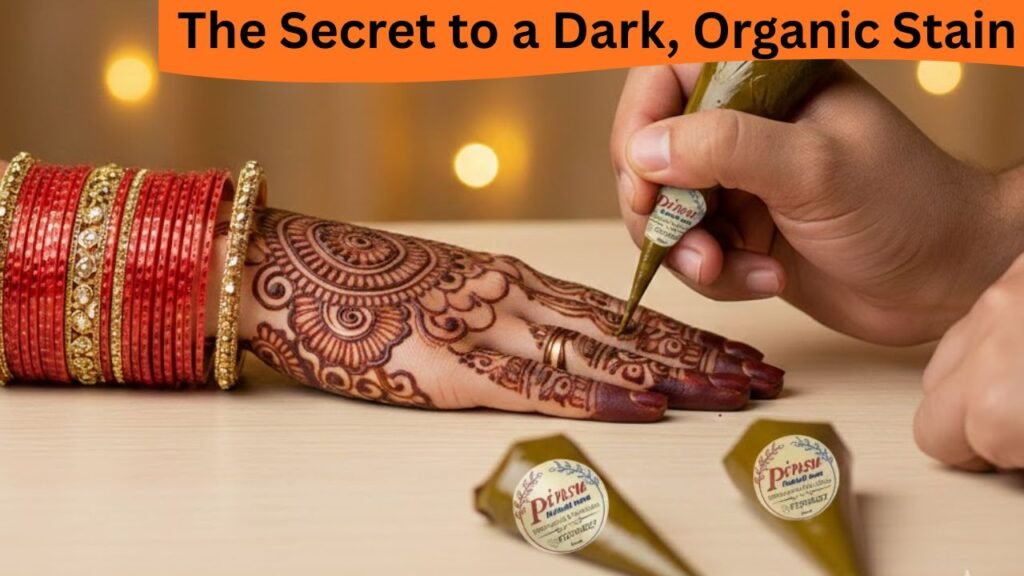
Henna Powder Base: Why Source & Crop Year Matter
Henna powder forms the backbone of every natural cone. No oil or trick can compensate for poor-quality powder. Experienced artists always choose Body Art Quality (BAQ) henna, most trusted from Sojat, Rajasthan, where climate and soil naturally support high dye yield.
Inside this Guide:
Crop year matters more than most people realize. Current crop henna powder contains significantly higher lawsone levels than old crop powder. Fresh powder appears greenish-brown and smells earthy. Old powder looks grey, stains weakly, and fades faster, no matter how well the paste is mixed.
BAQ henna also provides essential stringiness, which artists rely on for clean line work. Stringy paste stretches slightly before breaking, allowing smooth curves and fine details. Low-grade or hair henna snaps quickly, causing broken lines and uneven flow. Triple-sifted powder ensures predictable piping and professional results.
Buy Mehndi Cones Pack of 24 – Natural, Organic & Dark Stain
Terpene-Rich Essential Oils: The Key to Dark Stains
Essential oils play a chemical role, not a cosmetic one. Oils rich in monoterpenes, especially terpineol, act as solvents that dissolve the lawsone molecule from the henna leaf, allowing it to bind with skin effectively.
Different oils serve different purposes. Eucalyptus (Nilgiri) oil accelerates dye release and performs well in most Indian climates. Clove (Laung) oil increases warmth and depth, often producing darker final tones, but it can irritate sensitive skin. For children or sensitive users, lavender oil offers a gentler alternative while still supporting dye release.
Only pure essential oils belong in mehndi paste. Many cheap cones use kerosene, petrol, or synthetic fragrance to imitate sharp smells. These substances burn skin and create artificial color. Natural cones smell herbal and sharp, never chemical. If the smell feels harsh, the ingredients likely are.
Sugar Binding: Flexibility, Moisture, and Suction
Sugar controls how long the paste stays in contact with the skin. It adds flexibility as the paste dries, preventing cracks that cause early flaking. Longer contact time always results in deeper stains.
Buy Mehndi Cones Pack of 24 – Natural, Organic & Dark Stain
Sugar also draws moisture from the air, keeping lawsone active during drying. More importantly, sugar creates suction to the skin. As the paste dries, it forms a mild vacuum seal that keeps the paste pressed against the skin instead of lifting away.
Climate dictates sugar quantity. In high humidity or monsoon weather, reduce sugar to prevent the paste from melting or becoming runny. In dry climates, slightly increase sugar to maintain flexibility. White sugar and jaggery both work when balanced correctly, but excess sugar always leads to smudging.
Liquid Choice: Water, Lemon Juice, and Dye Release Timing
Liquid determines paste texture and dye release speed. Each option works, but timing differs.
Lemon juice creates an acidic environment that promotes slow dye release. Paste mixed with lemon typically needs 8 to 12 hours of resting time before use. This traditional method works well but may irritate sensitive skin if the acidity is too strong.
Warm water activates fresh BAQ henna faster. Dye release usually completes within 2 to 6 hours, making this method ideal for professionals or anyone with sensitive skin.
Tea water adds fragrance, not darkness. It does not increase lawsone content or stain depth. Stain strength still depends on powder freshness and oil quality.
The 5-Minute Spot Test (Dye Release Test):
Do not guess if your paste is ready. Place a small dot of paste on your palm and leave it for 5 minutes. Wipe it off gently. If it leaves a bright pumpkin-orange stain instantly, the dye is ready. If the stain appears pale yellow, allow the paste to rest longer before use.
Organic vs. Chemical Mehndi Cones: Know the Difference
Understanding this difference protects both skin and tradition. Many instant cones rely on artificial dyes instead of henna chemistry.
| Feature | Organic / Natural Cone | Chemical / Instant Cone |
|---|---|---|
| Smell | Earthy, herbal | Sharp, petrol-like |
| Stain Development | Orange → Brown → Maroon (24–48 hrs) | Red or black instantly |
| Texture | Smooth, controlled | Over-runny or sticky |
| Active Ingredients | Henna, oils, sugar, liquid | PPD, Sodium Picramate, solvents |
| Skin Safety | Generally safe | Burns, blisters, allergies |
PPD causes instant black stains and severe allergic reactions. Sodium Picramate produces instant red or maroon stains and is commonly used in “instant color” cones sold locally. Both chemicals damage skin and should never be used, especially for bridal mehndi.
Labels such as “Clinically Tested” or “Export Quality” often mean nothing unless full ingredients are clearly listed. Transparency signals safety.
Oxidation: Where Real Color Develops
Mehndi does not finish when the paste comes off. True color develops through oxidation, where oxygen reacts with lawsone over the next 24 to 48 hours. Heat speeds this reaction, while water slows it.
Never wash the area immediately after paste removal. Scrape the paste gently instead. Apply a heat-generating balm like Vicks VapoRub or traditional mustard oil. The warmth from these substances stimulates blood flow, keeps the skin warm, and encourages deeper oxidation.
Pro Tip: Mild heat exposure after paste removal often deepens color naturally within hours.
General Mixing Ratio: A Safe Starting Point
Many readers want clarity without complexity. This ratio works as a reliable baseline.
100g henna powder : 30ml essential oil : 30g sugar : liquid as needed
Add liquid slowly until the paste reaches the correct texture.
The Visual Consistency Check:
When you lift your spoon, the paste should flow in a long, unbroken ribbon and form a soft peak that slowly curls over in the bowl. A stiff peak means the paste is too dry. A puddle that disappears instantly means it is too wet. Adjust with small amounts of liquid or powder as needed.
How to Check Ingredients Before Buying Cones
Start with the label. Natural cones clearly list henna, essential oils, sugar, and liquid. Avoid vague descriptions. Smell the cone opening before use. Herbal sharpness indicates safety. Chemical sharpness signals danger.
Check paste color. Fresh paste looks greenish-brown, never jet black or bright red. Always ask for the manufacturing date. Fresh cones outperform old stock every time.
Final Thoughts: Control the Result, Not the Risk
Dark stains never come from shortcuts. Henna powder provides dye. Essential oils release it. Sugar holds paste in place. Liquid controls timing and comfort. Each ingredient supports the next.
Test the consistency. Perform the dye release check. Verify ingredients before use. Your dark stain starts the moment you validate what goes into the cone, not when you wash off the paste, and that confidence naturally leads you toward products made with the same care and honesty.
More Design Inspiration