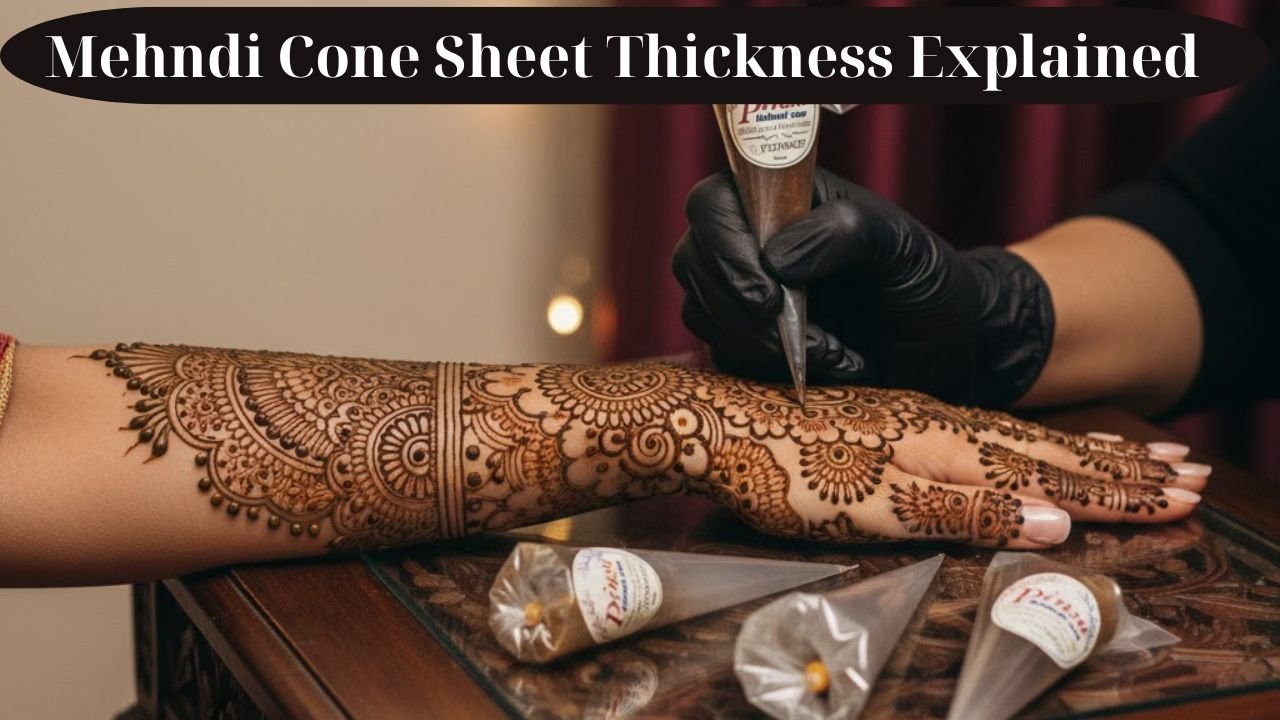
PVC or Cellophane? Decoding Cone Sheet Micron Size for Professional Precision
Ever notice some mehndi cones wobble, making your tight Jaali lines shaky, while others feel perfectly firm and reliable? The difference is in the micron size of the cone sheet. This small measurement plays a huge role in cone stiffness, line sharpness, and hand comfort. For professional artists in India, understanding this is as important as mixing the paste correctly.
The micron—one millionth of a meter—dictates how thick or thin the plastic sheet is. Thinner sheets flex easily, giving sensitivity but less support. Thicker sheets resist deformation, improving stability but requiring more hand pressure. Most professional work thrives on sheets between 35–40 μ, providing a perfect balance of precision and comfort.
Master this with Professional Cones
The same products used in this guide are available in our shop.
The physical behavior of mehndi paste under pressure is controlled by Rheology—the science of flow. Temperature and cone stiffness combine to determine paste viscosity and Flow Control during application.
Decoding the Micron: Definition and Impact
What is a Micron in Henna Art?
A micron (μ) measures the thickness of your cone sheet. One micron equals one-millionth of a meter. Each extra micron increases cone stiffness, directly affecting how your hand interacts with the paste.
Inside this Guide:
Micron vs. Structural Integrity
Cone thickness = stiffness = structural integrity.

Buy Mehndi Cones Pack of 12 – Natural, Organic & Dark Stain
A high-micron sheet keeps the cone tip perfectly circular under pressure, allowing for precise, sharp lines essential for intricate Jaali or Mandala designs. Too thin, and the cone collapses, causing uneven flow and hand strain. The right thickness ensures consistent Flow Control and professional-quality results.
The Professional Micron Range: Pros and Cons
In India, the most common cone sheets fall into three practical ranges:
The Ultra-Fine Cone
- Pros: Highly sensitive, flexible, easy to manage with very liquid paste
- Cons: Tips wobble easily; minimal structural rebound; frequent hand adjustments → increased Hand Fatigue
- Ideal Use: Small designs, beginner practice, very thin paste
The Professional Standard
- Pros: Balanced flexibility and support; resists creasing; perfect for fine tips and detailed Bridal Mehndi
- Cons: Slightly more hand pressure required
- Ideal Use: Tight Jaali, Mandala patterns, professional bridal work
The Heavy-Duty Cone
- Pros: Extremely durable, suitable for stiff paste or filling/shading large areas
- Cons: Can feel stiff; more hand fatigue; less responsive
- Ideal Use: Shading, large designs, thick paste applications
Material Matters: PVC vs. Cellophane
PVC/Mylar (The Standard)
PVC sheets are widely used in professional cones. They offer rigid support, resist moisture, and roll tightly. The cone tip remains stable, giving precise Flow Control and clean, consistent lines.
Cellophane (The Popular Choice)
Cellophane is common in Indian markets due to cost and availability. Thin cellophane (25 μ) is flexible but provides minimal structural rebound, which can increase Hand Fatigue during long Bridal Mehndi sessions. Tips may wobble, making precise lines challenging for intricate designs.
Buy Mehndi Cones Pack of 12 – Natural, Organic & Dark Stain
Micron Size and Artist Comfort
Hand Fatigue and Pressure
Cone stiffness affects finger strain:
- 50 μ cones: Constant high pressure → hand fatigue
- 25 μ cones: Collapse easily → constant reshaping and adjustment
How to Customize
Some artists use the Double Roll Technique: layering two thin sheets (e.g., 25 μ + 25 μ) to simulate the stiffness of a thicker cone. This balances structural support with material accessibility, maintaining Flow Control without adding extra cost.
Featured Snippet-Optimized Questions
What is the Recommended Micron Size for Fine Line Mehndi Cones?
Answer: For professional, detailed designs, use a sheet between 35–40 μ for maximum Structural Integrity and smooth Flow Control, minimizing Hand Fatigue.
How Does Cone Sheet Thickness Affect Line Sharpness?
Answer: Higher micron sheets resist deformation, keeping the cone tip circular under pressure. This ensures sharper, cleaner lines and consistent paste flow.
Can Thinner Cones Improve Sensitivity?
Answer: Yes, 25–30 μ cones are more sensitive and flexible, but they collapse easily with thick paste, requiring frequent hand adjustment.
Conclusion
For professional, consistent fine-line work, the ideal setup combines 35–40 μ cone sheets with either PVC or well-rolled Cellophane. This balance maximizes Structural Integrity, reduces Hand Fatigue, and ensures precise Flow Control throughout the entire application, from delicate Jaali to intricate Mandala patterns.
More Design Inspiration