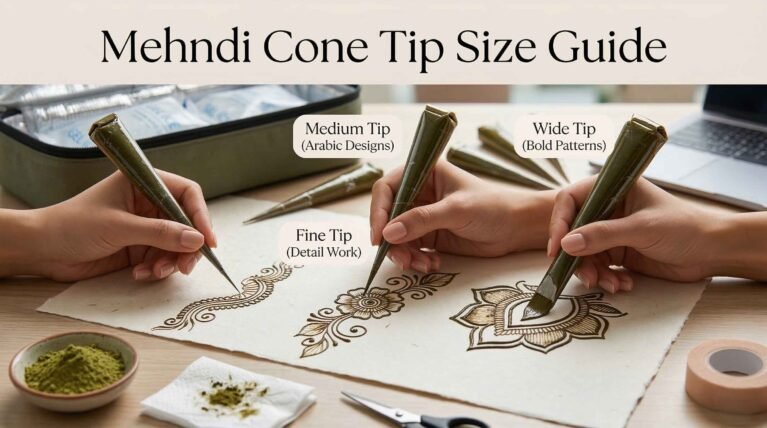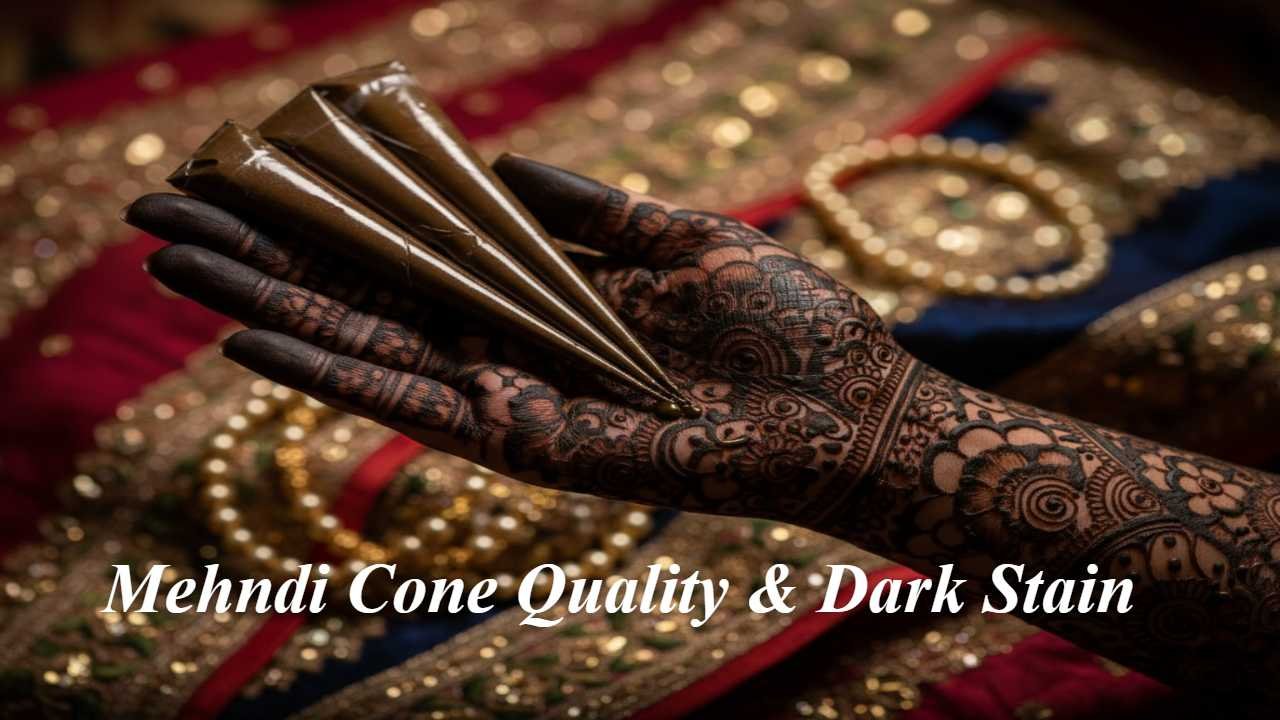
Mehndi cone quality plays a decisive role in stain depth, color longevity, and overall design precision. Whether you create intricate bridal mehndi or bold Arabic patterns, the cone you use directly affects line clarity, pigment release, and final oxidation. Many artists focus heavily on design skills but underestimate cone formulation and freshness. That gap often explains weak stains, uneven application, or premature fading.
This comprehensive authority guide explores everything that defines superior mehndi cone quality—from ingredients and grinding techniques to cultural relevance and storage science—so you can consistently achieve deep, dark stains.
Master this with Professional Cones
The same products used in this guide are available in our shop.
Why Mehndi Cone Quality Determines Stain Power
Henna stain forms through a molecule called lawsone, which binds to keratin in skin. The depth of binding depends on:
- Freshness of henna powder
- Proper sifting and grinding
- Essential oil composition
- Cone sealing and storage
- Skin preparation
Low-quality cones often contain stale powder, artificial dyes, or poorly balanced essential oils. Those shortcuts reduce dye release and compromise stain depth.
Inside this Guide:
Key Factors That Influence Stain Strength
| Factor | High-Quality Cone | Low-Quality Cone |
|---|---|---|
| Henna Source | Fresh crop, high lawsone | Old or mixed batches |
| Sifting | Triple or fine sifted | Coarse, grainy |
| Essential Oils | High terpene content | Weak or synthetic |
| Cone Packaging | Airtight, sealed | Loose wrapping |
| Shelf Life | 3–6 months frozen | Rapid degradation |
A professionally prepared cone enhances stain reliability across bridal, festival, and everyday applications.
1. Fresh Henna Powder: The Foundation of Mehndi Cone Quality
Premium mehndi cone quality begins with crop freshness. Henna leaves lose dye strength over time, especially when exposed to heat or humidity.
Buy Mehndi Cones Pack of 12 – Natural, Organic & Dark Stain
Professional artists typically prefer:
- Rajasthani or Sojat henna
- Finely milad sifted powder
- Green, earthy aroma (not dull brown)
Signs of Fresh Henna
- Bright green powder
- Smooth paste consistency
- Strong natural scent
- Quick dye release during testing
Without fresh powder, even perfect application techniques cannot produce a rich stain.
2. Essential Oils That Enhance Mehndi Cone Quality
Essential oils improve dye release and stain darkness. Oils rich in monoterpene alcohols strengthen lawsone binding.
Common high-performance oils include:
Buy Mehndi Cones Pack of 12 – Natural, Organic & Dark Stain
- Cajeput
- Tea tree
- Lavender (high terpene variety)
Low-grade cones often use fragrance oils, which add scent but no stain benefit.
Oil Comparison Table
| Oil Type | Dye Release Support | Suitable for Bridal Mehndi |
|---|---|---|
| Cajeput | Excellent | Yes |
| Tea Tree | Very Good | Yes |
| Lavender (terpene-rich) | Good | Yes |
| Synthetic Fragrance | None | No |
Bridal mehndi demands high terpene oils for maximum stain depth.
3. Cone Construction and Its Role in Mehndi Cone Quality
Many overlook cone wrapping precision. Poorly wrapped cones cause inconsistent flow and cracking.
Ideal Cone Characteristics
- Smooth cellophane sheet
- Sharp, controlled tip
- Even paste fill
- Tight rubber band seal
A well-constructed cone ensures:
- Clean Arabic strokes
- Fine Indian lace patterns
- Stable bridal detailing
Inconsistent cones interrupt line work and compromise intricate regional styles.
4. Storage Science Behind Dark Stain Results
Even superior mehndi cone quality declines without proper storage.
Correct Storage Methods
- Freeze immediately after preparation
- Keep airtight to prevent oxidation
- Avoid repeated thawing cycles
Room temperature exposure reduces dye power quickly. Professional mehndi artists freeze cones until needed, then thaw only what they use.
5. Skin Preparation and Its Link to Mehndi Cone Quality
Even premium cones cannot overcome poor skin prep.
For optimal stain:
- Wash skin with soap only
- Avoid lotion or oil
- Apply eucalyptus sealant after drying
- Keep paste on 6–8 hours
Heat boosts oxidation. Traditional bridal mehndi often uses clove steam to deepen color.
6. Cultural & Regional Influence on Mehndi Cone Usage
Different regions approach henna application differently, yet mehndi cone quality remains central to all traditions.
Indian Bridal Mehndi
- Dense patterns
- Mandala centers
- Groom initials
- Symbolic motifs like peacocks and kalash
Deep maroon stains signify love and prosperity.
Arabic Mehndi Designs
- Floral vines
- Negative spacing
- Bold outlines
- Faster application style
Arabic patterns require smooth paste flow and consistent pigment release.
Moroccan & Gulf Styles
- Geometric shapes
- Tribal symmetry
- Strong contrast
Each regional style demands specific flow consistency and stain strength, reinforcing why cone quality matters across cultures.
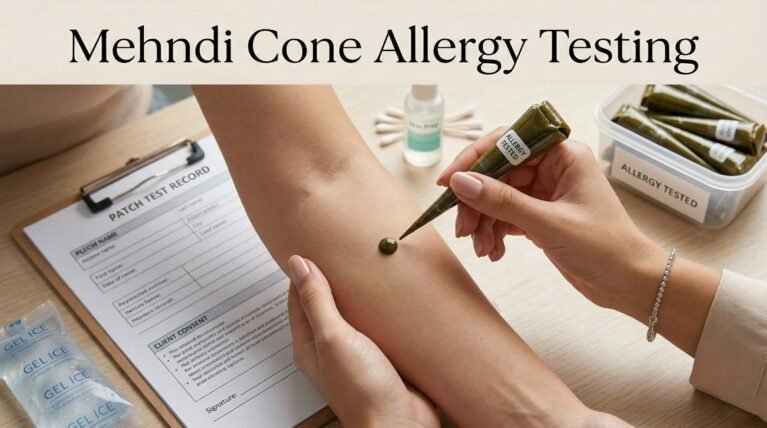
7. Testing Mehndi Cone Quality Before Application
Professionals test cones before major events.
Simple Patch Test Method
- Apply small dot on palm.
- Leave 6 hours.
- Remove paste.
- Observe stain after 24 hours.
A dark brown or deep maroon stain confirms strong dye release.
If stain appears light orange after 24 hours, cone potency may be low.
Common Mistakes That Reduce Stain Depth
Many artists unknowingly compromise mehndi cone quality through handling errors.
- Storing at room temperature too long
- Over-diluting paste
- Using expired essential oils
- Applying on moisturized skin
- Removing paste too early
Each mistake reduces oxidation strength and stain longevity.
Advanced Techniques to Maximize Dark Stain
Beyond cone quality, technique amplifies results.
Heat Activation
Gentle warmth enhances stain oxidation. Avoid direct flame exposure.
Sugar-Lemon Sealant
Keeps paste moist longer, allowing deeper dye penetration.
Overnight Retention
Longer contact equals stronger stain.
Ingredient Transparency: What to Avoid
Artificial black henna often contains PPD (para-phenylenediamine), which causes allergic reactions and long-term skin sensitivity.
High mehndi cone quality never includes:
- Chemical dyes
- Metallic salts
- Artificial color boosters
Natural henna always oxidizes from orange to brown gradually.
Professional vs Commercial Cones
| Feature | Professional Handmade | Mass Commercial |
|---|---|---|
| Ingredient Control | Full transparency | Often unclear |
| Freshness | Made in small batches | Bulk stored |
| Stain Reliability | High | Inconsistent |
| Custom Oil Blend | Yes | Rare |
| Bridal Suitability | Excellent | Risky |
Serious bridal artists rely on controlled handmade cones for predictable dark stains.
Mehndi Cone Quality in Bridal Mehndi Authority
Bridal mehndi requires flawless stain depth across hands and feet. Uneven staining disrupts aesthetic harmony.
Professional bridal preparation includes:
- 24-hour dye release rest
- Premium oil blend
- Temperature-controlled storage
- Detailed pre-wedding skin prep
Deep stains symbolize strong marital blessings in Indian culture, reinforcing the emotional importance of cone quality.
Sustainability and Ethical Henna Sourcing
Top-tier mehndi cone quality also reflects ethical sourcing.
Responsible sourcing ensures:
- Fair farmer wages
- Chemical-free cultivation
- Minimal environmental impact
Consumers increasingly value authenticity and safety alongside aesthetics.
Frequently Asked Questions (FAQ)
1. How long does a high-quality mehndi cone last?
Frozen cones maintain potency for 3–6 months. Room temperature storage reduces strength within days.
2. Why does my henna stain look light orange?
Light stains often result from low mehndi cone quality, poor dye release, or insufficient paste retention time.
3. Does bridal mehndi require special cones?
Yes. Bridal applications demand high terpene essential oils and freshly sifted henna for deep maroon stains.
4. Can I improve stain if cone quality is average?
Proper heat, long retention, and sugar sealant help, but premium mehndi cone quality remains essential for best results.
5. How can I check if a cone contains chemicals?
Artificially dark stain within one hour signals chemical additives. Natural henna oxidizes slowly over 24–48 hours.
Final Thoughts
Mehndi artistry blends tradition, chemistry, and craftsmanship. Design skill matters, but mehndi cone quality determines the stain that carries the beauty forward. Artists who prioritize ingredient integrity, freshness, and storage precision consistently achieve rich, long-lasting results.
Explore professional-grade cones and elevate your henna results with uncompromised mehndi cone quality that transforms every design into a stunning masterpiece.
More Design Inspiration