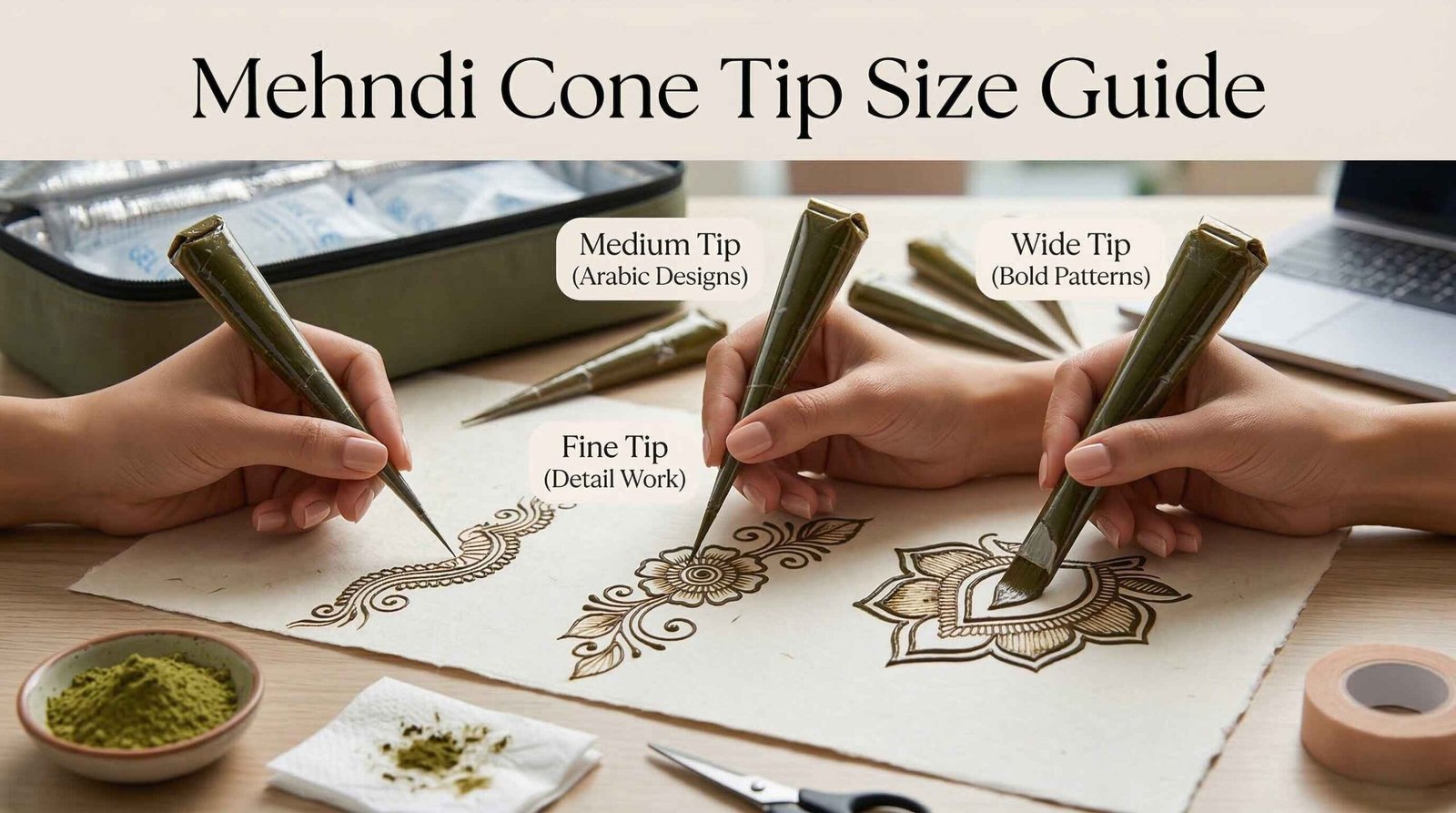
Mehndi cone tip size guide is one of the most important yet overlooked aspects of professional henna artistry. Many artists focus on paste quality and stain depth but underestimate how tip diameter affects line precision, flow control, and design clarity. Whether you are creating dense bridal mehndi, bold Arabic florals, or delicate contemporary patterns, the cone tip directly shapes your final result.
Selecting the correct tip size ensures smoother application, reduced hand fatigue, and consistent stain coverage. This comprehensive guide explains how different tip sizes impact technique, style, and cultural design requirements.
Master this with Professional Cones
The same products used in this guide are available in our shop.

Why Cone Tip Size Matters in Mehndi Art
The cone tip controls:
- Line thickness
- Paste flow rate
- Pressure sensitivity
- Detailing capability
- Speed of application
Even high-quality henna paste will perform poorly if the tip opening does not match the design style.
Inside this Guide:
The mehndi cone tip size guide helps artists align tool selection with artistic goals.
Understanding Basic Tip Size Categories
Cone tip sizes generally fall into three categories:

Buy Mehndi Cones Pack of 12 – Natural, Organic & Dark Stain
- Fine tip
- Medium tip
- Wide tip
Tip Size Comparison Table
| Tip Size | Line Thickness | Best For | Skill Level |
|---|---|---|---|
| Fine (0.3–0.5 mm) | Very thin | Intricate bridal | Advanced |
| Medium (0.6–0.8 mm) | Balanced | Arabic patterns | Intermediate |
| Wide (1.0 mm+) | Thick | Bold outlines | Beginner |
Each size serves a specific purpose in the mehndi cone tip size guide.
Fine Tip: Precision for Bridal Mehndi
Fine tips create ultra-thin lines required for:
- Dense Indian bridal designs
- Mandala centers
- Lace-style detailing
- Micro patterns
Advantages:
- High detailing control
- Elegant finish
- Refined symmetry
Challenges:
Buy Mehndi Cones Pack of 24 – Natural, Organic & Dark Stain
- Requires steady hand
- Higher clogging risk if paste is grainy
- Slower application speed
The mehndi cone tip size guide recommends fine tips for experienced artists working on ceremonial designs.
Medium Tip: Versatility for Arabic Patterns
Medium tips provide balanced flow.
Ideal for:
- Arabic floral vines
- Paisley outlines
- Shaded petals
- Contemporary minimal mehndi
Advantages:
- Smooth extrusion
- Faster coverage
- Lower clogging risk
Medium size works well for event-based artists who need efficiency without sacrificing precision.
Wide Tip: Bold and Fast Coverage
Wide tips are best for:
- Bold outlines
- Practice sessions
- Beginner learning
- Filling larger spaces
Advantages:
- Faster design completion
- Reduced hand strain
- Easier paste control
However, wide tips may lack refinement for intricate bridal work.
How Paste Consistency Influences Tip Choice
Even the perfect tip size fails if paste texture is incorrect.
Paste and Tip Compatibility
| Paste Texture | Recommended Tip |
|---|---|
| Very smooth | Fine tip |
| Medium consistency | Medium tip |
| Slightly thick | Wide tip |
The mehndi cone tip size guide emphasizes matching paste elasticity with tip diameter.
Pressure Control and Hand Technique
Tip size interacts with hand pressure.
Fine tips require:
- Gentle pressure
- Controlled wrist movement
- Stable finger positioning
Wide tips tolerate:
- Stronger pressure
- Faster strokes
Understanding pressure dynamics improves line consistency.
Bridal Mehndi Considerations
Bridal designs demand layered detailing across palms and feet.
Using mixed tip sizes may enhance results:
- Fine tip for detailing
- Medium tip for outlines
- Wide tip for quick base filling
Professional artists often prepare multiple cones to follow the mehndi cone tip size guide effectively.
Arabic Design Dynamics
Arabic mehndi features:
- Bold floral curves
- Negative space
- Flowing patterns
Medium tips maintain rhythm and speed while preserving elegance.
The mehndi cone tip size guide suggests avoiding overly fine tips for large Arabic motifs.
Moroccan and Geometric Designs
Moroccan styles depend on symmetry and clean angles.
Fine tips ensure:
- Sharp lines
- Consistent thickness
- Balanced geometry
Precision matters more than speed in these patterns.
Beginner Mistakes When Selecting Tip Size
Common errors include:
- Choosing fine tips without proper practice
- Using wide tips for intricate work
- Ignoring paste consistency
- Cutting tip unevenly
Uneven tip cutting creates irregular line flow.
Always trim carefully and test before application.
How to Adjust Tip Size Manually
Artists can customize tip size by trimming the cone carefully.
Guidelines:
- Cut minimal amount first
- Test on paper
- Increase opening gradually
Over-cutting cannot be reversed.
Patience ensures optimal control.
Climate Influence on Tip Performance
Temperature affects paste flow.
Hot weather thins paste, causing faster flow. Fine tips may leak more easily.
Cold weather thickens paste, increasing resistance in narrow tips.
The mehndi cone tip size guide recommends adjusting tip choice according to seasonal conditions.
Ergonomics and Hand Fatigue
Long bridal sessions may last several hours.
Fine tips require more controlled pressure, increasing finger strain.
Medium tips reduce fatigue without sacrificing precision.
Choosing correct tip size supports ergonomic comfort.
Professional Workflow Strategy
Experienced artists:
- Prepare multiple tip sizes
- Match tip to design stage
- Test flow before starting
- Adjust pressure dynamically
A systematic approach ensures consistency.
Quality of Cone Wrapping Matters
Even correct tip size fails if cone wrapping is loose.
Secure wrapping ensures:
- Controlled extrusion
- Stable pressure response
- Reduced leakage
Cone structure complements tip selection.
Visual Comparison Overview
| Design Type | Recommended Tip | Detail Level |
|---|---|---|
| Bridal Full Hand | Fine + Medium | High |
| Arabic Floral | Medium | Moderate |
| Practice Design | Wide | Low |
| Moroccan Geometric | Fine | High |
This reference simplifies decision-making.
Cultural Significance of Line Precision
In Indian bridal traditions, intricate detailing symbolizes celebration and prosperity.
Arabic patterns emphasize graceful flow.
Moroccan styles reflect symmetry and heritage.
Correct tip size enhances cultural authenticity and visual clarity.
Frequently Asked Questions (FAQ)
1. Which tip size is best for beginners?
Medium or wide tips offer easier control for learning.
2. Can I use one tip size for all designs?
Possible, but professional results often require multiple sizes.
3. Why does my fine tip clog frequently?
Paste may be grainy or insufficiently strained.
4. How do I prevent uneven lines?
Cut tip evenly and maintain consistent pressure.
5. Does tip size affect stain depth?
Indirectly. Proper flow ensures even paste application, improving stain consistency.
Final Thoughts
The mehndi cone tip size guide highlights how tool precision shapes artistic outcome. Fine, medium, and wide tips each serve unique purposes across bridal, Arabic, and geometric designs. Matching tip size with paste consistency, climate conditions, and design complexity ensures smooth flow and professional-quality lines.
Choose the right cone tip thoughtfully and elevate every mehndi design with flawless precision and confidence.
More Design Inspiration