
Every bride dreams of a deep, rich bridal mehndi stain, but confusion between labels makes mistakes common. Understanding the difference between natural and organic mehndi protects skin safety while ensuring the deepest, longest-lasting bridal colour.
- Natural Henna: Contains the dye Lawsone, giving the classic reddish-brown stain.
- Organic Henna: Ensures the leaves were grown without chemicals or pesticides and often carries certifications like USDA Organic or Ecocert.
Your goal is simple: purity, safety, and the deepest bridal stain possible. This 10-Point Checklist will guide you through every step of verification, from ingredients to source, helping you confidently pick the best mehndi cones for your wedding functions.
Master this with Professional Cones
The same products used in this guide are available in our shop.
Part I: The Purity Test (Ingredients & Labeling)
1: The Essential Ingredient List
Always start with the label. A truly pure mehndi cone contains only:
- Henna Powder – finely sifted and fresh
- Essential Oils – like Eucalyptus, Tea Tree, or Clove
- Sugar – for smooth paste and adhesion
- Acidic Liquid – lemon juice or tea decoction
Anything beyond these, like artificial colours or “instant enhancers,” is a red flag.
Inside this Guide:
2: The Non-Negotiable PPD-Free Claim
The cone must clearly state PPD-free, as this single label protects brides from burns, scarring, and long-term skin damage. Learning how to verify chemical-free mehndi helps brides avoid instant-colour cones that compromise both safety and stain quality.
- Avoid: vague “coloring agents” or “emergency cones.”
- Using PPD-containing paste can cause burns, scarring, or allergic reactions—permanent consequences that are never worth temporary dark colour.
3: Verification of Essential Oils
High-quality oils are the secret alchemy behind a dark, lasting stain.
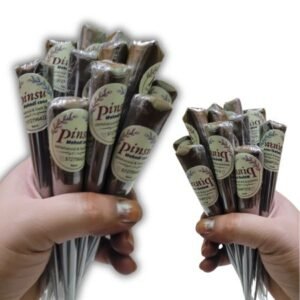
Buy Mehndi Cones Pack of 12 – Natural, Organic & Dark Stain
- Look for oils rich in monoterpene alcohol content like Cajeput, Tea Tree, or Eucalyptus.
- Avoid synthetic fragrances or “perfume” oils that do not aid in extracting Lawsone.
4: The Organic Certification Stamp
Certification adds authority and safety assurance.
- Look for: USDA Organic, Ecocert, or India Organic seals.
- Red Flag: Products claiming “Natural” but lacking certification/proof—these may have poor quality leaves or chemical contamination.
5: Absence of Colourants
Natural mehndi develops its colour over 48 hours; it does not need additives.
- Avoid cones with coffee, beetroot, or chemical dyes.
- Products promising instant colour are unsafe shortcuts.
Part II: The Sensory & Source Test (Physical Inspection)
6: The Smell Test
A real mehndi cone smells earthy, slightly grassy, and fresh.
- Red Flag: chemical or synthetic aroma.
- Your nose is a quick purity detector.
7: The Final Stain Test
This is the ultimate purity test for henna powder.
Buy Mehndi Cones Pack of 12 – Natural, Organic & Dark Stain
- The paste must stain orange first, never black or dark brown instantly.
- Confirms absence of PPD and ensures proper Lawsone oxidation over 48 hours.
8: Texture and Fineness
High-quality powder is finely sifted, soft, and smooth like talcum.
- Coarse or gritty powder may be old or lower-grade.
- Fineness increases surface area, helping Lawsone molecules release fully, giving a uniform, dark stain.
Part III: The Vendor & Price Test (Source and Safety)
9: Price Point Realism
Good organic henna is an investment.
- Red Flag: very cheap cones; freshness and quality cost more.
- High-quality price reflects purity, Lawsone content, and proper storage.
10: The Trusted Source
Purchase from trusted bridal artists, certified vendors, or reputable beauty stores.
- Avoid unregulated street vendors or random online sellers.
- Freshness Check: Paste should be soft, moist, and smell earthy and slightly grassy, not chemical.
- Trusted sources ensure maximum Lawsone potency and PPD-free guarantee.
Quick Reference Table: Red Flags vs Safe Terms
| Red Flag Term | Safe Term / Action |
| Instant Black, Emergency Cone | Natural, stains orange first |
| “Coloring Agent” | PPD-Free Label |
| Perfume / Fragrance | Essential Oils (Eucalyptus, Tea Tree, Clove) |
| Cheap, Suspicious Price | Realistic, reflects organic purity |
| Claims “Natural” but Lacks Certification/Proof | Certified Organic Seal (USDA / Ecocert / India Organic) |
Conclusion: Your Bridal Mehndi Safety Checklist
Using this Organic Mehndi Buying Checklist, you can confidently verify your mehndi is 100% natural, safe, and bridal-ready. From ingredients to smell, texture, and source, every step ensures your bridal hands shine safely.
Follow this checklist, and your bridal mehndi will deliver the rich, deep, and lasting stain every bride dreams of, guaranteeing safety, beauty, and peace of mind.