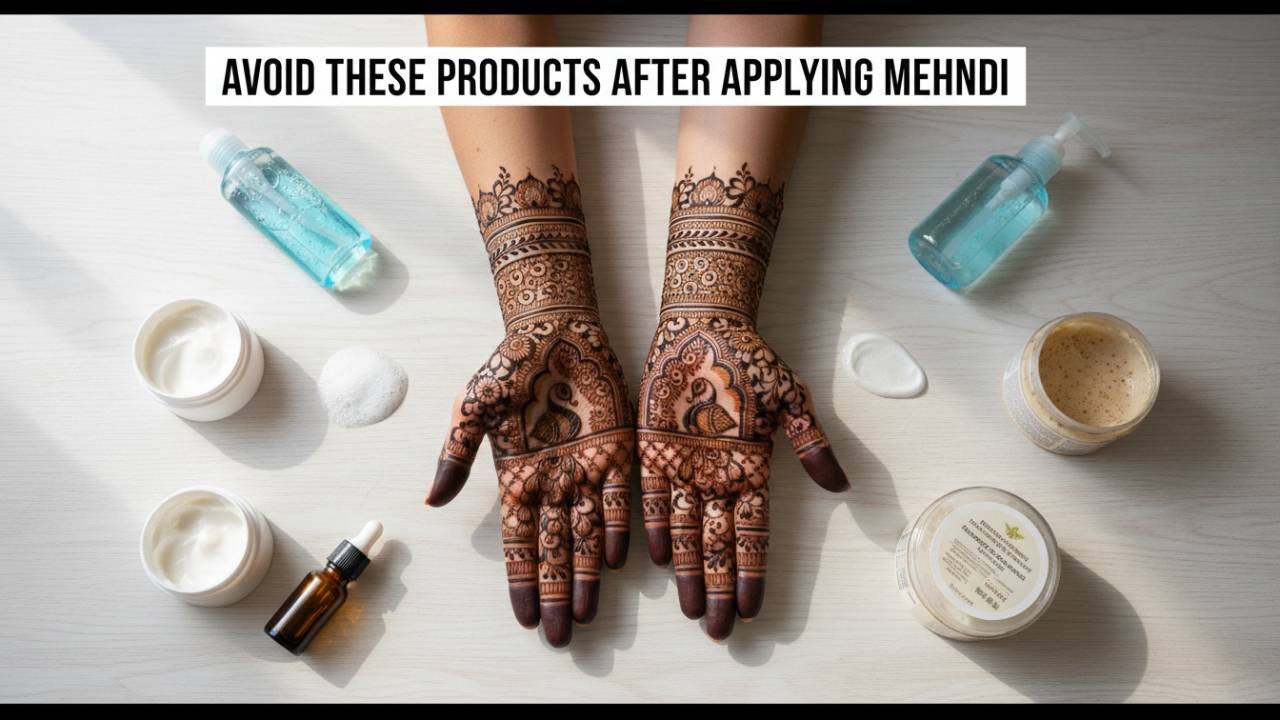
Products to Avoid After Applying Mehndi can determine whether your design turns deep maroon or fades into a light orange disappointment. Many people invest time in intricate bridal mehndi, detailed Arabic patterns, and professional henna application techniques. Yet a single wrong product used during aftercare can weaken oxidation and reduce stain depth.
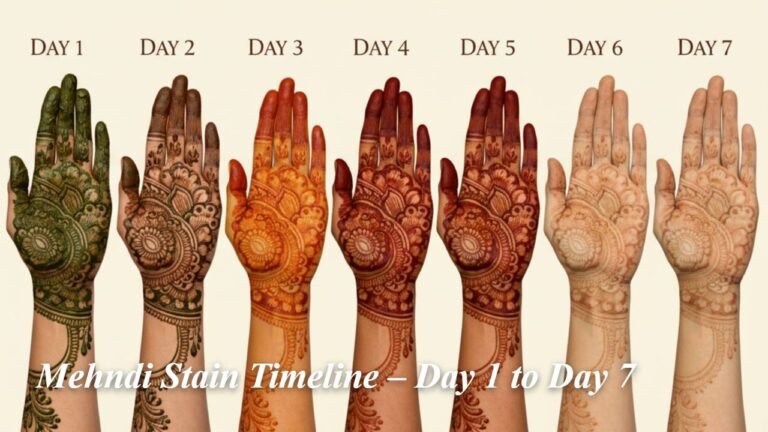
Henna staining is a chemical bonding process. The dye molecule lawsone binds to keratin in the skin. During the first 24–48 hours, that bond strengthens through oxidation. Certain skincare and household products interfere with this process.
Master this with Professional Cones
The same products used in this guide are available in our shop.
Understanding which products damage fresh mehndi allows you to protect color intensity and extend design longevity.
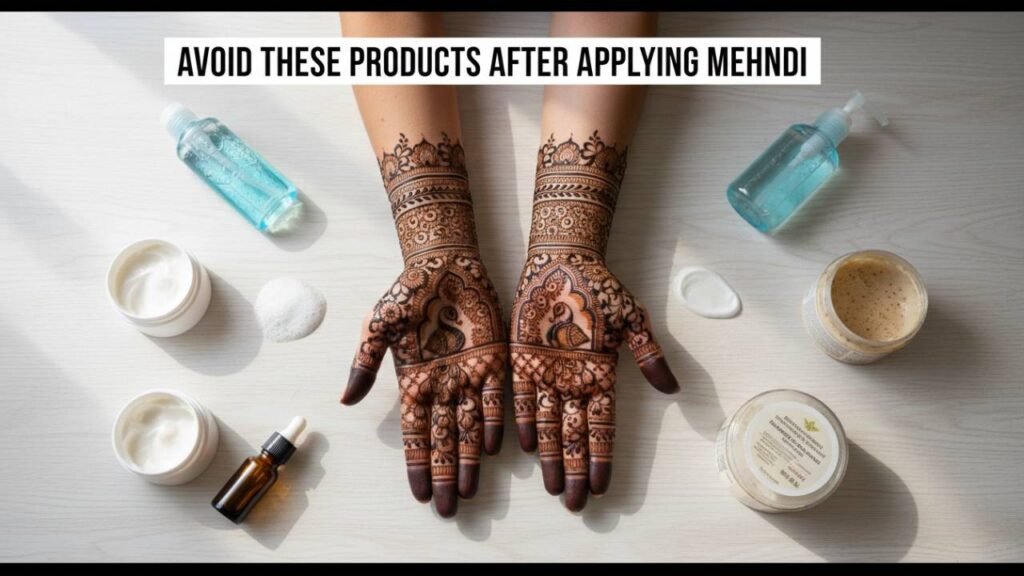
Why Aftercare Products Matter So Much
Henna stain development depends on:
Inside this Guide:
- Stable oxidation
- Minimal moisture disruption
- Limited friction
- Healthy skin barrier
Applying the wrong product too early introduces chemicals, water, or exfoliating agents that weaken dye bonding.
Even premium bridal mehndi can fade prematurely if exposed to harsh skincare products.
Buy Mehndi Cones Pack of 12 – Natural, Organic & Dark Stain
Products to Avoid After Applying Mehndi in the First 24 Hours
The first 24 hours are critical. Avoid all unnecessary product exposure during this window.
1. Soap and Body Wash
Soap strips natural oils from the skin. It also introduces moisture during the most sensitive oxidation phase.
Effects include:
- Reduced stain depth
- Uneven fading
- Patchy appearance
Avoid washing hands with soap for at least 24 hours after paste removal.
Buy Mehndi Cones Pack of 24 – Natural, Organic & Dark Stain
2. Hand Sanitizer
Alcohol-based sanitizers dry the skin aggressively. Alcohol disrupts oxidation and weakens surface dye.
Frequent sanitizer use leads to:
- Dull color
- Faster fading
- Increased dryness
Use gloves if hygiene is required in public settings.
3. Exfoliating Scrubs
Physical and chemical exfoliants remove stained skin cells. Mehndi bonds to the outermost layer of skin. Scrubbing accelerates fading.
Avoid:
- Sugar scrubs
- Salt scrubs
- Chemical exfoliating acids
Exfoliation should only resume after stain naturally begins fading.
Products to Avoid After Applying Mehndi That Contain Alcohol
Alcohol appears in many cosmetic products beyond sanitizer.
Check ingredient lists carefully.
Avoid:
- Perfumes
- Deodorant sprays on hands
- Certain toners
- Makeup setting sprays
Alcohol evaporates quickly but disrupts early oxidation significantly.
Products to Avoid After Applying Mehndi with Strong Fragrance
Fragrance compounds irritate sensitive skin and weaken the barrier.
Perfumed lotions may:
- Cause mild itching
- Increase redness
- Reduce stain clarity
For bridal mehndi, fragrance-free moisturizers work better after 48 hours.
Products to Avoid After Applying Mehndi with Harsh Chemicals
Certain ingredients directly damage stain quality.
| Ingredient | Risk Level | Effect on Mehndi |
|---|---|---|
| PPD | Very High | Severe irritation |
| Hydrogen peroxide | High | Bleaches stain |
| Retinol | High | Increases skin turnover |
| Glycolic acid | High | Exfoliates stained layer |
| Chlorine | Very High | Rapid fading |
Always avoid black henna products containing PPD.
Products to Avoid After Applying Mehndi in Bridal Mehndi
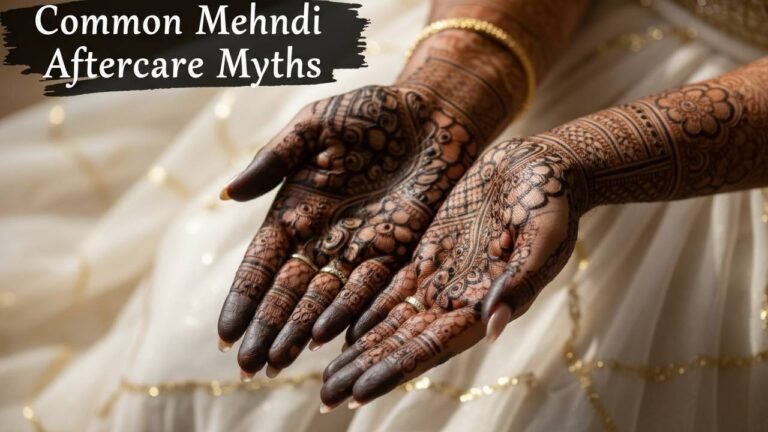
Bridal mehndi includes dense coverage, symbolic motifs, and detailed storytelling elements.
Brides often use:
- Perfumed body creams
- Glitter lotions
- Scented oils
These products can dull the rich maroon tone expected for wedding ceremonies.
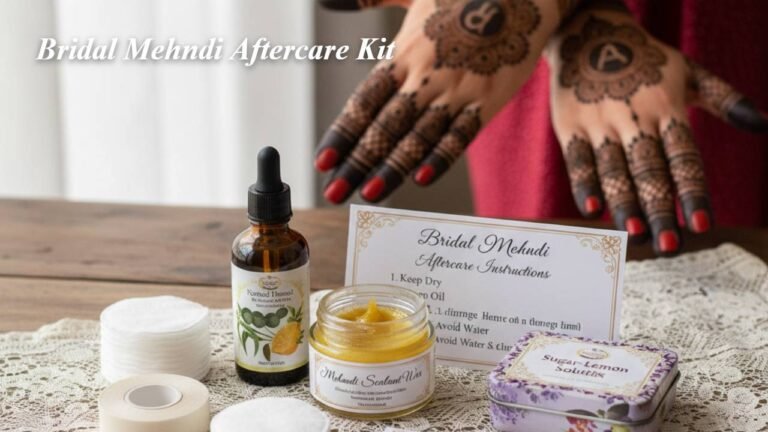
Bridal aftercare should focus on simple natural oils only.
Products to Avoid After Applying Mehndi in Sports and Active Lifestyles
Active individuals often rely on:
- Antibacterial wipes
- Gym sanitizers
- Chlorinated pools
Chlorine remains one of the most damaging substances for fresh henna. Swimming within 72 hours significantly lightens stain.
Protecting mehndi during sports requires avoiding chemical-heavy environments temporarily.
Avoid These Products After Applying Mehndi in Winter
Cold weather increases dryness. Many people apply heavy moisturizers immediately after paste removal.
Thick creams containing synthetic fragrance or alcohol reduce stain depth.
Winter-friendly alternatives include:
- Light coconut oil
- Mustard oil
- Olive oil
Natural oils protect without interfering chemically.
Products to Avoid After Applying Mehndi for Sensitive Skin
Sensitive skin reacts more quickly to additives.
Avoid:
- Artificial dyes
- Synthetic preservatives
- Strong essential oil blends
- Scented creams
Pure henna combined with minimal aftercare works best.
The Role of Chlorine and Swimming Pools
Chlorine acts as a bleaching agent. It strips color from stained skin cells.
| Time After Application | Swimming Risk |
|---|---|
| 0–24 hours | Severe fading |
| 24–48 hours | Significant fading |
| 72+ hours | Moderate fading |
Delay swimming for at least three days after removal.
Products to Avoid After Applying Mehndi: Makeup and Cosmetic Products
Makeup rarely affects hands directly. However, certain foundation products contain alcohol and acids.
Avoid applying:
- Liquid highlighters on hands
- Glitter sprays
- Setting sprays
These products contain chemicals that reduce stain longevity.
Products to Avoid After Applying Mehndi That Increase Skin Turnover
Anti-aging skincare speeds cell renewal.
Ingredients to avoid:
- Retinol
- Tretinoin
- Vitamin C serums (strong concentration)
- AHA/BHA acids
Faster cell turnover shortens mehndi lifespan.
Safe Alternatives to Use After Applying Mehndi
Instead of harmful products, choose safe options.
| Safe Product | Benefit |
|---|---|
| Coconut oil | Protects oxidation |
| Mustard oil | Deepens color protection |
| Olive oil | Gentle hydration |
| Fragrance-free lotion (after 48 hrs) | Maintains moisture |
Simple care produces superior results.
Cultural Importance of Protecting Mehndi
Mehndi represents joy, prosperity, and celebration in Indian, Pakistani, and Arabic traditions. Bridal mehndi symbolizes love and new beginnings.
Using inappropriate products after application diminishes both aesthetic beauty and cultural symbolism.
Protecting stain depth honors tradition.
Long-Term Stain Protection Strategy
Follow this timeline:
First 24 Hours
- No soap
- No sanitizer
- No swimming
24–48 Hours
- Minimal washing
- Apply oil before exposure to water
After 48 Hours
- Resume normal washing gently
- Avoid scrubbing
Consistency extends stain life.
Professional Artist Recommendations
Mehndi artists should:
- Provide aftercare instructions clearly.
- Warn clients about harmful products.
- Recommend natural oil options.
- Encourage delayed washing.
- Avoid chemical-heavy cones.
Education builds credibility and repeat business.
Frequently Asked Questions
1. Can I use soap immediately after removing mehndi?
No. Avoid soap for at least 24 hours to protect oxidation.
2. Does sanitizer ruin mehndi stain?
Alcohol-based sanitizers can lighten fresh stains significantly.
3. Is chlorine harmful to mehndi?
Yes. Chlorine bleaches stained skin cells and causes rapid fading.
4. Can I apply lotion after mehndi removal?
Use natural oil first. Regular lotion is safer after 48 hours.
5. Does perfume affect mehndi color?
Perfume containing alcohol may dull stain during early oxidation.
Final Thoughts
Understanding the Products to Avoid After Applying Mehndi protects both stain depth and skin health. Small aftercare decisions dramatically influence bridal mehndi richness, Arabic pattern contrast, and overall longevity.
Avoid harsh chemicals, alcohol-based products, exfoliants, and chlorine during the critical oxidation window.
Choose premium-quality natural henna cones and follow expert aftercare guidance from pinsumehndiart.in to achieve consistently dark, long-lasting mehndi designs that truly stand out.
More Design Inspiration