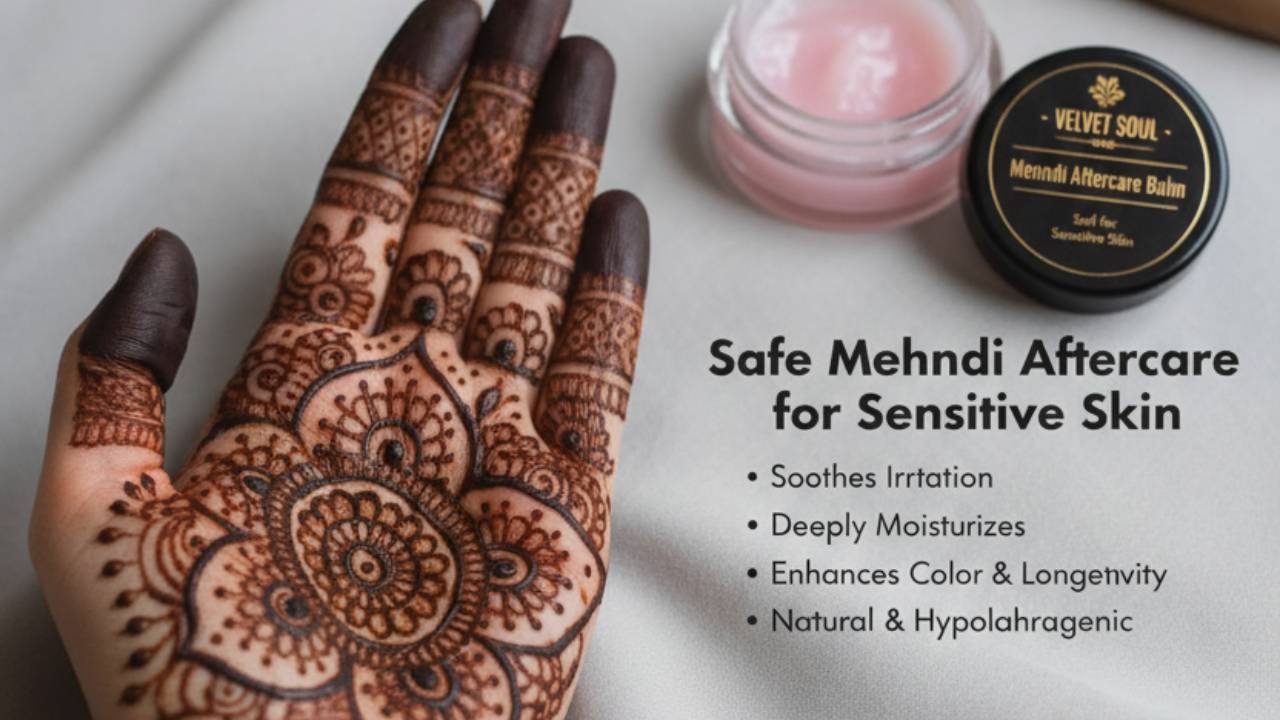
Safe Mehndi Aftercare for Sensitive Skin is critical for anyone prone to redness, itching, dryness, or irritation after henna application. While mehndi is traditionally natural and plant-based, sensitive skin reacts differently to environmental triggers, essential oils, and even friction during oxidation.
Many people focus on achieving a dark bridal mehndi stain. Fewer understand that proper aftercare determines both color depth and skin comfort. Sensitive skin requires a balanced approach that protects stain development without causing inflammation.
Master this with Professional Cones
The same products used in this guide are available in our shop.
This guide explores safe, dermatologist-aware aftercare practices while preserving the beauty of intricate mehndi designs.
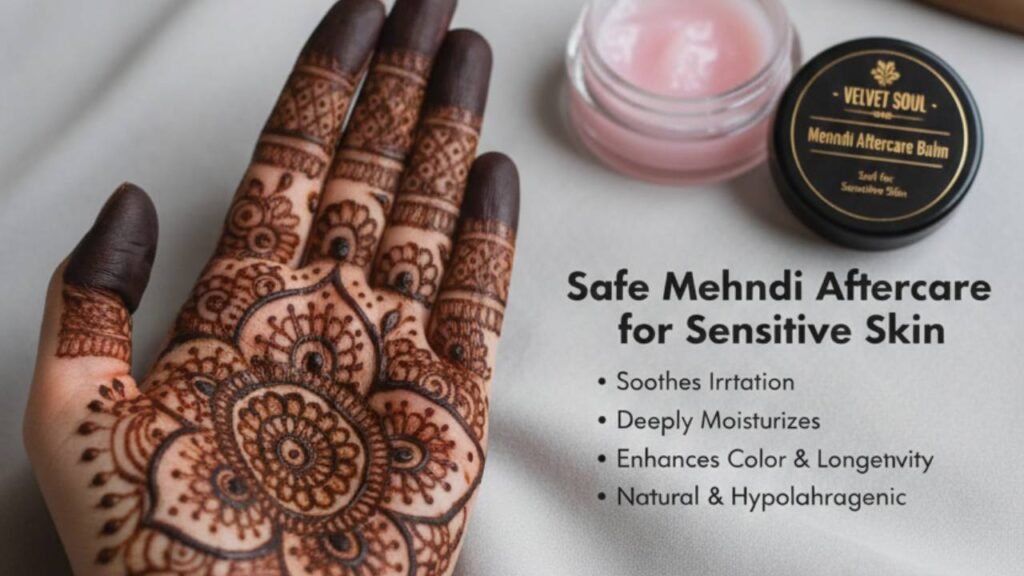
Understanding Sensitive Skin in Mehndi Application
Sensitive skin is not a medical condition by itself. It describes skin that reacts more easily to:
Inside this Guide:
- Fragrance
- Essential oils
- Dryness
- Temperature shifts
- Friction
In mehndi application, reactions may include:
- Mild redness
- Temporary itching
- Tightness
- Flaky texture
True allergic reactions to pure henna are rare. Most irritation results from improper aftercare or low-quality cones.
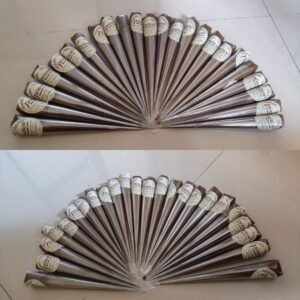
Buy Mehndi Cones Pack of 24 – Natural, Organic & Dark Stain
Using Safe Mehndi Aftercare for Sensitive Skin prevents unnecessary discomfort while ensuring deep stain development.
The Science of Henna and Skin Reaction
Henna contains lawsone dye, which binds to keratin in the outer skin layer. Natural henna rarely causes severe reactions. However, added essential oils such as eucalyptus or clove oil may irritate reactive skin.
Sensitive skin barriers are weaker. Moisture loss occurs faster. Cold or dry air increases irritation risk.
Aftercare must therefore:
Buy Mehndi Cones Pack of 24 – Natural, Organic & Dark Stain
- Protect oxidation
- Avoid harsh chemicals
- Maintain hydration balance
Balancing stain depth and skin safety is the key objective.
Safe Mehndi Aftercare for Sensitive Skin: Immediate Steps After Application
1. Allow Natural Drying
Avoid aggressive sealing methods. Let the paste dry naturally before applying any sealant.
If using lemon-sugar seal:
- Apply lightly
- Avoid over-saturation
- Stop if tingling occurs
Gentle drying reduces irritation risk.
2. Remove Paste Without Water
Dry scraping remains the safest removal technique. Water can irritate sensitive skin while interrupting oxidation.
Use:
- Soft spoon edge
- Fingertips gently
- Dry tissue for residue
Avoid wet cloths.
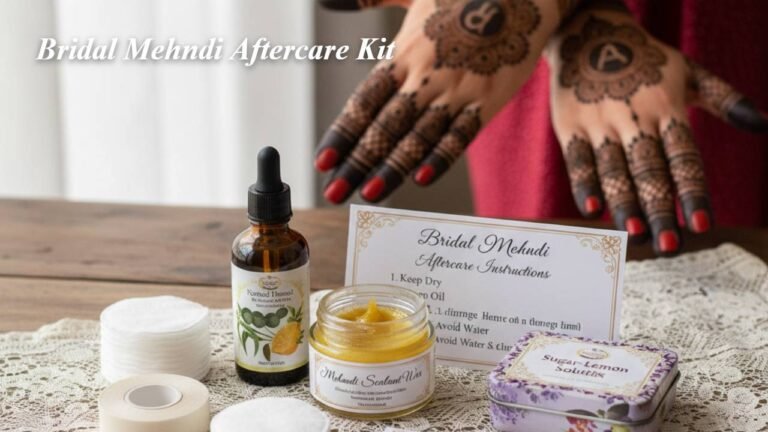
3. Apply Mild Natural Oil
Choose oils known for skin soothing:
- Coconut oil
- Almond oil
- Olive oil
Avoid strongly scented oils if skin is reactive.
Oil protects oxidation and prevents dryness.
Safe Mehndi Aftercare for Sensitive Skin During Oxidation
The first 24 hours after paste removal remain critical.
Sensitive skin needs:
- Dry environment
- Minimal friction
- Stable temperature
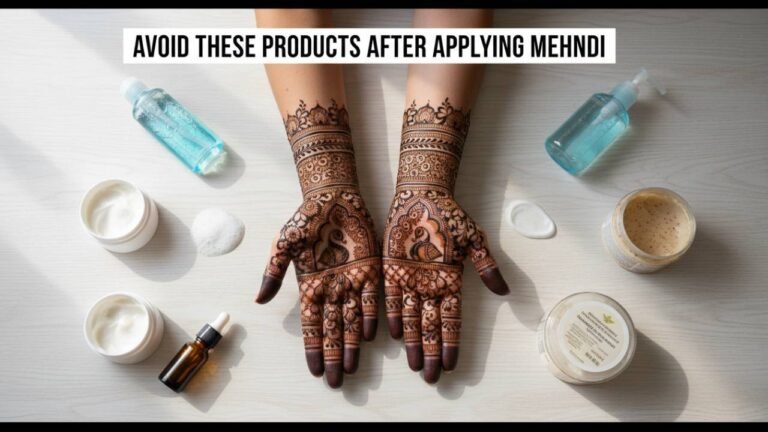
Avoid:
- Soap
- Sanitizer
- Perfumed creams
- Tight gloves
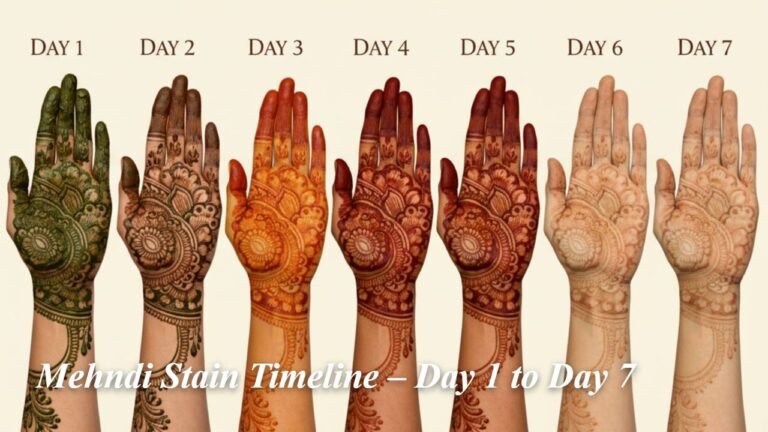
Oxidation naturally deepens stain from orange to brown over 48 hours.
Oxidation Timeline for Sensitive Skin
| Time After Removal | Expected Reaction | Care Focus |
|---|---|---|
| 0–6 hours | Mild warmth | No water exposure |
| 6–24 hours | Color darkening | Oil protection |
| 24–48 hours | Final tone setting | Gentle washing only |
Controlled care ensures both comfort and color depth.
Safe Mehndi Aftercare for Sensitive Skin in Bridal Mehndi
Bridal mehndi features dense motifs, fine detailing, and heavy coverage.
Heavy coverage increases warmth and skin stimulation. Brides with sensitive skin should:
- Inform artist before application
- Request mild essential oil blends
- Avoid aggressive steaming
- Wear breathable cotton gloves overnight
Dense Indian bridal mehndi demands careful balance between tradition and comfort.
Safe Mehndi Aftercare for Sensitive Skin in Arabic and Minimal Designs
Arabic mehndi patterns include open spaces and bold strokes. Minimal modern designs rely on fine lines.
These styles generally cause less irritation because they:
- Cover smaller skin areas
- Dry faster
- Require less sealing
However, sensitive individuals should still avoid:
- Repeated rubbing
- Tight jewelry
- Excess sweat during oxidation
Gentle care remains essential.
Ingredients to Avoid for Sensitive Skin
Certain additives increase irritation risk.
Avoid cones containing:
- Artificial fragrance
- Chemical dyes
- Para-phenylenediamine (PPD)
- Synthetic preservatives
Only use natural henna from trusted sources.
Here is a comparison:
| Ingredient | Risk for Sensitive Skin | Recommendation |
|---|---|---|
| Pure henna | Low | Safe |
| Eucalyptus oil | Moderate | Use cautiously |
| Clove oil | Moderate | Patch test first |
| PPD | High | Avoid completely |
Choosing quality products supports safe mehndi aftercare for sensitive skin.
Safe Mehndi Aftercare for Sensitive Skin: Hydration Strategy
Dry winter air or air-conditioned environments worsen sensitivity.
Maintain skin balance by:
- Drinking adequate water
- Applying light fragrance-free moisturizer after 48 hours
- Avoiding heavy creams during oxidation
Hydration improves stain longevity.
Managing Mild Irritation
If slight itching occurs:
- Avoid scratching
- Apply cold compress around design (not directly wet)
- Use soothing aloe gel around area
If severe redness appears, consult a medical professional immediately.
Safety always comes first.
Cultural Considerations and Sensitive Skin
Mehndi carries cultural symbolism across Indian, Pakistani, Arabic, and Rajasthani traditions. Bridal ceremonies emphasize warmth rituals and extended paste retention.
Sensitive skin may require modifying these rituals:
- Shorter retention time
- Minimal steam exposure
- Controlled warmth instead of direct heat
Tradition adapts without losing meaning.
Safe Mehndi Aftercare for Sensitive Skin in Sports and Active Lifestyles
Sweat increases irritation risk.
Active individuals should:
- Apply oil before activity
- Avoid intense workouts during early oxidation
- Wear breathable gloves if necessary
Friction amplifies skin sensitivity.
Balanced planning prevents discomfort.
Long-Term Stain Care for Sensitive Skin
After 48 hours:
- Wash gently with mild soap
- Pat dry instead of rubbing
- Moisturize lightly
- Avoid exfoliation for several days
Stain typically lasts 7–12 days depending on skin type and activity level.
Sensitive skin may fade slightly faster due to increased turnover rate.
Professional Artist Guidelines
Professional mehndi artists should:
- Conduct patch tests for highly sensitive clients.
- Use minimal essential oils.
- Provide written aftercare instructions.
- Avoid artificial additives.
- Educate clients on safe mehndi aftercare for sensitive skin clearly.
Transparent communication builds trust.
Common Mistakes That Cause Irritation
Avoid these frequent errors:
- Using black henna products
- Overusing lemon-sugar sealant
- Taking prolonged steam
- Applying alcohol-based sanitizer repeatedly
- Scrubbing hands too early
Small habits influence skin comfort significantly.
Frequently Asked Questions
1. Is natural henna safe for sensitive skin?
Pure henna is generally safe, but essential oils may cause mild irritation in some individuals.
2. Should I avoid lemon-sugar seal on sensitive skin?
Use it lightly and only if no tingling occurs.
3. Can I moisturize immediately after removing paste?
Apply light natural oil first. Use regular moisturizer after 24–48 hours.
4. How long should mehndi stay on sensitive skin?
Keep paste for 6–8 hours. Avoid excessive retention if irritation begins.
5. What should I do if rash develops?
Remove residue gently and consult a healthcare professional if symptoms persist.
Final Thoughts
Safe Mehndi Aftercare for Sensitive Skin requires thoughtful product selection, gentle handling, and disciplined oxidation protection. Achieving deep bridal tones does not require sacrificing skin comfort. With proper technique and high-quality natural henna, sensitive individuals can enjoy stunning mehndi designs safely.
Explore premium, skin-safe mehndi cones and expert guidance at pinsumehndiart.in to experience beautiful color with complete confidence.
More Design Inspiration