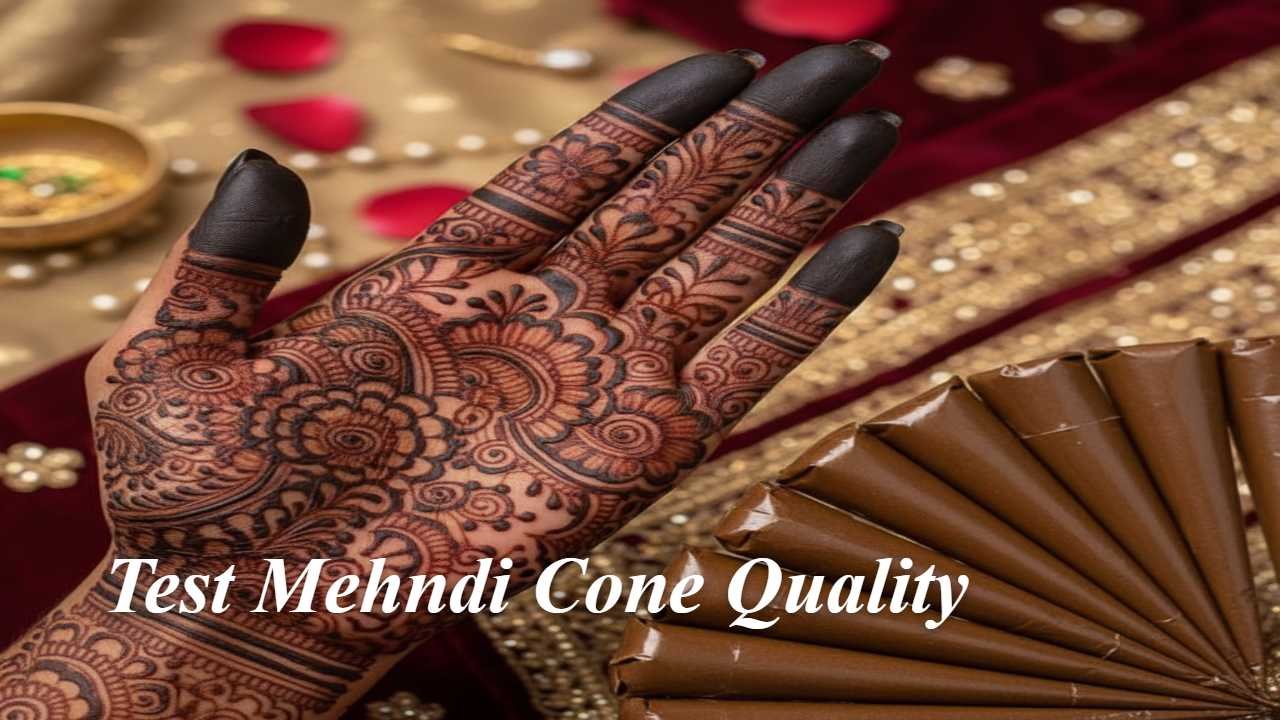
Test mehndi cone quality before purchasing if you want deep stains, smooth flow, and reliable bridal results. Many buyers focus on packaging or price, yet overlook the scientific and practical indicators that reveal true performance. Poor-quality cones lead to weak stains, clogging tips, uneven Arabic patterns, and disappointing bridal mehndi outcomes.
Professional mehndi artists never rely on marketing claims alone. They follow a structured evaluation process that ensures stain depth, paste consistency, ingredient safety, and cultural suitability. This guide explains exactly how to evaluate cones before investing in them.
Master this with Professional Cones
The same products used in this guide are available in our shop.
Why You Must Test Mehndi Cone Quality
A mehndi cone directly affects:
- Stain darkness
- Design precision
- Paste flow control
- Skin safety
- Client satisfaction
Bridal mehndi demands consistency. Festival designs require smooth application. Arabic patterns rely on bold, clean strokes. Without testing, you risk compromised results.
Inside this Guide:
Testing before buying protects both artistic standards and brand reputation.
1. Check the Ingredient Transparency First
Start by reading the ingredient list carefully.
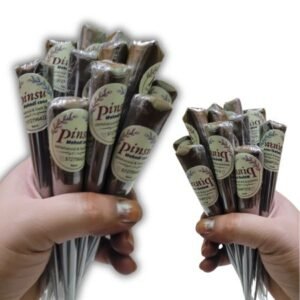
Buy Mehndi Cones Pack of 12 – Natural, Organic & Dark Stain
High-quality cones should contain:
- Pure henna powder
- Essential oils (cajeput, tea tree, lavender)
- Acidic liquid base
- Sugar (optional stabilizer)
Avoid cones that list:
- PPD (para-phenylenediamine)
- Artificial dyes
- Synthetic fragrance oil
- Unknown color boosters
Ingredient Comparison Table
| Feature | Professional Cone | Commercial Mass Cone |
|---|---|---|
| Ingredient List | Transparent | Vague |
| Natural Henna | Yes | Sometimes diluted |
| Chemical Additives | No | Possible |
| Bridal Safe | Yes | Risky |
When you test mehndi cone quality, ingredient transparency becomes your first filter.
2. Inspect the Cone Packaging and Construction
Packaging reveals storage standards.
Buy Mehndi Cones Pack of 12 – Natural, Organic & Dark Stain
Look for:
- Airtight sealing
- Proper tip shape
- Even paste fill
- Manufacturing date
Loose wrapping or air bubbles indicate oxidation risk.
A poorly sealed cone loses dye strength quickly. Oxidized henna produces lighter stains.
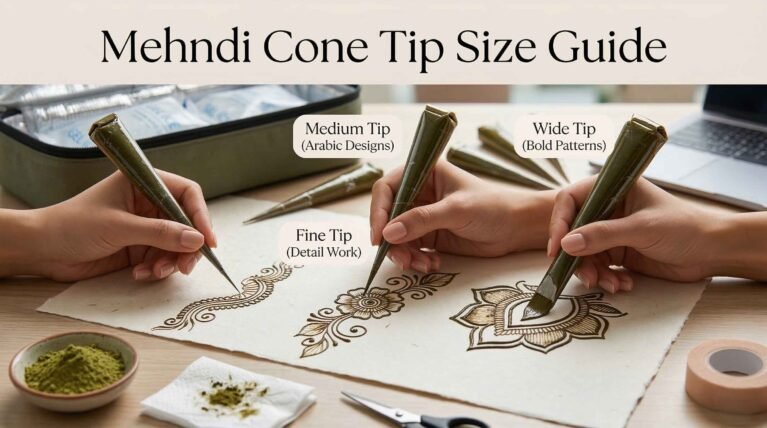
3. Perform a Texture and Flow Test
Before bulk buying, request a sample cone.
Cut a tiny opening and test on paper.
Signs of Good Flow
- Smooth extrusion
- No clogging
- Even pressure response
- Consistent line thickness
Warning Signs
- Grainy texture
- Sudden paste bursts
- Air pockets
- Watery leakage
When you test mehndi cone quality using flow assessment, you protect intricate bridal detailing from failure.
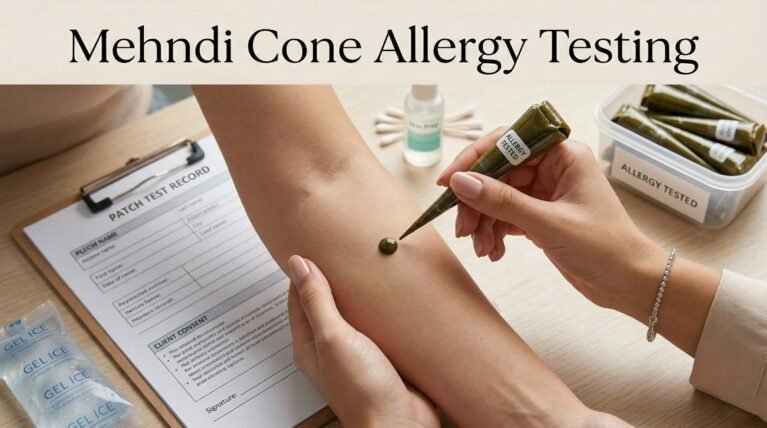
4. Conduct a 24-Hour Stain Patch Test
The most reliable way to test mehndi cone quality involves a skin patch test.
Step-by-Step Method
- Apply small dot on palm.
- Leave paste 6–8 hours.
- Remove without water.
- Observe stain at 24 and 48 hours.
Natural henna oxidizes gradually from orange to brown. Deep maroon after 48 hours indicates strong dye release. Instant dark stain within one hour suggests chemical additives.
5. Evaluate Dye Release Timing
Ask the supplier about dye release rest time.
Professionally prepared cones typically:
- Rest 8–24 hours before filling
- Use terpene-rich essential oils
- Maintain controlled temperature
Under-rested paste produces weak stains.
Over-processed paste loses freshness.
Proper timing ensures consistent bridal performance.
6. Assess Aroma and Color of Paste
Smell and color provide clues.
Fresh natural henna smells earthy and herbal.
Chemical cones smell synthetic or overly perfumed.
Paste color should appear:
- Deep green
- Smooth and creamy
Dull brown paste indicates oxidation or age.
7. Verify Storage Conditions
Ask how cones are stored before sale.
Proper storage includes:
- Freezing after preparation
- Airtight packaging
- Minimal thaw cycles
Room-temperature display reduces stain potency.
When you test mehndi cone quality, storage history matters as much as ingredients.
Advanced Evaluation for Bridal Mehndi
Bridal mehndi requires the highest standards.
Look for cones that deliver:
- Uniform stain across palms and feet
- Deep brown to maroon tone
- Long-lasting color (7–10 days)
- No skin irritation
Bridal designs include dense lacework, mandalas, paisleys, peacocks, and groom initials. Uneven stain disrupts aesthetic harmony.
Comparing Cone Quality Levels
| Quality Level | Suitable For | Stain Depth | Risk Level |
|---|---|---|---|
| Premium Professional | Bridal & Events | Very Dark | Low |
| Mid-Range Natural | Festivals | Medium Brown | Moderate |
| Chemical Black Henna | Temporary Tattoos | Artificial Black | High |
| Unknown Bulk | Practice Only | Unpredictable | High |
Always test mehndi cone quality before trusting cones for ceremonial events.
Cultural Importance of Deep Stains
In Indian weddings, darker mehndi symbolizes deeper affection and prosperity. Families often judge bridal results based on stain intensity.
Arabic designs emphasize bold floral patterns and clean negative spaces. Smooth flow and consistent pigment enhance visual contrast.
Moroccan and Gulf styles rely on geometric precision. Grainy paste disrupts symmetry.
Testing ensures cultural integrity and artistic excellence.
Common Buying Mistakes
- Choosing lowest price option
- Ignoring harvest date
- Skipping patch test
- Trusting only online reviews
- Buying in bulk without sample
Professional artists treat cones as technical tools, not decorative accessories.
Questions to Ask Suppliers
Before placing bulk order, ask:
- What is the henna crop origin?
- When was it harvested?
- Which essential oils are used?
- How are cones stored?
- Is patch testing recommended?
Reliable suppliers answer transparently.
Safety First: Avoid Black Henna
Black henna often contains PPD.
PPD may cause:
- Blisters
- Burns
- Long-term skin sensitivity
True natural henna never stains jet black instantly.
Testing protects client health and brand credibility.
Long-Term Business Impact
Consistently testing cones builds:
- Client trust
- Positive referrals
- Strong portfolio images
- Premium pricing opportunities
For brands like pinsumehndiart.in, maintaining strict quality control strengthens authority in the mehndi niche.
Quick Quality Checklist
Before purchasing, confirm:
- Natural ingredient list
- Fresh manufacturing date
- Smooth paste flow
- 24-hour stain confirmation
- Proper storage conditions
This checklist simplifies your decision process.
Frequently Asked Questions (FAQ)
1. How often should I test mehndi cone quality?
Test every new batch or supplier before bulk purchasing.
2. Can a good cone still produce light stains?
Yes, if skin preparation or aftercare is poor. However, testing ensures base quality.
3. Is strong fragrance a good sign?
No. Overpowering scent may indicate synthetic additives.
4. What stain color is ideal for bridal mehndi?
Deep brown to maroon after 48 hours signals strong dye release.
5. Should beginners test cones too?
Absolutely. Early testing prevents bad design experiences and builds skill confidence.
Final Thoughts
Professional mehndi artistry demands precision, safety, and consistency. When you test mehndi cone quality before buying, you protect your designs, your clients, and your brand reputation. Ingredient transparency, flow smoothness, dye release timing, and stain depth all determine true performance.
Choose wisely, test thoroughly, and invest only in cones that deliver powerful, reliable results worthy of stunning bridal and Arabic masterpieces.
More Design Inspiration