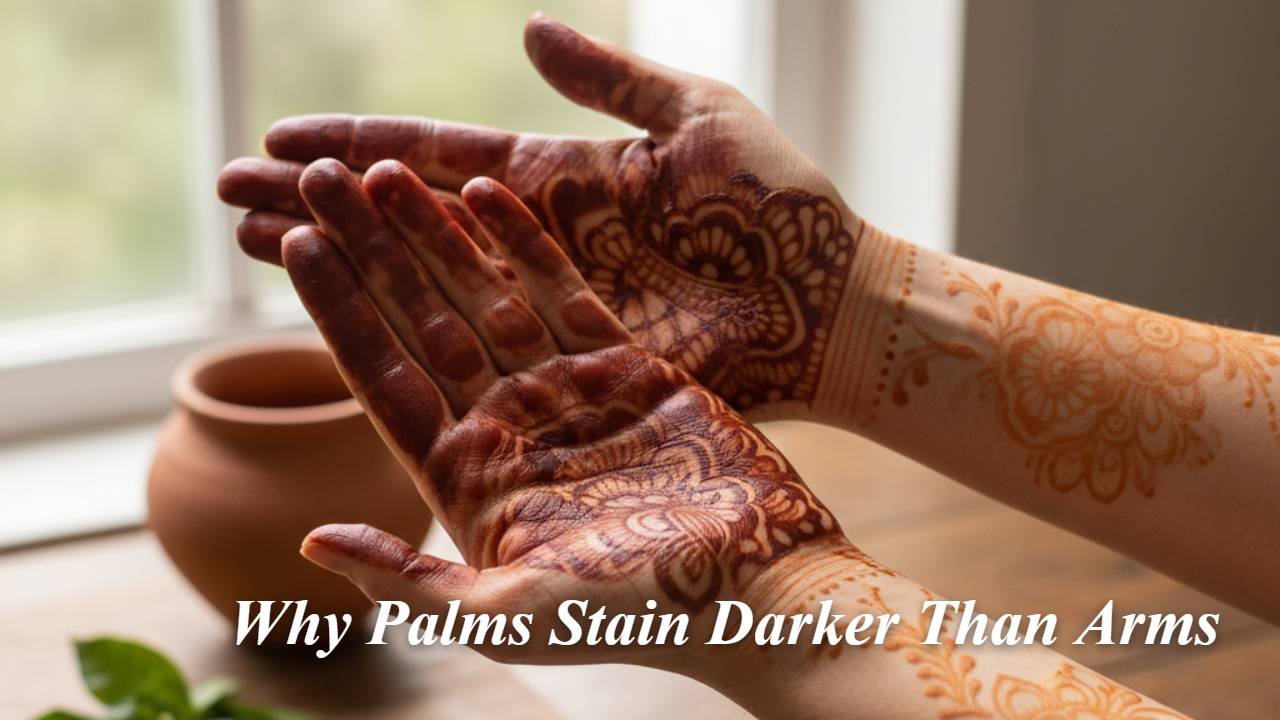
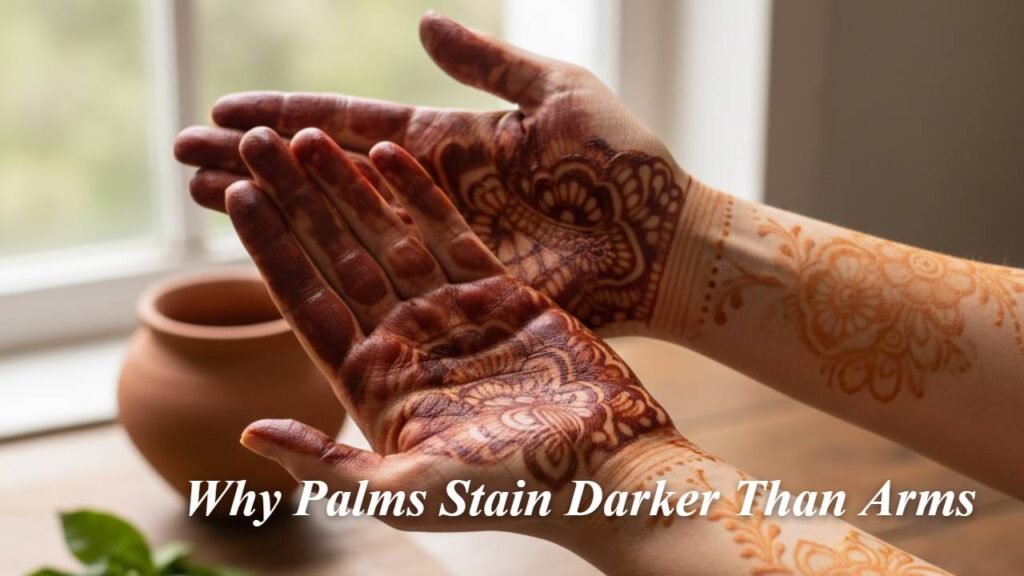
Why Palms Stain Darker Than Arms is one of the most fascinating and frequently asked questions in mehndi artistry. Every experienced henna artist has noticed this pattern. Apply the same cone, use the same paste, keep the same duration—yet the palms develop a deep brown stain while the arms remain lighter.
This contrast is not accidental. It is rooted in skin biology, keratin structure, sweat gland density, body heat, and dye chemistry. Understanding this difference builds technical authority and helps artists set accurate expectations for bridal mehndi, Arabic patterns, and full-hand traditional designs.
Master this with Professional Cones
The same products used in this guide are available in our shop.
Let us explore the science, cultural observations, and practical implications behind this natural phenomenon.
The Core Science Behind Why Palms Stain Darker Than Arms
To understand Why Palms Stain Darker Than Arms, we must begin with henna chemistry. Henna contains a dye molecule called lawsone. Lawsone binds to keratin proteins present in the outermost layer of skin, known as the stratum corneum.
Inside this Guide:
The darker the stain, the stronger and deeper the binding.
Palms naturally contain:
Buy Mehndi Cones Pack of 24 – Natural, Organic & Dark Stain
- Thicker stratum corneum
- Higher keratin concentration
- More sweat glands
- Greater heat retention
Arms, by contrast, have thinner skin layers and lower keratin density. This biological difference directly affects stain intensity.
Skin Thickness: The Primary Factor
The thickness of the stratum corneum varies significantly across body areas.
| Body Area | Skin Thickness | Keratin Density | Typical Mehndi Stain |
|---|---|---|---|
| Palms | Very thick | High | Deep brown |
| Soles | Very thick | Very high | Darkest stain |
| Forearms | Thin | Moderate | Light brown |
| Upper arms | Thin | Low | Light orange-brown |
Thicker skin allows more dye molecules to bind and remain trapped within keratin layers. This is the strongest explanation for why palms stain darker than arms.
Keratin Concentration and Dye Binding
Keratin is the protein that lawsone attaches to during staining. Palms contain densely packed keratin cells designed for grip and durability.
Buy Mehndi Cones Pack of 12 – Natural, Organic & Dark Stain
Because henna binds to keratin:
- Higher keratin equals stronger bonding.
- Stronger bonding equals darker stain.
- Deeper penetration equals longer-lasting color.
Arms contain less keratin density, so the same amount of dye produces lighter tones.
Sweat Glands and Natural Moisture
Another reason why palms stain darker than arms involves sweat gland distribution.
Palms contain a high number of eccrine sweat glands. These glands:
- Keep skin slightly moist.
- Support dye migration.
- Help maintain paste adhesion.
Moderate moisture enhances dye transfer. Arms have fewer sweat glands, leading to faster paste drying and weaker dye penetration.
Body Heat and Circulation
Body heat plays a critical role in oxidation and dye migration.
Palms often remain warmer because:
- Blood circulation is active.
- Hands move frequently.
- Emotional excitement increases warmth.
Heat accelerates molecular activity, helping lawsone penetrate more deeply.
Arms tend to stay cooler, especially in air-conditioned environments.
Why Palms Stain Darker Than Arms in Bridal Mehndi
Bridal mehndi highlights this contrast clearly. Dense mandalas, paisleys, floral vines, and dulha-dulhan motifs on palms develop intense brown tones overnight.
Arms, even when covered in elaborate Rajasthani or Arabic patterns, remain lighter.
This difference is normal and expected in traditional bridal mehndi.
Culturally, darker palms symbolize:
- Love and affection
- Prosperity
- Strong marital bond
Tradition celebrates palm darkness without expecting identical arm intensity.
Arabic Patterns and Contrast
Arabic mehndi designs often extend from palms to forearms in flowing, open layouts.
Artists frequently observe:
- Bold dark palms
- Softer forearm shading
- Slight gradient effect
This natural variation enhances visual depth. It creates dimension in floral and vine-based Arabic patterns.
Understanding why palms stain darker than arms helps artists design transitions intentionally.
Oxidation Differences Between Palms and Arms
Oxidation deepens stain color over 24–48 hours.
Because palms:
- Retain more warmth
- Maintain moisture longer
- Have thicker keratin layers
Oxidation tends to produce richer brown tones.
Arms oxidize as well but cannot reach the same pigment intensity due to structural limitations.
Duration and Its Impact
Keeping mehndi on longer benefits both palms and arms. However, palms still outshine arms even with identical duration.
| Duration | Palm Result | Arm Result |
|---|---|---|
| 4 hours | Medium brown | Light orange-brown |
| 6 hours | Dark brown | Medium brown |
| Overnight | Deep brown | Moderate brown |
Duration enhances both areas but does not eliminate biological differences.
Can Arms Ever Match Palm Darkness?
In most cases, no. Arms cannot match palm darkness because of structural differences.
However, artists can improve arm stain depth by:
- Extending paste duration
- Using lemon-sugar sealant
- Maintaining warmth
- Applying proper night care
- Using high-quality organic henna cones
These methods reduce contrast but do not remove it completely.
Cultural Awareness of This Difference
Traditional henna practices never expected uniform staining.
In Indian and Middle Eastern cultures:
- Palms are central to bridal symbolism.
- Soles often receive intricate detailing.
- Arms serve decorative extension purposes.
The darker palms naturally draw attention to central motifs.
Common Myths About Why Palms Stain Darker Than Arms
| Myth | Reality |
|---|---|
| Paste was uneven | Biological difference |
| Arm skin rejected dye | Normal keratin variation |
| Quality issue with cone | Structural skin factor |
| Oil application caused contrast | Natural anatomy |
Educating clients about these facts builds trust and professional credibility.
Seasonal Influence on Stain Depth
Cold weather reduces overall oxidation speed. However, palms still outperform arms due to thicker skin and heat retention.
Winter tips:
- Keep hands warm overnight
- Avoid cold surfaces
- Apply natural oils after paste removal
Seasonal care enhances results but does not change biological fundamentals.
The Role of Sweat and Natural Oils
Palms produce more sweat but lack sebaceous glands. Arms contain sebaceous glands that produce natural oils.
Excess oil on arms can:
- Create slight barrier
- Reduce dye penetration
- Affect adhesion
This further explains why palms stain darker than arms.
Professional Artist Recommendations
Experienced mehndi artists recommend:
- Designing arms with shading or bold outlines to balance tone differences.
- Managing client expectations before application.
- Using consistent paste quality for uniform results.
- Encouraging structured overnight care.
Design strategy compensates for biological variation.
Advanced Technical Breakdown
From a dermatological perspective:
- Palm epidermis thickness: up to 1.5 mm
- Arm epidermis thickness: approximately 0.1–0.2 mm
Greater epidermal thickness allows:
- More dye absorption
- Slower shedding
- Longer stain longevity
Arm skin sheds faster, leading to lighter and shorter-lived stain.
Frequently Asked Questions
1. Is it normal for palms to be darker than arms?
Yes. It is completely natural due to skin thickness and keratin density.
2. Can I make my arms stain as dark as my palms?
You can improve depth but cannot fully match palm intensity.
3. Does paste quality affect this difference?
High-quality paste improves overall results but does not change biological contrast.
4. Why do soles stain even darker than palms?
Soles have even thicker keratin layers and higher pressure-induced skin density.
5. Should I worry if my arms look lighter?
No. This contrast is expected and common in all natural henna applications.
Final Thoughts
Why Palms Stain Darker Than Arms is rooted in skin biology, keratin concentration, moisture levels, and heat retention. This natural contrast enhances the visual impact of bridal mehndi, Arabic patterns, and traditional designs.
Rather than viewing it as a flaw, artists should embrace it as part of authentic henna artistry. Choose premium organic cones, follow structured aftercare, and design strategically to achieve beautifully balanced results that showcase the rich depth of natural mehndi.
More Design Inspiration