Winter storage for henna cones requires a different strategy than summer handling. Many artists assume cold weather automatically protects henna freshness. In reality, winter conditions create unique challenges that affect dye release, paste texture, and stain development. Low temperatures slow oxidation, thicken paste consistency, and reduce essential oil activation.
For bridal mehndi, Arabic floral patterns, and intricate Indian designs, understanding winter storage for henna cones ensures deep brown stains and smooth application. This comprehensive guide explores the science behind cold-weather handling and provides practical solutions for maintaining consistent results.
Master this with Professional Cones
The same products used in this guide are available in our shop.

Why Winter Conditions Affect Henna Performance
Henna paste contains natural dye molecules, essential oils, and moisture. Cold weather influences all three components.
Winter impacts include:
Inside this Guide:
- Slower dye migration
- Thickened paste texture
- Reduced skin warmth
- Delayed oxidation
Unlike summer, where heat accelerates degradation, winter slows chemical activity.
Proper winter storage for henna cones balances preservation with activation.
Buy Mehndi Cones Pack of 12 – Natural, Organic & Dark Stain
Understanding Dye Release in Cold Weather
Lawsone, the active dye molecule in henna, binds to keratin in the skin. This process requires warmth.
- Delay dye release during paste resting
- Slow oxidation after removal
- Reduce stain depth
Maintaining optimal temperature during preparation becomes essential in winter storage for henna cones.
Ideal Storage Temperature During Winter
Cold outdoor weather does not eliminate the need for refrigeration or freezing.
Buy Mehndi Cones Pack of 12 – Natural, Organic & Dark Stain
Storage Temperature Guide
| Storage Method | Temperature Range | Effect on Paste |
|---|---|---|
| Freezer | -18°C | Preserves dye potency |
| Refrigerator | 4–8°C | Short-term stability |
| Room Temperature (Cold Climate) | 10–15°C | May thicken paste |
| Near Heater | Variable high heat | Risk of oil loss |
Even in winter, freezing remains the most reliable method for winter storage for henna cones.
Freezing vs Refrigeration in Winter
Some artists stop freezing cones in winter, assuming cold air is sufficient. This is risky.
Freezing advantages:
- Stops dye degradation
- Protects essential oils
- Maintains smooth texture
Refrigeration works only for short-term use.
Proper winter storage for henna cones includes freezing immediately after preparation.
Thawing Strategy for Cold Climate Application
Cold weather affects thawing speed and paste consistency.
Correct Thawing Method
- Remove cone from freezer.
- Allow gradual thaw at room temperature.
- Avoid placing directly near heater.
Rapid heating creates condensation inside the cone, leading to uneven texture.
Controlled thawing supports smooth bridal application.
Managing Paste Thickness in Winter
Cold temperatures make paste thicker.
Thick paste may cause:
- Increased pressure during application
- Uneven line width
- Hand fatigue during detailed bridal mehndi
To manage consistency:
- Slightly adjust liquid ratio during mixing
- Ensure full dye release rest period
- Warm cone gently in hands before use
Winter storage for henna cones requires attention to paste elasticity.
Skin Temperature and Stain Development
Cold skin reduces stain intensity.
Areas such as palms and soles stain darker due to higher keratin concentration. However, cold hands slow dye binding.
Encourage clients to:
- Keep hands warm
- Avoid cold water exposure
- Use clove steam for warmth
Traditional warming practices evolved to support winter mehndi application.
Impact on Bridal Mehndi Results
Bridal mehndi often occurs during winter wedding seasons in many regions.
Deep maroon stains symbolize love and prosperity. Cold weather may delay color development, creating anxiety for brides expecting instant results.
Educating clients about natural oxidation stages strengthens trust.
Winter storage for henna cones ensures consistent performance during peak wedding season.
Arabic and Regional Design Considerations
Arabic floral designs rely on smooth flow. Thick paste from cold storage may disrupt line fluidity.
Moroccan geometric patterns demand precision. Uneven paste consistency compromises symmetry.
Contemporary minimalist mehndi depends on crisp outlines. Proper winter storage maintains flow stability.
Design precision depends on temperature control.
Essential Oils and Cold Weather
Essential oils behave differently in cold climates.
Cold slows evaporation, which is beneficial. However, oil absorption into the skin requires warmth.
Maintaining moderate room temperature during application improves dye penetration.
Winter storage for henna cones must balance preservation and activation.
Transportation Tips in Winter
Winter travel introduces temperature swings.
Avoid:
- Leaving cones in freezing outdoor conditions
- Placing cones near car heaters
- Exposing to repeated temperature fluctuations
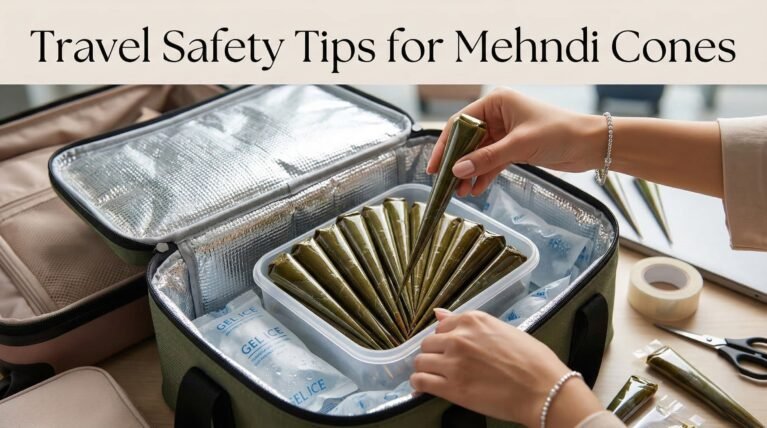
Use insulated containers to maintain stable conditions.
Temperature consistency prevents texture shock.
Regional Winter Considerations in India
| Region | Winter Condition | Storage Strategy |
|---|---|---|
| Delhi | Cold & Dry | Freeze + warm application area |
| Rajasthan | Mild Winter | Continue freezing practice |
| Himachal | Very Cold | Insulated storage |
| Mumbai | Mild | Standard freezing |
Regional adaptation improves stain reliability.
Signs Winter Conditions Are Affecting Your Cone
Watch for:
- Delayed stain darkening
- Paste overly thick despite thawing
- Reduced essential oil scent
- Client complaints about light color
Testing before bridal events prevents disappointment.
Common Winter Storage Mistakes
Avoid these errors:
- Skipping freezing because weather feels cold
- Placing cones near heaters
- Applying paste in cold rooms
- Ignoring client aftercare
Winter storage for henna cones requires proactive management.
Professional Winter Workflow
For consistent winter performance:
- Freeze cones after preparation
- Thaw gradually before use
- Warm workspace slightly
- Encourage warmth during oxidation
- Avoid water for 24 hours
This workflow ensures stable stain development.
Cultural Significance and Seasonal Adaptation
Winter weddings are common in many Indian communities. Deep stains carry emotional symbolism and visual importance for photography.
Traditional practices such as warming hands and avoiding cold exposure reflect an understanding of temperature’s role in stain development.
Winter storage for henna cones preserves both technical performance and cultural meaning.
Quick Winter Storage Reference
| Action | Purpose |
|---|---|
| Freeze cones | Preserve dye potency |
| Gradual thaw | Prevent condensation |
| Warm skin | Improve stain depth |
| Avoid heater blast | Protect essential oils |
| Test stain early | Ensure readiness |
Small adjustments prevent major issues.
Frequently Asked Questions (FAQ)
1. Do I still need to freeze cones in winter?
Yes. Freezing remains the safest method for preserving dye potency.
2. Why is my winter mehndi stain lighter?
Cold skin slows oxidation and dye binding.
3. Can I warm cones using a heater?
Avoid direct heat. Allow gradual thaw at room temperature.
4. Does winter improve shelf life?
Cold slows degradation but does not eliminate the need for proper storage.
5. How can brides achieve darker stains in winter?
Maintain warmth, follow aftercare strictly, and use fresh, properly stored cones.
Final Thoughts
Winter storage for henna cones demands thoughtful temperature control and careful thawing practices. Cold weather slows dye activity, thickens paste, and delays oxidation, making proper storage and application techniques essential. Bridal and Arabic designs rely on smooth texture and deep brown results that only disciplined winter handling can deliver.
Choose professionally stored henna cones and follow seasonal best practices to ensure stunning, long-lasting stains throughout the winter season.
More Design Inspiration